
Introduction
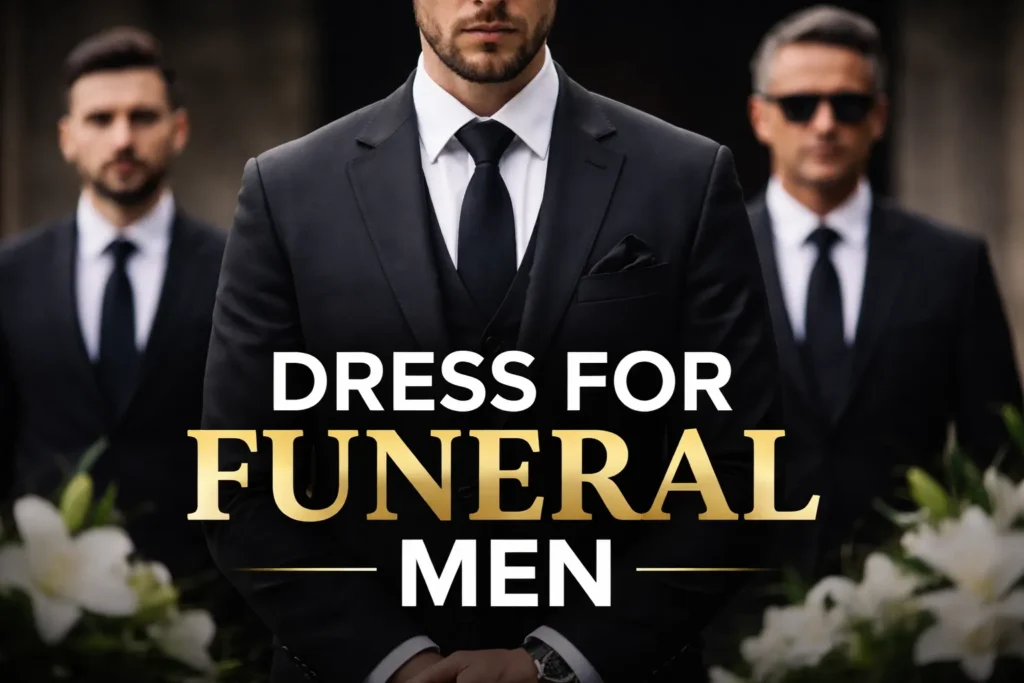
The presence at a funeral service is one of the greatest duties and responsibilities that a human being is called on to fulfill. This could be your golden opportunity not only to pay a tribute and homage to the departed soul, but also extend your support and solace to the bereaved family members and demonstrate your compassion and empathy through body language and mannerism. However, it should also be noted that together with spoken and demonstrated words, your attire, which is a part of your silent language, could also have an impact. The garment, thus, is a silent language.
When the issue of consideration in choosing dress to put on to the funeral of men is being discussed, it should be made clear that it is preferable to choose an attire that symbolizes humility, solemnness, and compassion to the mourning family. A funeral is not, and should not, in any way, be characterized by personal expressions; it is characterized by reflection, retrospect, and collective grief.
This comprehensive manual explains everything that you should know about men’s Funeral attire, from classical traditional outfits for men in the West to culturally significant outfits, color codes, seasonal variations, grooming, etc., and also frequently asked questions, checklists, etc., and thus, if you follow these guidelines properly, you can make sure that your talk consistently demonstrates respect, understanding, and propriety and hence, enable you to take part in these sensitive events with confidence.
Why Funeral Attire Matters
Clothing serves also as a non-verbal communicator. At funerals, the clothes you wear will convey the level of respect you accord the dead, as well as the level of consideration you have for the mourners
The multi-dimensional significance of funeral wear:
- It conveys empathy and compassion – wearing appropriate clothing also tells other people that you understand the nature of the occasion and are understanding of the emotions of those who are grieving.
- Demonstrates cultural literacy – Wearable articles are indicative of cultural, religious, or family influences, making sure you respect those cultures and refrain from accidentally offending them.
- Minimizes distraction – Bold colors, intricate designs, and trendy styles can distract people away from the ceremony, hence distracting attention from the solemn occasion.
- Illustrates Etiquette and Emotional Intelligence — Thoughtful attire demonstrates a level of maturity, discernment, and sophisticated thought on the part of the individual.
Traditional Funeral Dress Code for Men
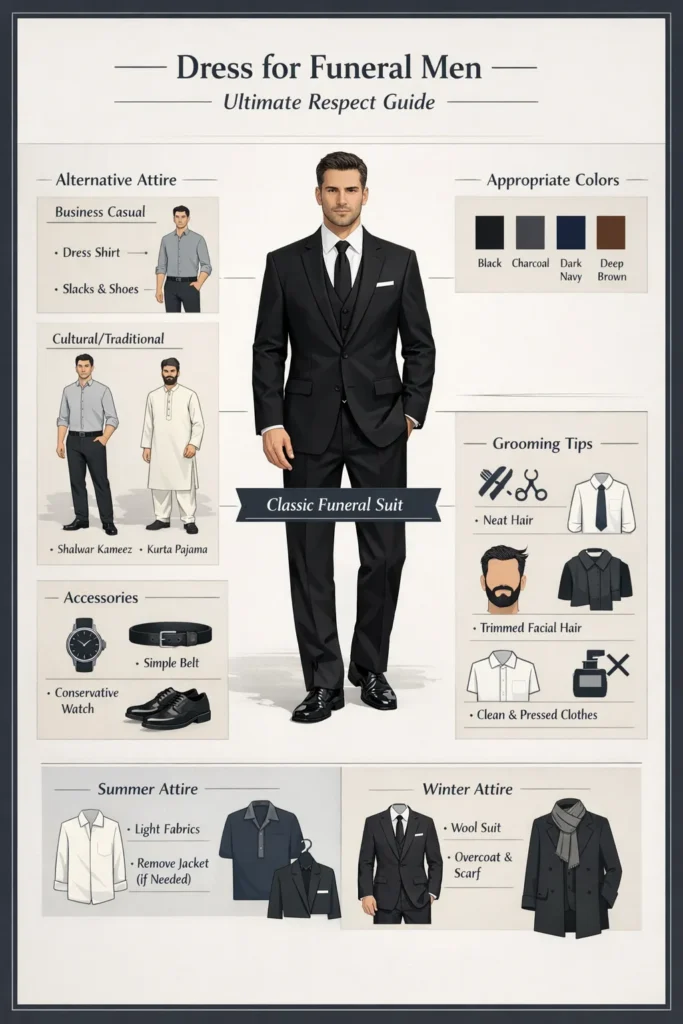
Classic Funeral Suit — The Universal Standard
The traditional funeral suit is still the most accepted and universally respectful form, particularly for a more formal or conservative situation, especially within a Western culture.
Important parts associated with the traditional funeral suit:
| Category | Recommended Style |
| Suit Color | Black (most traditional), Charcoal gray, Dark navy |
| Suit Style | Two-piece or three-piece |
| Shirt | Long-sleeved collared shirt, white or muted colors |
| Tie | Solid dark colors or understated patterns |
| Shoes | Polished black leather dress shoes |
| Socks | Dark dress socks that complement the suit |
Acceptable Alternative Funeral Outfits
All funerals call for full Western service attire. Cultural contexts, weather, or family wishes may allow alternatives, so long as dignity is preserved.
Business Casual
Note that some funeral services, e.g., ‘celebration of life’ or semi-formal services, may offer less restrictive clothing. It is recommended to consult the family first before choosing a business casual option.
Examples:
- Dark dress trousers
- Collared dress shirt
Cultural or Religious Attire
Their topmost priority is respecting the cultural or religious tradition, and these communities feel that wearing traditional clothing is much more important than wearing Western style suits, etc.
Examples:
- Islamic funerals: Plain and modest clothing such as neutral-colored shalwar kameez
- South Asian funerals: Clean and simple kurta pajama sets in muted tones
Colors That Convey Respect
Choice of color is one of the most symbolically important factors in funeral wear. Colors convey mood, solemnity, and sensitivity.
Recommended Colors
- Black: Globally accepted as a funeral color
- Charcoal Gray: Neutral, serious, and understated
- Dark Navy: Slightly softer than black and but still dignified
Also Acceptable (With Family Approval)
- Deep brown
- Dark Burgundy
Colors to Avoid
- Neon or bright hues
- Loud patterns or prints
- Excessively bright white
What to Avoid — A Concise Guide
The dress code that is emphasized at a funeral service is quite strict, and that is how it should always be, as it is not about how you are dressed when attending a ceremony but about the ceremony itself. Do not wear anything too casual and too attention-seeking in nature.
Casual bottoms – Jeans, Shorts, Cargo Pants
Athletic wear: hoodies, tracksuits, sweat
Casual shoes: Sneakers, Flip Flop Shoes
Distracting Patterns: Large Logos or Flamboyant Prints
Seasonal Funeral Outfit Guide
The clothing to be worn for a funeral is also expected to be practical based on the conditions without compromising the formal requirement.
Summer Funerals
Breathable clothing is also important attire for warm weather.
Lightweight fabrics: Linen, Cotton Blends, Tropical Wool
Shirts: Breathable and Ironed
Shoes: Polished, Dark Leather
Socks: Dark Dress Socks
Winter Funerals
Cold weather requires warmth, but at the same time, cold weather requires elegance and respect.
Suits: Wool or heavier blends
Outerwear: A Formal overcoat in dark colors
Accessories: Dark-colored scarves, leather gloves
Socks: Wool or Heavy Dress Socks
Shoes: Polished and Formal
Accessories Done Right
Instead, these accessories should complement the look rather than dominate it.
Acceptable:
- Simple leather belt matching shoes
- Conservative wristwatch
- Subtle tie bar
- Minimal cufflinks
Avoid:
- Bright, Flashy Jewelry
- Oversized Belt Buckles
- Loud or ornamental accessories
Grooming & Presentation Tips
Although clothing may be extremely appropriate for a certain occasion, it may not necessarily mean showing respect for a person if one’s level of personal hygiene is poor.
Clothes: Clean, neatly pressed, free from wrinkles or stains
Hair: Neatly combed or styled Conservatively
Facial Hair: Trimmed and neat
Shoes: Polished and Spotless
Fragrance: Low or None
Special Cultural & Religious Considerations
It must be noted that various cultures and religious traditions emphasize different requirements. Such an understanding is very important
Pakistani & South Asian Funerals
- Wear humble, simple attire
- Neutral colors include the following: white, cream, and black.
- Traditional clothes like shalwar kameez are allowed if clean
Islamic Funerals
- Emphasize simplicity and modesty
- Muted tones or white are often used
- Avoid expensive fabrics or bright decorations
Western
- Dark suits are standard
- Ties and polished shoes are customary
- Business casual may be acceptable in some contexts
East Asian
- Black or other subdued shades dominate
- The traditional garment may also be preferred
- Avoid wearing bright and decorative items
Dress for Funeral Men — Pros & Cons
| Attire Type | Pros | Cons |
| Classic Funeral Suit | Universally accepted, timeless | May be too formal for certain cultures/climates |
| Business Casual | Comfortable, less restrictive | Risky if family expects formal attire |
| Cultural/Traditional Attire | Shows cultural respect, meaningful | Must align strictly with family norms |
FAQs
A:The colors most respected are black, charcoal grey, and dark navy .
A:The colors held in the highest esteem are black, charcoal grey, and dark navy.
A:While wearing a tie can be recommended for a formal or traditional funeral service, for casual services or family requests, it can be optional.
A:Black is a preference, but dark brown or oxblood shoes may be acceptable if polished and low key.
A:Avoid using any strong fragrances. However, if any are to be used, they should be mild and subtle.
Conclusion
Going to a funeral service is never the right time and opportunity for personal expression; rather, the time and opportunity to display respect, sympathy, and cultural Sensitivity in an event of great importance. Whether the attire is Western, traditional, or an outfit of Business Casual, the underlying purpose is always the same: to honor the departed, console the grieving, and manifest dignity through our being there.
