
Introduction
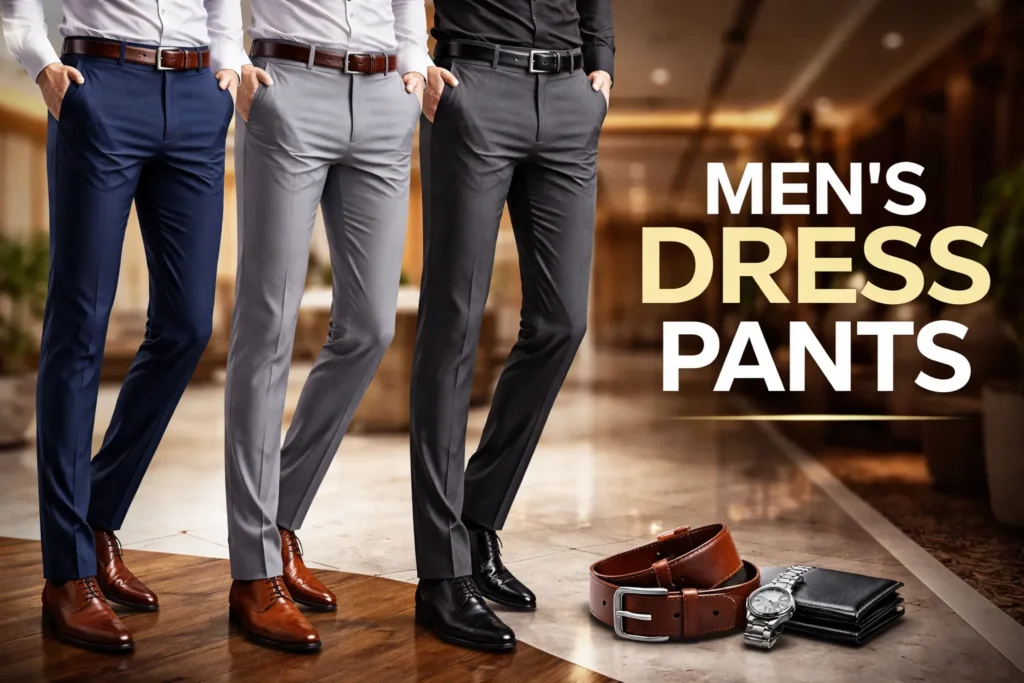
Men’s dress pants are not merely trousers — they are the structural base of a gentleman’s refined wardrobe. A properly tailored pair enhances posture, sharpens proportions, and projects Authority. When the silhouette is correct, and the textile is premium, the transformation is immediate: you appear taller, leaner, and more self-assured.
Whether you are attending:
- The workplace
- A wedding reception
- A corporate dinner
- A graduation ceremony
- A prestigious European function
Formal trousers can make a huge difference to your presence.
What menswear is like in 2026: Menswear has never been more intelligent or performance-driven. Today, modern men want:
- Improved tailoring
- Superior comfort
- Luxury-grade materials
- Long-term durability
- Sustainable craftsmanship
This in-depth pillar guide explores everything about men’s dress trousers:
- Definition and construction
- Historical evolution
- Fabric compositions
- Fit profiles and rise
- Styling frameworks
- Purchasing strategy
- Care routines
- 2026 fashion movements
- Common pitfalls
At the end of this detailed guide, you will be able to grasp how to acquire high-caliber dress trousers like a seasoned expert.
What Are Men’s Dress Pants?
Men’s Dress Pants, which are also referred to as tailored trousers or formal slacks, refer to a type of lower garment for men that is worn for business or formal events.
Defining Characteristics
- Structured waistband with curtain lining
- Flat-front or pleated configuration
- Streamlined leg line
- Elegant fabric falls
- Partial interior lining
- Designed for pairing with formal footwear
These attributes create a polished aesthetic suitable for:
- Executive offices
- Boardroom meetings
- Ceremonial occasions
- Diplomatic events
- Cultural celebrations
Dress trousers represent discipline, sophistication, and attention to detail.
The History & Origin of Men’s Dress Pants
Understanding the historical context helps to appreciate the value of quality craftsmanship.
19th Century European Foundations
The evolution of modern tailored trousers began in Victorian England. During this period::
- Waistcoats and coats dominated formal wear
- Breeches disappeared from mainstream menswear
- Tailoring represented refinement and class
British tailoring emphasized:
- Strong vertical lines
- High-rise waistbands
- Heavy wool textiles
- Structured drape
The crease — now iconic — emerged as a defining feature of sharp presentation.
Early 20th Century Refinement
By the early 1900s:
- High-rise pleated trousers gained popularity
- Wool flannel became a winter staple
- Pressed creases were standardized for crispness
Hollywood icons helped to enhance the allure of elegant trousers globally.
Post-World War II Modernization
Following WWII:
- Silhouettes became slimmer
- Lightweight fabrics increase mobility
- Italian tailoring introduced softness and fluid drape
Early British styles, while rigid, eventually gave way to a more expressive look in Europe.
Contemporary 2026 Influence
Today’s dress pants combine:
- Italian elegance
- British structure
- Scandinavian minimalism
- Japanese precision finishing
Ergonomic comfort and heritage combine in contemporary tailoring.
Fabrics & Materials Used
The selection of textiles can impact performance, breathability, durability, and lifespan.
As a garment sourcing specialist perspective suggests: opt for natural fibers for premium performance.
Core Fabric Categories
Wool
Best for: Corporate wear, formal occasions, colder climates
Advantages:
- Exceptional drape
- Natural temperature regulation
- Breathable fibers
- Long lifespan
Disadvantage:
- Higher price point
Luxurious Worsted Wool fabric (weight: 250 – 300 gsm) is suitable for the European climate
Wool Blends
Best for: Daily business attire
Benefits:
- Improved durability
- Enhanced crease retention
- Slight stretch options
Trade-off:
- Slightly less luxurious than pure wool
Cotton Blends
Best for: Office and smart casual
Strengths:
- Breathable
- Comfortable
- Structured finish
Weakness:
- Prone to wrinkling
Linen Blends
Best for: Summer ceremonies
Advantages:
- Lightweight
- Airy
- Relaxed texture
Limitation:
- Wrinkles rapidly
Polyester Blends
Best for: Budget or travel
Strengths:
- Durable
- Easy maintenance
Drawback:
- Reduced breathability
- Synthetic sheen
Stretch Blends
Best for: Everyday movement
Benefits:
- Flexibility
- Comfort
- Modern practicality
Potential downside:
- Slightly reduced lifespan
Professional Insight: Avoid shiny polyester. The fabric looks cheap and does not breathe well.
Fit & Style Guide
Fit makes up approximately 80% of visual impact. The richest fabric looks unimpressive if the fit is not right.
Modern Fit Profiles
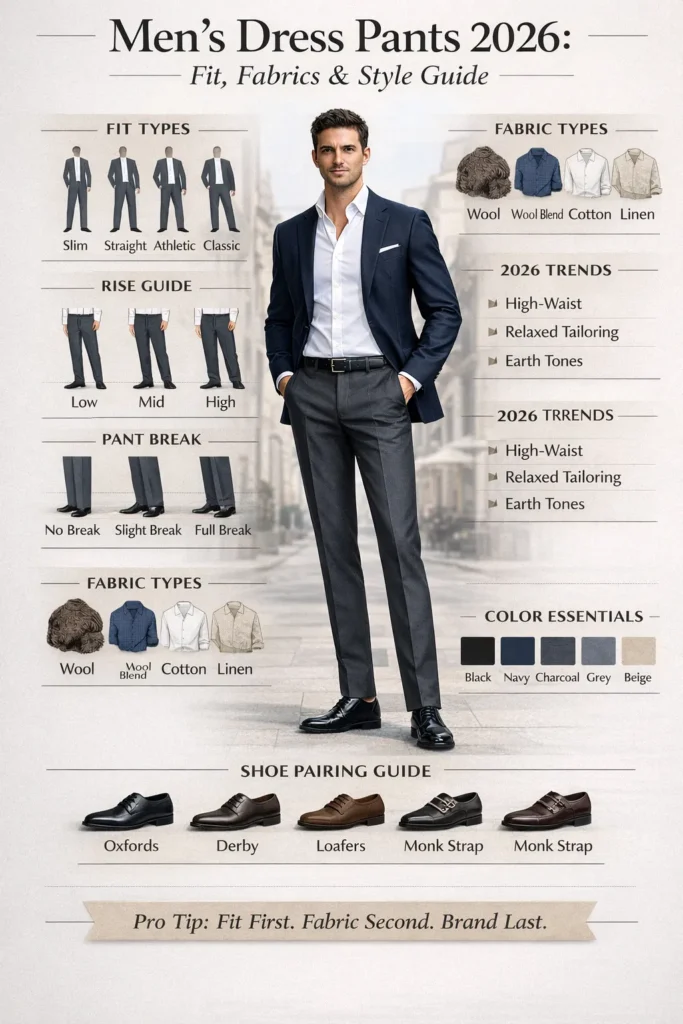
Slim Fit Dress Pants
- Narrow hem
- Gentle taper
- Clean profile
- Contemporary vibe
Ideal for:
- Lean physiques
- Young professionals
- Fashion-conscious environments
Straight Fit
- Balanced leg width
- Minimal taper
- Classic silhouette
Suitable for:
- All body types
- Conservative corporate settings
Athletic Fit
- Additional seat space
- Roomy thigh
- Tapered ankle
Designed for:
- Muscular builds
- Active individuals
Classic / Relaxed Fit
- Wider leg opening
- Traditional appeal
- Maximum ease
Appropriate for:
- Mature executives
- Formal institutions
Wide-Leg (2026 Trend)
- Inspired by vintage tailoring
- Higher waistline
- Dramatic drape
Popular in European fashion capitals like Milan and London.
Rise & Length Explained
Rise Options
- Low Rise: Trend-driven
- Mid Rise: Most versatile
- High Rise: Leg-lengthening, heritage-inspired
High-rise trousers are resurging strongly in 2026.
Pant Break Types
- No Break: Modern, cropped effect
- Slight Break: Balanced elegance
- Full Break: Traditional pooling
For most professionals, a slight break is safest.
Pleated vs Flat Front
Pleated
- Extra hip room
- Greater seated comfort
- Classical sophistication
Single pleats are returning in 2026.
Flat Front
- Sleek profile
- Minimal aesthetic
- Universally flattering
If in doubt, a flat front is always a safe bet.
Essential Colors for Men’s Dress Pants
Build a foundation first:
- Black (ceremonial)
- Charcoal grey (business staple)
- Navy (versatile anchor)
- Mid grey (modern professional)
- Beige/khaki (smart casual)
2026 Trending Shades
- Olive
- Deep brown
- Earth tones
- Muted sand
- Slate blue
Start with neutrals before experimenting.
Style Variations
Contemporary dress trousers include:
- Cuffed hems
- Side adjusters
- Double pleats
- Cropped tailoring
- Drawstring formal hybrids
Side adjusters remove the necessity for belts while preserving a streamlined waistline.
Occasions
Formal trousers suit:
- Office presentations
- Corporate interviews
- Weddings
- Business dinners
- Graduation events
- Religious gatherings
- Cultural festivities
Their versatility surpasses casual trousers significantly.
Global Influence of Dress Trousers
Tailored trousers dominate in:
- United Kingdom
- Italy
- France
- Germany
- Scandinavian nations
European craftsmanship heavily shapes global menswear in 2026.
Latest Trends in 2026
Tailoring remains timeless, yet evolution continues.
Key Movements
- Relaxed silhouettes
- Textured wool finishes
- Earth-inspired palettes
- High-waisted cuts
- Stretch-infused luxury blends
- Sustainable materials
Environmental responsibility now influences purchasing decisions.
How to Style Men’s Dress Pants
Office Formal
Combine with:
- Crisp white or pale blue dress shirt
- Structured navy blazer
- Black or brown leather Oxfords
- Coordinated leather belt
Business Casual
Pair with:
- Knit polo
- Lightweight sweater
- Leather loafers
- Optional tie
Modern Smart Casual
Combine:
- Plain T-shirt
- Minimal leather sneakers
- Unstructured blazer
Favored by younger professionals seeking a balance between polish and ease.
Shoe Pairing Guide
- Oxfords → Formal tailoring
- Derby → Business attire
- Loafers → Smart casual
- Monk straps → Fashion-forward
- Leather sneakers → Relaxed tailoring
Always synchronize belt and shoe color for cohesion.
Buying Guide
Examine Fabric Composition
Look for:
- 100% wool
- Wool-elastane (2–4%)
- Avoid excessive polyester
Evaluate Stitching
- Uniform seams
- No loose threads
- Reinforced waistband
- Clean internal finishing
Assess Fabric Texture
Quality wool feels:
- Smooth
- Dense
- Matte (not glossy)
Inferior fabric feels flimsy and synthetic.
Waistband Engineering
Premium trousers feature:
- Curtain waistband
- Structured lining
- Durable button closure
Prioritize Fit Over Brand
Expert tailoring surpasses luxury logos. Precision alterations can transform mid-range trousers into impeccable garments.
Pros & Cons
Advantages
- Professional image
- Styling flexibility
- Long durability
- Formal appropriateness
- Confidence enhancement
Disadvantages
- Maintenance required
- Tailoring expenses
- Premium fabrics costly
- Less suitable for casual wear
Care & Maintenance Guide
Proper care extends garment lifespan significantly.
After Wearing
- Hang immediately
- Use wooden hangers
- Lightly brush debris
Cleaning
- Dry clean occasionally
- Spot treat stains
- Avoid excessive washing
Pressing
- Use steam
- Maintain crease precision
- Apply ca loth barrier for wool
FAQs
A: Not always. Athletic or straight fits may be more comfortable for muscular builds.
A: At least three: navy, charcoal, and black.
A: No. Single pleats are stylish again in 2026.
A: Not necessarily. Contrast combinations work well in business settings.
A: Yes. Side adjusters eliminate the need for belts.
Final Thoughts
Men’s dress pants continue to be the foundation of sophisticated men’s wear. Whether in the financial zones of London or the fashion boulevards of Milan, they represent Sophistication, authority, and cultural sensitivity
The formula is straightforward:
- Choose a superior fabric
- Focus on precision fit
- Select versatile shades
- Maintenance of these items has to be done meticulously
In 2026, modern men’s wear trousers represent comfort, tradition, eco-friendliness, and craftsmanship. Trousers can increase self-confidence, self-branding, and lifespan, provided they are properly selected.
