
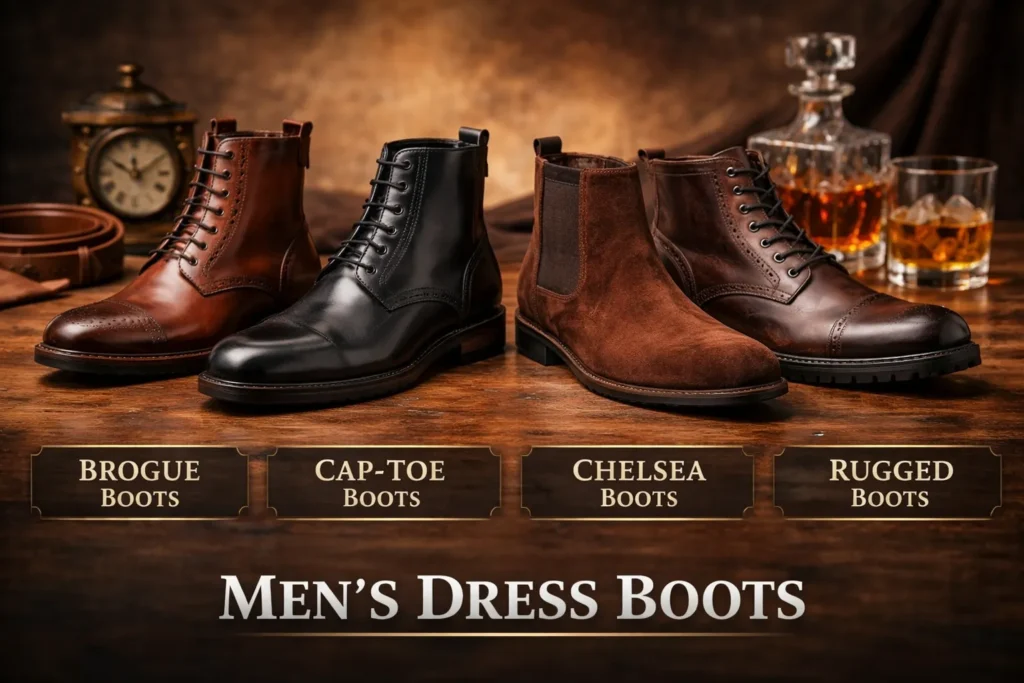
Introduction
Dress boots for men are not only boots, but they are also an epitome of sophisticated masculine elegance, architectural power, and traditional tastes in men’s boots. Be it formal events, sophisticated social gatherings, corporate meetings between corporate heads, or weekend wear.
Dress boots for men are not limited to the winter season and cold weather only. In the year 2026, dress boots have turned out to be a necessity for the modern man’s wardrobe and have been appreciated by professionals.
This guide will cover all the information you need to know regarding men’s dress boots, including their history, various kinds of leather used, construction methods, styles, fitting, styling, and maintenance. At the end of this guide, you will be able to acquire all the information you need to know regarding men’s dress boots.
What Are Men’s Dress Boot?
Definition of Men’s Dress Boots
Men’s dress boots are ankle-high leather boots that are designed with an eye for refined design, similar to that of dress shoes. They are defined by:
- Streamlined profiles
- Polished or smooth leather uppers
- Fine stitching and craftsmanship
- Minimal bulk or ruggedness
- Elegant proportions and balance
Other types of boots, such as work boots and hiking boots, which have been designed to be functional and rugged, dress boots, on the other hand, have been designed to be elegant, refined, and versatile.
Dress boots fall somewhere in between the scale of formality vis-à-vis other types of dress shoes and casual boots.
Brief History of Dress Boots
The history of dress boots can be traced back to the late eighteenth and early nineteenth centuries. During this period, men wore boots as part of their outfit. The boots provided men with protection, durability, and distinction.
Victorian Era Influence
Boots worn during the Victorian period were becoming refined. Gentlemen wore refined leather boots as part of their outfit. Early dress boots included:
- Tight-fitting contours of the ankles
- Polished leather finish
- Stitching design
- Button and lace closure
Boots symbolized status, discipline, and hierarchy.
20th Century Shift Toward Dress Shoes
In the early years of the twentieth century, conventional dress shoes like Oxfords and Derbies became fashionable in male formal wear. As people became more “indoor-oriented,” the rate of urbanization also accelerated, and low-cut shoes became the norm as opposed to boots
Formal boots never went out of fashion and remained common in:
- Cold climates
- Equestrian traditions
- Military ceremonial uniforms
- Formal winter wardrobes
Modern Revival of Dress Boots
In the twenty-first century, dress boots experienced a strong resurgence due to:
- Urban fashion evolution
- Slim tailoring aesthetics
- Smart-casual workplace culture
- Designer menswear influence
The dress boots of today have advanced comfort engineering, better finishing of leather, and a light sole design. They are more comfortable and flexible than their predecessors.
Dress Boots vs. Dress Shoes
The difference between dress boots and shoes helps you select the correct footwear for any given situation.
| Feature | Dress Boots | Dress Shoes |
| Height | Above ankle | Below ankle |
| Formality | Semi-formal to formal | Formal to ultra-formal |
| Weather Resistance | Higher | Lower |
| Ankle Support | Strong | None |
| Versatility | Office → Casual | Mostly formal |
| Seasonality | Year-round | Mostly indoor |
Key Distinctions Explained
Structure & Support
Dress boots cover the ankle area, providing stability and structural support. Dress shoes do not cover the ankle area.
Formality Level
Dress shoes are the most formal type of shoe for black-tie events. Dress boots fit in well with professional and business wear.
Weather Performance
Boots protect the feet from rain, wind, and cold more effectively without compromising style
Visual Presence
In addition, boots will give more definition to the legs when wearing trousers.
How to Choose the Best Dress Boots
In order to determine the best dress boots for men, it is important to consider the quality of leather, construction, shape, and fit.
Materials & Construction
Leather Types
Leather determines aesthetic appeal, longevity, and refinement level.
Full-Grain Leather
- Highest quality and resilience
- Develops natural patina with age
- Highly formal and prestigious
Calfskin Leather
- Smooth, supple texture
- Elegant luster
- Ideal for business and formal boots
Suede Leather
- Soft, velvety surface
- Slightly more relaxed aesthetic
- Perfect for smart-casual styling
Best Choice: Full-grain or calfskin for maximum sophistication.
Sole Types
The sole influences are reaction, comfort, and formality.
Leather Soles
- Traditional elegance
- Slim profile
- Ideal for formal interiors
Rubber / Dainite Soles
- Durable and weather-resistant
- Reliable traction
- Retains refined appearance
Avoid Lug Soles: Heavy lug soles appear rugged and casual, unsuitable for dress boots.
Construction Methods
Construction determines lifespan, comfort, and repairability.
Goodyear Welt Construction
- Exceptional durability
- Fully resolvable
- Premium craftsmanship
- Long-term investment
Blake Stitch Construction
- Sleeker silhouette
- Lightweight and flexible
- Common in Italian footwear
Pro Tip: Choose Goodyear welt for decades-long wear potential.
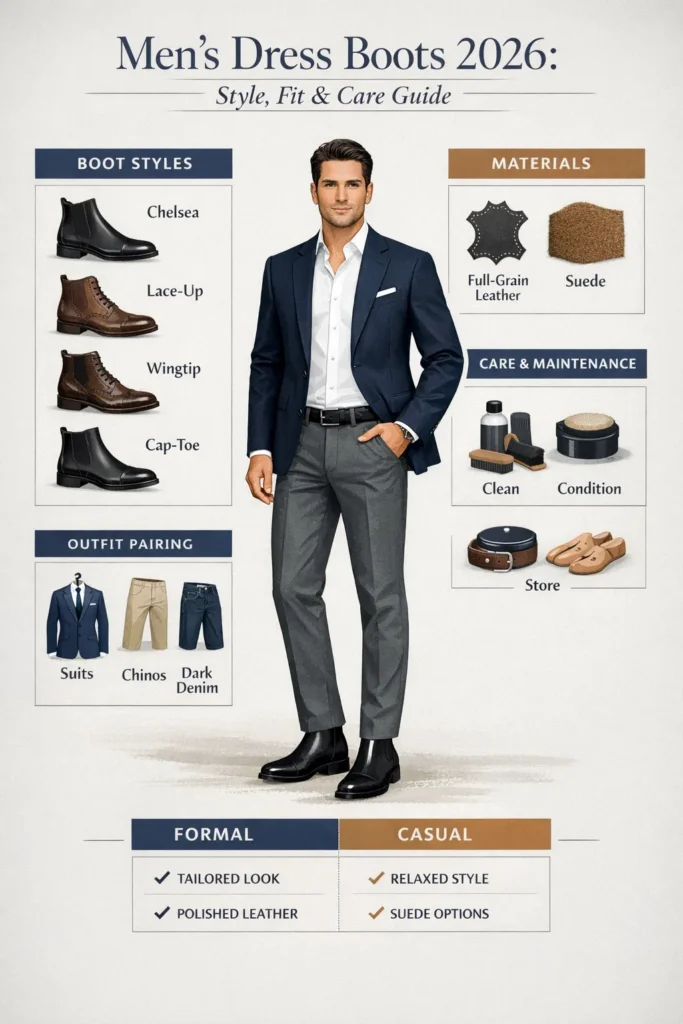
Dress Boot Styles & Silhouettes
It’s vital to know the basic styles of dress boots to mix them with other clothing on various occasions.
Chelsea Dress Boots
- Elastic side panels
- Slip-on convenience
- Minimalist elegance
- Highly adaptable
Best for: Suits, office wear, smart-casual attire
Lace-Up Dress Boots
- Traditional lacing
- Formal structure
- Includes plain-toe and cap-toe
Best for: Business and formal environments
Wingtip & Brogue Dress Boots
- Decorative perforations
- Heritage character
- Slightly relaxed formality
Best for: Business-casual styling
Cap-Toe Dress Boots
- Toe cap seam detail
- Structured aesthetic
- Professional authority
Best for: Suits and office attire
How to Wear Dress Boots — Complete Style Guide
Dress boots look good in formal, business, and casual settings. The following is a comprehensive framework.
Formal Office & Business Wear
Best pairings:
- Tailored suits
- Dress trousers
- Structured blazers
Styling principles:
- Choose black leather boots for formal business
- Maintain minimal design
- Avoid broguing
- Ensure trousers fall cleanly
Example outfit:
- Navy wool suit
- White dress shirt
- Black cap-toe dress boots
- Matching leather belt
Business Casual
Best pairings:
- Chinos
- Blazers
- Knitwear
Styling principles:
- Brown or tan leather boots work best
- Add structured layering
- Keep trousers tailored
Example outfit:
- Charcoal chinos
- Camel blazer
- Cream turtleneck
- Chocolate suede dress boots
Smart Casual & Weekend
Best pairings:
- Dark deni
- Casual trousers
- Sweaters
- Overshirts
Styling principles:
- Suede boots complement denim
- Add layered textures
- Maintain a lean silhouette
Example outfit:
- Slim dark denim
- Navy sweater
- Brown suede dress boots
Pro Tip: Always coordinate belt color with boot color family.
Dress Boots Maintenance & Care
Premium leather boots can last decades with proper care routines.
Daily Care
- Brush with a horsehair brush after wear
- Remove dust and debris
- Allow natural air drying
Conditioning
Apply leather conditioner regularly to:
- Prevent cracking
- Preserve suppleness
- Maintain sheen
Wet Weather Care
If boots become wet:
- Insert absorbent paper
- Air dry slowly
- Avoid heat sources
Storage Tips
- Use cedar shoe trees
- Store in a dry environment
- Avoid direct sunlight
Proper storage preserves shape and leather integrity.
Best Dress Boots for Every Style
| Category | Style Focus | Best Uses |
| Formal & Business | Chelsea / Cap-Toe Lace | Suits & Office |
| Modern Minimal | Sleek Leather Boots | Urban Professional |
| Casual Refined | Suede / Textured | Smart Casual |
| Weather-Ready | Dainite Sole | Rain & Cold |
Pros & Cons
Pros
- Extremely versatile
- Weather-resistant elegance
- Timeless wardrobe investment
- Adds height and presence
- Suitable year-round
Cons
- Less formal than Oxfords
- Premium pairs costly
- Some styles unare suitable for black-tie
FAQs
A: Yes. Chelsea and cap-toe dress boots look great with suits.
A: Yes. Use lighter leather for summer and suede or polished leather for other seasons.
A: Wear thin dress socks of the same color as your trousers. Avoid wearing athletic socks or thick socks
A: Wear them for short intervals and condition them to soften.
Conclusion
Men’s dress boots can be regarded as a classic investment in footwear that provides a perfect mix of elegance, durability, and flexibility. In the year 2026, these boots can be paired with formal as well as semi-formal wear such as suits and semi-formal wear such as casuals. Hence, these boots can be regarded as one of the most convenient and fashionable wears for men in today’s world. It is highly recommended that one learn the basics of leather quality, Construction, styles, fit, and care to ensure that they purchase dress boots that not only ensure comfort but also enhance the aesthetic value.
