
Introduction
A Princess Wedding Dress is far more than a simple garment—it is a lifelong fantasy brought to life. It symbolizes grace, sophistication, charm, and a once-in-a-lifetime magical experience that many brides envision from an early age. Inspired by fairy tales, royal ceremonies, and iconic bridal moments, this silhouette continues to represent luxury, romance, and timeless elegance.
Even in 2026, the princess-style wedding gown remains among the most searched, admired, and desired bridal looks worldwide. Brides are drawn to its dramatic presence, regal aesthetic, and unforgettable visual impact. The combination of a fitted bodice and a voluminous skirt creates a striking silhouette that enhances femininity while delivering a truly majestic appearance.
However, selecting the perfect dress is not solely about aesthetics or visual appeal. It requires thoughtful consideration of comfort, textile quality, climate conditions, body proportions, and venue suitability. A well-chosen gown should not only look stunning but also feel comfortable and align with your wedding theme.
What Is a Princess Wedding Dress?
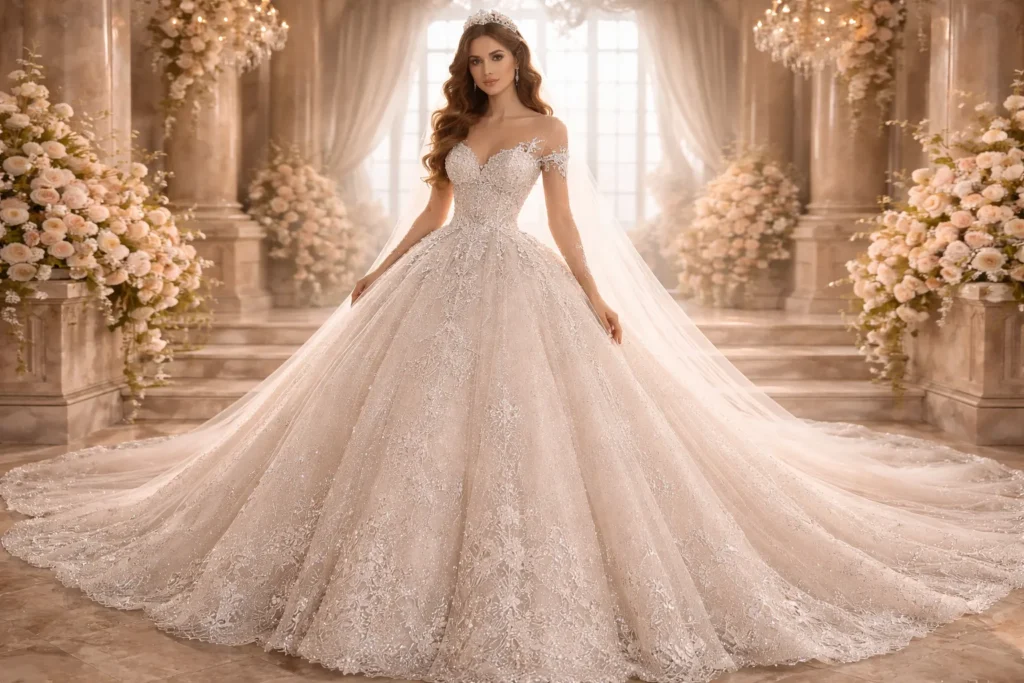
A Princess Wedding Dress, often referred to as a ball gown, is characterized by its dramatic and regal silhouette. It is designed to create a striking visual effect that resembles royal attire.
Key Features:
- A structured, well-fitted bodice
- A clearly defined waistline
- A wide, voluminous skirt
- Multiple layers of tulle, satin, or organza
- Often paired with extended trains or flowing veils
This style emphasizes the waist while allowing the skirt to expand outward, creating a flattering and enchanting shape that enhances movement and presence.
Princess vs A-Line Dress
| Feature | Princess Dress | A-Line Dress |
| Volume | High | Moderate |
| Drama | Maximum impact | Subtle elegance |
| Structure | Firm bodice | Soft structure |
| Best For | Grand ceremonies | Minimal weddings |
Simple Explanation:
If you desire a fairytale-inspired, luxurious bridal look, choose a princess gown.
If you prefer something more understated and refined, an A-line dress may be a better fit.
History & Origin of Princess Wedding Dresses
The princess’s wedding dress has its origins deeply rooted in European aristocracy and royal traditions.
Key Historical Milestones:
- 19th Century: White wedding dresses gained popularity after Queen Victoria’s wedding
- Royal Influence: Elaborate gowns became standard in royal courts
- 1980s Era: Princess Diana popularized the voluminous bridal gown globally
- Modern Era: Designers introduced lighter fabrics and improved wearability
Today, the princess gown is a harmonious blend of classical heritage and contemporary innovation, offering both grandeur and comfort.
Fabrics Used in Princess Wedding Dresses
The fabric plays a crucial role in determining the overall appearance, comfort level, and movement of the gown.
Fabric Comparison Table
| Fabric | Best For | Advantages | Limitations |
| Tulle | Volume & drama | Lightweight, airy texture | Delicate and prone to tearing |
| Satin | Luxurious look | Smooth, glossy finish | Slightly heavier |
| Organza | Summer weddings | Breathable and crisp | Less structured |
| Silk | Premium gowns | Soft and luxurious | Expensive |
| Lace | Romantic style | Intricate detailing | Requires layering |
Expert Tip:
Choosing premium-quality fabric enhances both comfort and visual appeal, making your gown appear more refined and elegant.
Types of Princess Wedding Dresses
Not all princess dresses are identical. Various styles cater to different preferences and wedding themes.
Ball Gown Princess Dress
- Maximum volume and fullness
- Traditional royal aesthetic
- Ideal for luxurious weddings
Perfect for brides seeking a grand entrance.
Modern Minimalist Princess Dress
- Clean lines with a satin finish
- Subtle and refined design
- Minimal embellishments
Ideal for modern brides who appreciate simplicity with elegance.
Lace Princess Dress
- Romantic and delicate appearance
- Intricate lace detailing
- Vintage-inspired charm
Perfect for classic or traditional weddings.
Lightweight Princess Dress
- Reduced layering
- Breathable construction
- Easy mobility
Best suited for warm-weather weddings.
Corset-Style Princess Dress
- Structured bodice design
- Enhances body shape
- Creates defined curves
Ideal for brides seeking a sculpted silhouette.
Where Princess Wedding Dresses Are Popular
The popularity of princess wedding dresses spans across various cultures and regions.
Global Appeal:
- Europe: Classic and royal-inspired ceremonies
- United States: Celebrity-influenced trends
- Middle East: Luxurious and heavily embellished gowns
- South Asia: Fusion styles incorporating lehenga elements
Trend in Pakistan:
Brides often blend traditional lehenga designs with princess gown structures, creating a unique and opulent bridal look.
Occasions to Wear a Princess Wedding Dress
This style is not suitable for every type of wedding setting.
Ideal Occasions:
- Church ceremonies
- Ballroom receptions
- Palace or luxury venues
- Winter weddings
Not Ideal For:
- Beach weddings
- Small outdoor gatherings
- Minimalist ceremonies
Golden Rule: A grand dress requires a grand venue.
Princess Wedding Dress Trends 2026
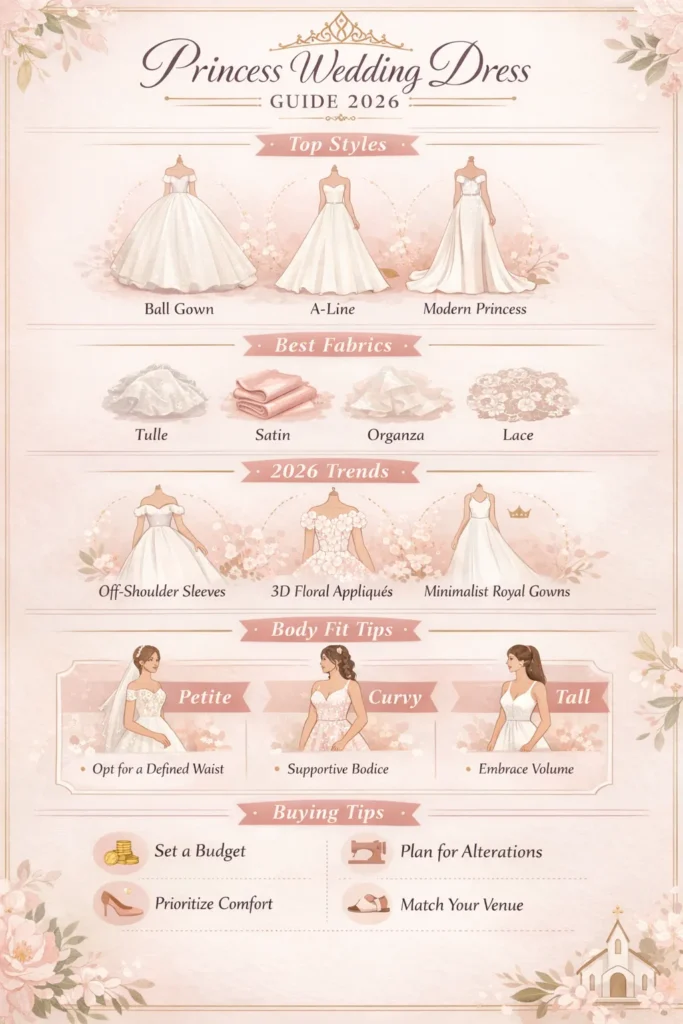
Fashion evolves continuously, and 2026 introduces innovative updates to this timeless style.
Top Trends:
- Off-shoulder royal sleeves
- Corset-inspired bodices
- Minimalist satin gowns
- Detachable overskirts
- Crystal embellishments
- 3D floral lace patterns
Trend Insight:
Modern brides are prioritizing comfort alongside style, leading designers to create lighter, more wearable gowns without compromising elegance.
How to Style a Princess Wedding Dress
Styling plays a crucial role in completing your bridal appearance.
Accessories
- Tiara or crown
- Statement earrings
- Long veil (cathedral or chapel)
Footwear
- Hidden heels
- Comfortable flats for later use
Makeup
- Soft glam finish
- Natural tones
- Radiant skin
Hairstyle
- Classic bun
- Loose waves
- Braided crown
Maintain balance and avoid excessive accessories.
How to Choose Based on Body Type
Different body types require different styling approaches.
Petite Brides
- Opt for lightweight fabrics
- Avoid excessive volume
- Choose subtle designs
Curvy Brides
- Select structured bodices
- Emphasize waistline
- Consider corset styles
Tall Brides
- Embrace dramatic skirts
- Experiment with long trains
Golden Rule: Achieve balance between body proportions and dress volume.
Care & Washing Guide
Princess dresses require careful handling due to their delicate construction.
Cleaning Tips
- Dry clean only
- Avoid machine washing
- Handle gently
Storage Tips
- Store in breathable garment bags
- Keep in a cool, dry place
- Avoid plastic covers
Buying Guide
Purchasing a wedding dress is a significant investment and decision.
Step-by-Step Buying Tips:
- Set a realistic budget
- Choose fabric based on the climate
- Prioritize fit over design
- Try multiple styles
- Inspect stitching quality
- Allow time for alterations
Budget Guide
| Budget Range | What You Get |
| $200–$500 | Basic gowns |
| $500–$1500 | Good quality dresses |
| $1500–$5000+ | Designer gowns |
Pros & Cons of Princess Wedding Dresses
Pros:
- Timeless and elegant
- Suitable for most body types
- Creates a regal appearance
- Ideal for grand weddings
Cons:
- Can be heavy
- Not suitable for small venues
- Often expensive
- May restrict movement
FAQs
A: Yes, they look good on most body types when fitted properly.
A: No, it is too heavy for beach settings.
A: Organza and lightweight tulle.
A: They come in all price ranges, from affordable to luxury
Conclusion
A princess wedding dress isn’t just a style—it’s a statement of elegance, romance, and timeless beauty. From voluminous ball gowns to modern minimalist Interpretations, this iconic silhouette continues to evolve while staying true to its regal roots.
The key to choosing the perfect dress lies in balance: understanding your body shape, selecting the right fabric for your venue and season, and aligning the design with your personal style. Whether you’re inspired by royal weddings, fashion, or modern bridal trends, your dress should ultimately reflect you.
As 2026 trends show, personalization, comfort, and versatility are becoming just as important as visual impact. Brides today are not only looking for that “wow” moment, but also practicality, confidence, and a dress that tells their unique story.
