
Introduction
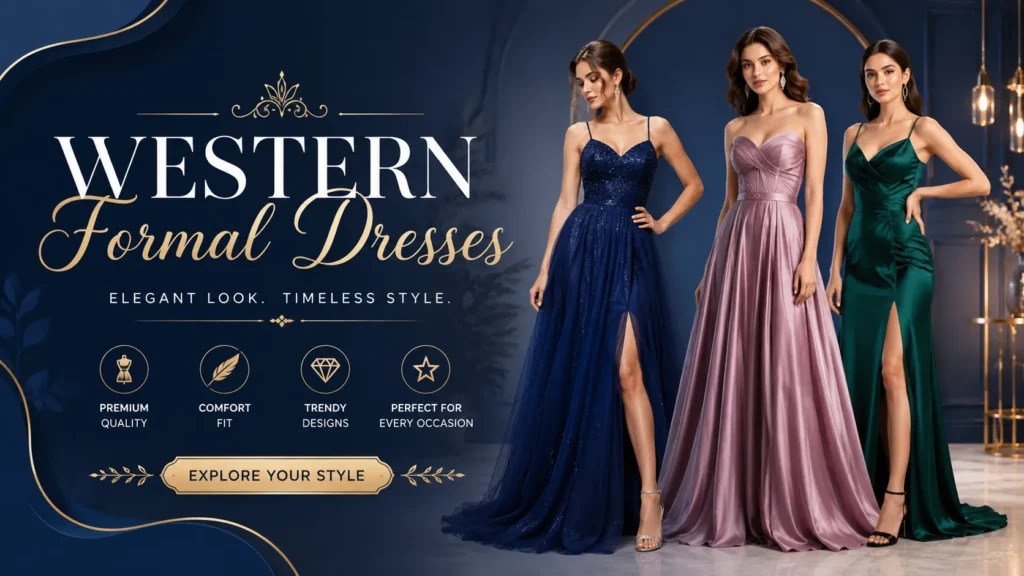
Western formal dresses are far more than mere garments—they represent refinement, poise, and contemporary sophistication. Whether you choose a luxurious evening gown or a tailored cocktail dress, these ensembles allow you to present yourself with grace while projecting self-assurance and charm.
In the modern fashion landscape, wearing a formal dress extends beyond aesthetics. It reflects individuality, communicates personal taste, and demonstrates an understanding of occasion-appropriate attire. Every detail—from fabric selection to silhouette—contributes to an overall impression that speaks volumes without words.
From lavish wedding celebrations and executive business gatherings to high-profile gala evenings and stylish social parties, mastering the art of Western Formal wear enables you to stand out effortlessly. It equips you with the confidence to navigate diverse settings while maintaining a polished appearance.
What Are Western Formal Dresses?
Western formal dresses are meticulously designed outfits intended for formal or semi-formal environments. These garments emphasize structure, precision, and elegance while maintaining a balance between simplicity and sophistication.
Core Characteristics
- Tailored and refined constructions
- Crafted from premium-quality textiles such as satin, silk, and velvet
- Minimal yet striking embellishments
- Designed to complement and enhance body contours
- Focus on understated elegance rather than excessive ornamentation
Common Categories
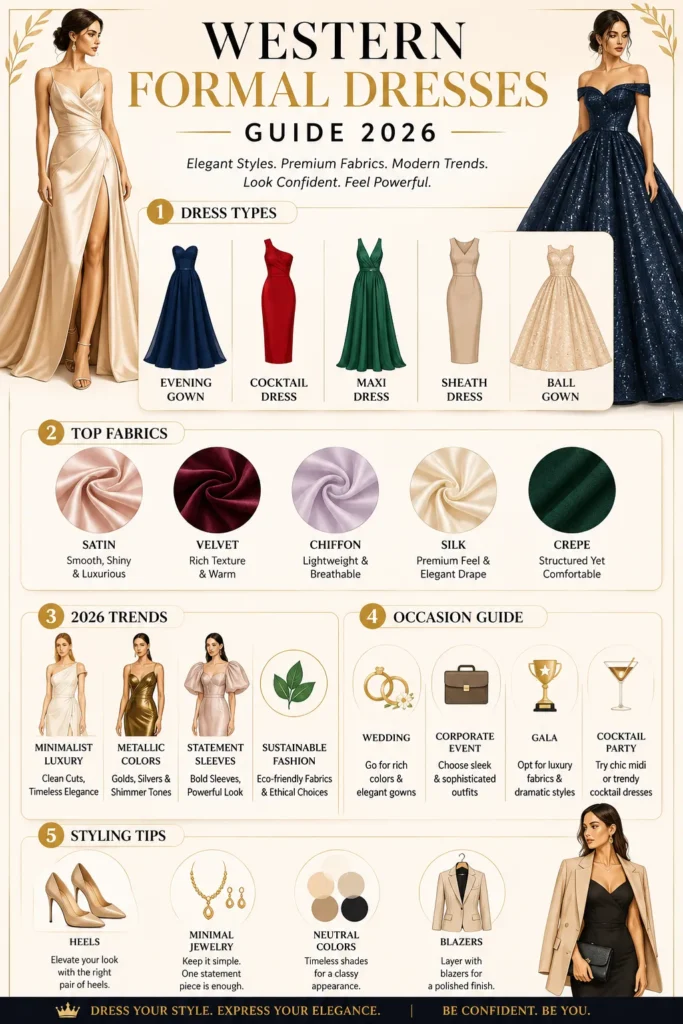
- Evening gowns
- Cocktail dresses
- Maxi and midi dresses
- Sheath dresses
- Structured jumpsuits
These outfits are created to deliver a sense of composure, confidence, and timeless style, ensuring you appear graceful in any formal setting.
History & Origin of Western Formal Dresses
The evolution of Western formal dresses can be traced back to the European aristocracy during the 18th and 19th centuries. At that time, attire symbolized prestige, hierarchy, and affluence. Clothing was not merely functional—it was a visual representation of societal rank.
Evolution Timeline
1800s
Formal wear consisted of heavy textiles, corseted bodices, and elaborate layers. These garments emphasized grandeur and intricate detailing, often at the expense of comfort.
1920s
The emergence of flapper dresses revolutionized fashion. Women embraced freedom of movement, lighter fabrics, and more relaxed silhouettes, reflecting social change and modernity.
1950s
This era celebrated femininity with cinched waists, voluminous skirts, and elegant proportions. Dresses became more structured yet visually balanced.
1980s
Power dressing dominated, characterized by bold silhouettes, dramatic shoulders, and statement-making designs. Fashion became a tool for expressing authority and ambition.
2020s to 2026
Modern formal wear prioritizes minimalism, sustainability, and innovation. Clean lines, Eco-Conscious materials, and versatile designs define contemporary fashion.
Western formal dresses merge traditional elegance with modern practicality, offering both comfort and sophistication.
Fabric Types & Materials Used
The choice of fabric significantly influences the appearance, texture, and overall impact of a dress. Selecting the right material can elevate even the simplest design into something extraordinary.
Popular Fabrics Overview
Satin
Ideal for evening events, satin offers a glossy finish and a smooth texture that exudes luxury.
Velvet
Perfect for winter occasions, velvet provides warmth and a rich, opulent feel.
Chiffon
Lightweight and breathable, chiffon is suitable for summer events and flowing silhouettes.
Crepe
Known for its subtle texture, crepe offers structure while maintaining comfort.
Silk
A premium fabric with a natural sheen, silk delivers unmatched elegance and fluidity.
Organza
A sheer and crisp material, organza is often used for layered gowns and dramatic effects.
Expert Insight
High-quality textiles can dramatically enhance the perceived value of a dress. Investing in superior fabric ensures durability, comfort, and a sophisticated finish.
Styles & Variations of Western Formal Dresses
Western formal dresses come in a wide range of styles, each designed to suit different occasions, preferences, and body types.
1. Evening Gowns
These full-length dresses are synonymous with elegance. They are commonly worn at weddings, gala events, and formal receptions. Crafted from Luxurious materials, they often feature intricate detailing and graceful silhouettes.
2. Cocktail Dresses
Typically knee-length or midi, cocktail dresses are versatile and stylish. They are ideal for semi-formal gatherings, evening parties, and social events.
3. Maxi Dresses
Maxi dresses offer a relaxed yet refined appearance. Their flowing design makes them suitable for outdoor events and warm-weather occasions.
4. Sheath Dresses
These slim-fitting dresses are perfect for professional settings. Their clean lines and structured design create a polished and sophisticated look.
5. Ball Gowns
Ball gowns are dramatic and voluminous, designed for grand occasions. They feature fitted bodices and expansive skirts, creating a regal presence.
Each style provides a unique way to express individuality while maintaining elegance.
Occasions Where Western Formal Dresses Are Worn
Western formal dresses are versatile and suitable for numerous events.
Common Occasions
- Weddings
- Corporate functions
- Gala dinners
- Cocktail parties
- Award ceremonies
Occasion-Based Recommendations
- Weddings: Evening gowns in deep tones like burgundy or navy
- Corporate Events: Sheath dresses in neutral shades such as black or grey
- Cocktail Parties: Midi dresses in soft pastels or metallic hues
- Galas: Ball gowns in luxurious shades like gold or emerald
Selecting the appropriate outfit ensures you appear both stylish and respectful of the event’s tone.
Countries & Cultures Where It Is Popular
Western formal dresses have gained global popularity and are embraced across various cultures.
Regions
- Europe: Known for classic, minimalist designs
- USA & Canada: Trend-driven and diverse fashion choices
- Middle East: Emphasis on luxurious fabrics and elaborate detailing
- South Asia: Fusion of Western silhouettes with traditional elements
Globalization has made Western formal wear adaptable, allowing individuals to incorporate cultural influences into modern designs.
Latest Trends in Western Formal Dresses (2026)
Fashion in 2026 emphasizes simplicity, innovation, and sustainability.
Top Trends
- Minimalist luxury aesthetics
- Metallic tones such as gold and silver
- Statement sleeves and unique cuts
- Eco-friendly and sustainable materials
- Monochrome ensembles
Emerging Insight
Consumers are increasingly prioritizing ethical fashion. Sustainable practices and environmentally responsible materials are becoming essential considerations in purchasing decisions.
How to Style Western Formal Dresses
Styling plays a crucial role in enhancing your overall look.
Footwear
- Heels create a timeless and elegant appearance
- Boots add a contemporary edge
Accessories
- Keep jewelry subtle and refined
- Choose a single statement piece for impact
Color Coordination
- Neutral tones for formal settings
- Bold shades for evening events
Layering
- Blazers for professional environments
- Shawls or wraps for colder weather
Thoughtful styling can transform a simple outfit into a striking ensemble.
How to Choose the Right Dress for Your Body Type
Understanding your body shape helps you select the most flattering design.
Body Type Guide
- Hourglass: Fitted or mermaid silhouettes
- Pear Shape: A-line dresses
- Apple Shape: Empire waist designs
- Petite: Midi or shorter dresses
- Tall: Maxi and column gowns
Choosing the right fit enhances comfort and confidence.
Care Tips & Washing Guide
Proper maintenance ensures longevity and preserves quality.
Care Tips
- Follow label instructions carefully
- Dry clean delicate fabrics
- Store garments in breathable covers
- Avoid prolonged exposure to sunlight
Fabric Care Overview
- Satin: Dry clean and hang properly
- Velvet: Avoid folding; dry clean only
- Chiffon: Hand-wash gently
- Crepe: Use gentle machine cycles
Maintaining your dress properly keeps it looking pristine and elegant.
Buying Guide
Making the right purchase requires thoughtful consideration.
Key Factors
- Fabric quality and durability
- Proper fit and tailoring
- Brand reliability
- Customer feedback
- Suitability for the occasion
Expert Advice
- Invest in timeless pieces
- Avoid overly trendy designs
- Prioritize comfort alongside elegance
Pros & Cons of Western Formal Dresses
Advantages
- Elegant and versatile
- Suitable for various occasions
- Wide range of styles
- Enhances confidence
Disadvantages
- Can be costly
- Requires careful maintenance
- May feel restrictive over time
- Trends evolve quickly
Common Mistakes to Avoid
- Over-Accessorizing
- Choosing poor-quality fabrics
- Ignoring body shape
- Pairing with inappropriate footwear
Avoiding these errors ensures a polished and sophisticated appearance.
FAQs About Western Formal Dresses
A: Western formal dress is an elegant outfit designed for formal occasions, such as gowns, cocktail dresses, or tailored suits.
A: Yes, you can wear evening gowns or midi dresses, depending on the dress code.
A: Black, navy, burgundy, and emerald are timeless and popular choices.
A: Yes, if they are made from high-quality fabrics like satin or chiffon.
Conclusion
Western formal dresses represent far more than fashion—they embody sophistication, identity, and self-expression. Whether you opt for a dramatic gown or a refined cocktail dress, the right choice can elevate your entire presence.
By understanding materials, silhouettes, and evolving trends, you can make informed decisions that align with your personal style. In 2026, fashion continues to move toward simplicity, Sustainability, and individuality—making it easier than ever to look elegant while staying true to yourself.
