
Introduction
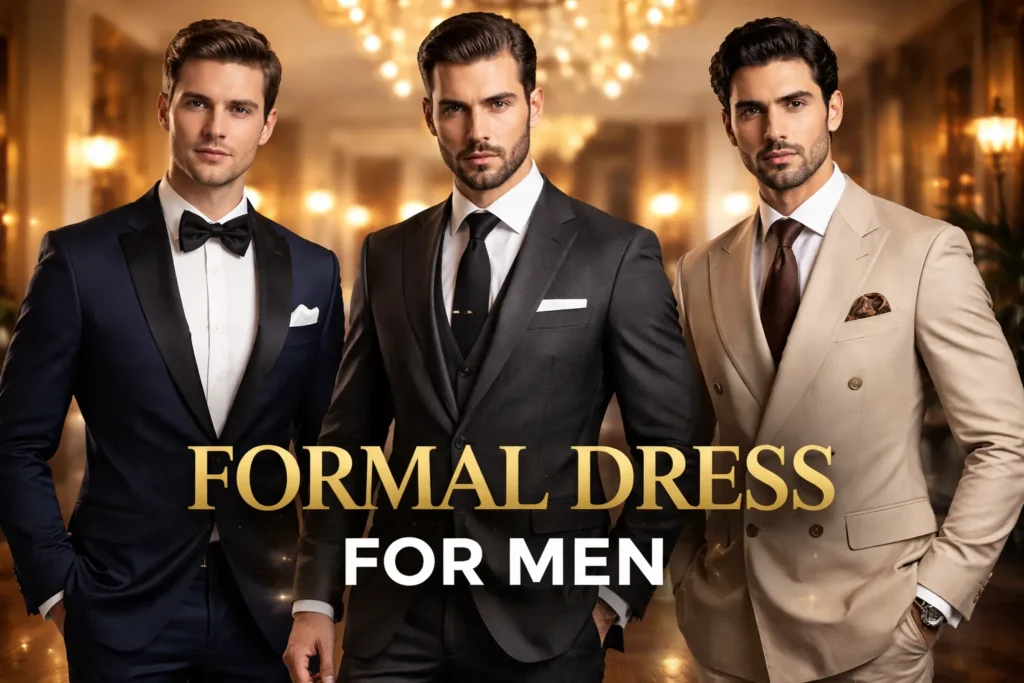
A suit, buttoning a shirt, and tying a tie have never defined formal wear for men. Formal wear is an embodiment of discipline, self-respect, confidence, and class. In today’s modern world, where casual wear has become the norm in workplaces, gatherings, and even ceremonies, Formal Wear remains a symbol of power, class, and professionalism.
When a man decides to wear formal wear, he sends out a host of non-verbal messages:
- He understands the importance of the occasion
- He respects social and professional standards
- He values grooming, structure, and presentation
- He takes pride in his appearance
Whether it is a wedding, business meeting, black-tie function, formal ceremony, dinner, or executive presentation, formal clothing has the ability to alter perception in an instant. People will notice a well-dressed man. More importantly, he will feel the difference himself.
A well-fitted formal attire enhances one’s posture, body proportions, and confidence. Factors such as the quality of fabric used, the cut of the suit, the polish of the shoes, and the coordination of accessories all contribute to this. Even the slightest error, such as an improperly fitted jacket or shoes that do not match, can detract from the otherwise perfect look.
This all-encompassing pillar guide on formal wear for men is presented from the point of view of an expert in the fashion and leather industry
This guide is intended for:
- Those who are new to formal wear basics
- Want to upgrade their wardrobe
At the end of this guide, you will know everything there is to know about formal dress codes, history, materials, fashion tips, events, contemporary trends, care, and shopping tips.
What Is Formal Dress for Men?
Formal wear for men is a structured, refined, and polished type of clothing that is worn on formal occasions that require elegance, seriousness, and sophistication. Casual or smart casual clothing, formal wear has rules and regulations when it comes to fit, fabric, colour, and accessories.
Key Characteristics of Formal Dress
Formal clothes always include:
- Tailored and structured silhouettes
- Premium, high-grade materials
- Neutral, classic, or subdued colours
- Minimal yet tasteful accessories
- Polished leather footwear
When you are dressing up, it is all about not doing too much. Formal dress should look easy to do. You should look calm and serious, not flashy or trying to get people to notice you.
History & Origin of Men’s Formal Wear
The history of formal wear helps us understand why some of these rules are still in place and why people are still so concerned with doing it the right way when it comes to formal wear.
18th Century: Aristocratic Roots
Men’s formal wear began in the courts of Europe, where the clothes that you wore indicated how important you were and how much money you had. The rich people wore:
- Long frock coats
- Knee-length breeches
- Decorative waistcoats
- Elaborate cravats
These clothes were meant to show status, not comfort.
19th Century: Birth of the Suit
. During the Industrial Revolution, society shifted towards practicality and efficiency. Clothing followed suit—literally.
- The lounge suit emerged in Britain
- Tailored jackets and trousers replaced ornate garments
- Formal daytime wear became accessible beyond nobility
This period marked the birth of the modern suit.
Early 20th Century: Tuxedos & Dinner Jackets
As social events became more structured, evening wear required higher elegance.
- The tux (dinner jacket) gained popularity
- Reserved for night and ceremonial movement
- Introduced the satin company and bow ties
Modern Era: Refined and Versatile
Today’s formalwear blends:
- Classic craftsmanship
- New tailoring
- Upgrade fabric technology
- Global fashion element
As social events became more structured, evening wear required higher charm.
Understanding Formal Dress Codes
Formal events vary in level of grace, which is why dress codes happen.
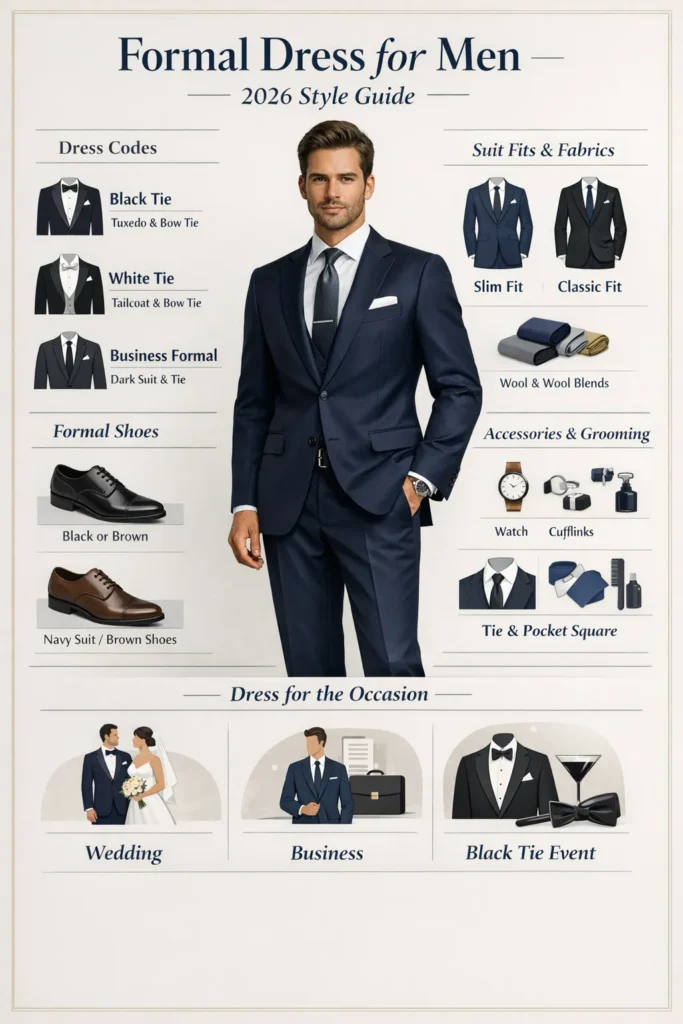
White Tie – The Highest Level of procedure
White tie is the most formal dress code in the world and is very rare.
Occasions
- Royal feast
- State dinners
- Diplomatic ceremonies
- Formal balls
What to Wear
- Black tailcoat
- White waistcoat
- White bow tie
- White formal shirt
Black Tie – Classic Evening Formal
Black tie is the most recognised formal dress code worldwide.
Occasions
- Joyful dinners
- Award show
- Evening marriage
- Charity events
What to Wear
- Black or night blue Tuxedo
- White dress shirt
- Black bow tie
- Patent or polished leather shoes
Black Tie Optional
This dress clipper offers flexibility while maintaining grace.
Business Formal
Business formal manages professional and corporate climate.
Occasions
- Executive meetings
- Corporate offices
- Business presentations
- Client negotiations
What to Wear
- Navy, sunless, or grey suit
- Proper dress shirt
- Conservative tie
- Leather dress shoes
Key Components of Formal Dress for Men
Formalwear is built around essential apparel elements.
Suits & Tuxedos
The suit or tux forms the foundation of formal garb.
Important Points
- Tailoring is essential
- Off-the-rack garments require modification
Popular Fabrics
- Wool blends
- Silk desgin (tux)
Dress Shirts
A formal shirt should be:
- Fresh and clean
- Well fitted
- Structured at the choker
Best Colors
- White
- Light blue
- Pale grey
Neckwear & Accessories
Accessories refine and raise the outfit.
Essential Accessories
- Ties or bend ties
- Pocket squares
- Cufflinks
- Leather belts
Formal Shoes
Shoes complete the formal look.
Best Formal Shoe Options
- Oxford shoes
- Derby shoes
- Patent leather shoes (black tie)
Pure leather is essential for grit and polish.
Formal Dress for Men by Occasion
For Weddings
- Evening marriage→ Dark suits or tux
- Day weddings → Grey or navy dresser
Formal Dress for Business Events
- Conservative tones
- Minimal accessories
- Clean, shining shoes
Professional appearance is demanding.
Formal Dress for Galas & Black-Tie Events
- Tuxedo
- Bow tie
- Patent leather sneaker
Classic elegance always proves.
Styles & Variations in Formal Wear
Formalwear offers multiple shades.
Single-Breasted Suits
- Most skilled
- Suitable for all body brands
Countries & Cultures Where Formal Wear Is Popular
Formal dressing ranges globally.
- United Kingdom – Traditional tailoring
- Italy – Fashion-forward elegance
- France – Minimalist sophistication
- Germany – Structured Professionalism
- Middle East – Luxury addition and fine fabrics
Latest Trends & Modern Updates in Formal Dress for Men
Modern formalwear focuses on comfort and power.
Current Trends
- Stretch wool fabrics
- Streamlined silhouettes
- Viable materials
- Custom tailoring
How to Style a Formal Dress for Men
Choosing the Right Shoes
- Black shoes → Black, grey suits
- Brown shoes → Navy, grey suits
Accessories Styling
- Fewer is more
- Avert flashy or oversized pieces
Colour Coordination Tips
- Slab to neutral palettes
- Avoid loud contrasts
Care Tips & Maintenance Guide
Proper care extends garment lifespan.
- Dry clean sparingly
- Use wooden hangers
- Polish leather shoes regularly
- Store suits in garment bags
Buying Guide: How to Choose the Best Formal Wear
| Feature | What to Look For |
| Fabric | 100% wool or premium blends |
| Fit | Tailored or adjustable |
| Shoes | Genuine leather soles |
| Stitching | Clean and durable |
Quality always outweighs quantity.
Pros & Cons of Formal Dress for Men
Pros
- Timeless elegance
- Boosts confidence
- Enhances professionalism
Cons
- Higher cost
- Requires maintenance
FAQs – Formal Dress for Men
Q1:Is formal wear only for special events?
A: Business formal attire is worn daily in many professional environments.
Q2:Can brown shoes be worn with a formal dress?
A: Yes. Brown shoes complement navy and grey suits wonderfully.
Q3:Are leather accessories important?
A: Leather shoes and belts complete a refined look.
Conclusion
A man’s formal wear is a deliberate business. A man is wearing a strong, proper suit or a tux; he looks amazing. Shoes should be made of leather and should be shining, and the accessories that he wears with his suit should also be of high condition. All these factors come together to make a man look like he is in Authority. A man’s formal wear is a symbol of confidence and control, and it is always in style. A man who is dressed in formal wear, such as a suit or a tuxedo, with his leather shoes polished and his accessories refined, is a man who commands respect.
