
Indrouction
Long ago, Medieval Wedding dresses weren’t just old-fashioned outfits – they revealed how people lived, ranked each other, and showed beauty. Step by step, this look travels back through time, exploring where these gowns began, what they were made of, their shapes, hidden messages, local twists, plus today’s echoes. Brides might find ideas here. So could scholars, designers, or anyone curious about how love dressed centuries past.
Picture walking down a stone aisle in a full tapestry gown – this happens when old-world vows meet today’s curiosity. Perhaps you’re weaving fresh patterns from ancient yarns, perhaps only listening to how silk murmured across stone halls long ago. Still, what comes next clings near, much like a tailor bending close to fix a fold right before the march starts.
What Are Medieval Wedding Dresses?
A gown from centuries past draped the shoulders of brides back when kingdoms rose and fell across Europe, roughly from 500 to 1500. Far from modern white, those clothes came alive with hues, fine patterns, meanings tucked inside every seam.
One day long ago, a bride would simply wear the fanciest thing she already owned, not a dress stitched only for marriage. Her clothing might whisper about her family’s wealth, hint at rank in town, and sometimes carry old symbols passed down through the years. Clothes spoke without words, really – quiet messages woven into fabric by habit, faith, or custom.
Even today, old gowns spark ideas for new designs – heavy fabrics take center stage, yet fine details draw the eye. Tradition holds on tight, refusing to let go.
A Historical Overview of Medieval Wedding Dresses
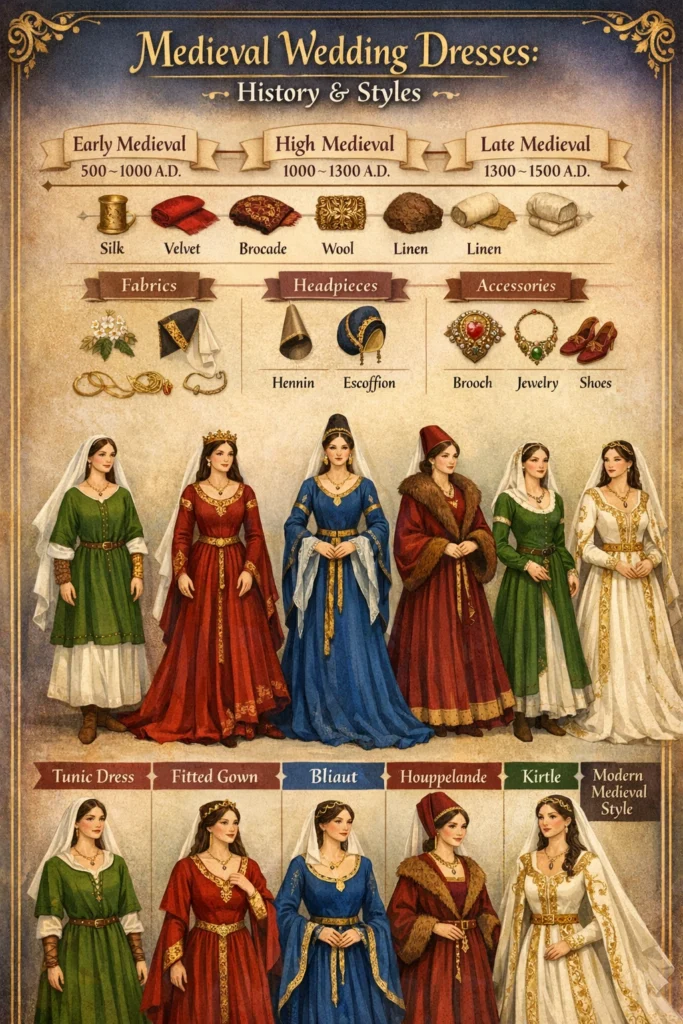
Early Medieval Period (500–1000 A.D.)
Built for use, not show, garments in the early Middle Ages focused on function. Tunics, cloaks, and belts made up daily wear, while weddings saw little change – outfits stayed plain, shaped by need rather than ceremony.
Key characteristics:
- Simple forms and drapery
- Predominantly wool and linen textiles
- Functional belts and fasteners
- Brooches serve both utility and decoration
High Medieval Era (1000–1300 A.D.)
Fashion began shaping itself more tightly during the High Middle Ages, leaning into fitted styles one layer at a time. Brides of means wore gowns built with sturdier frames, their choices stitched from opulent materials like silk or deep-piled velvet.
Key characteristics:
- Layered gowns with fitted bodices
- Long, narrow sleeves for elegance
- Fancy extras showed up more often among brides with bigger bank accounts
- Weddings inside churches started following stricter routines
Late Medieval Renaissance (1300–1500 A.D.)
Fashion grew more detailed in the Late Medieval Renaissance, featuring bold shapes alongside clever stitching techniques. Artistic expression and status showed clearly through the wedding gowns of that era.
Key characteristics:
- Structured, voluminous silhouettes
- Flowing trains and ornate embroidery
- Distinct regional variations and styles
Why Medieval Wedding Dresses Continue to Inspire Today
A glimpse into old ceremonies reveals how today’s brides borrow from the past. Cloaked in rich fabrics, these gowns shaped modern tastes without trying. Back then, symbolism stitched every seam – now that depth quietly lingers. Their weight, their drape, even their restrictions echo forward
Reasons for their enduring appeal:
- Infuse romance and fantasy into modern weddings
- Showcase rich fabrics and intricate embroidery
- Offer unique alternatives to conventional wedding dresses
- Connect brides and designers to history, artistry, and symbolism
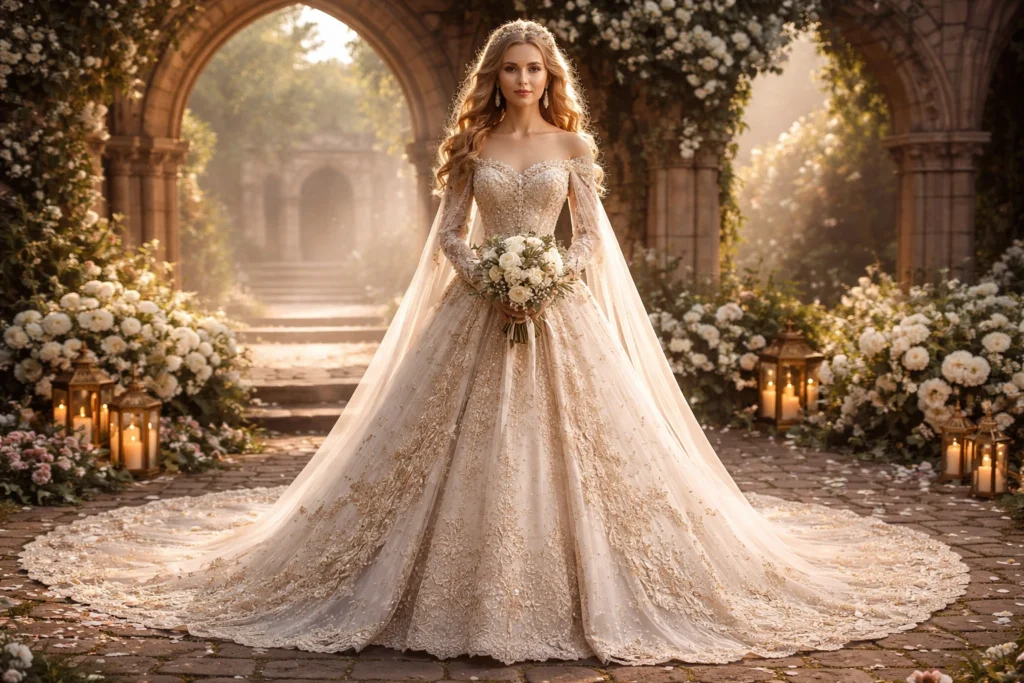
Floating sleeves drift into view, then stitched fronts appear, woven deep with thread. Luxurious velvet follows, rich under light. Capes drape like crowns, slow and stately. These details rise from old times, shaped long ago.
Fabrics & Materials in Medieval Wedding Dresses
Silk whispered luxury across castle halls, where linen spoke of modest labor in village homes. From Flanders to Sicily, thread by thread, cloth told who held power – wool dyed deep red marked nobles apart. A merchant’s velvet sleeve could say more than his speech ever did.
| Fabric / Material | Symbolism | Who Wore It |
| Silk | Luxury, nobility | Royals & aristocrats |
| Velvet | Opulence, elegance | Upper-class brides |
| Brocade | Ornate wealth | Affluent families |
| Wool | Practicality | Middle-class brides |
| Linen | Comfort, coolness | Undergarments & lining |
| Fur trim | Prestige, warmth | Northern Europe |
Silk & Brocade — Extravagance and Prestige
Back then in medieval Europe, silk showed up only now and then – mostly worn by those at the top. Woven together with threads of gold or silver, it carried emblems tied to faith or bloodlines. Power wore this fabric. So did taste.
Filigree threads rose from the fabric, forming scenes that meant something – symbols stitched by hand. What mattered showed through: rank, tale, identity. Not just cloth, but meaning woven deep.
Velvet — Depth and Luxury Medieval Wedding Dresses
A deep nap, along with that quiet glow, gave velvet its place among grand wedding gowns. Winter ceremonies favored the fabric – its weight and warmth stood out without trying. Wealth showed up quietly through touch rather than words. Sophistication settled into every fold.
Wool & Linen — Accessibility and Functionality
Folks in the middle class often picked wool or linen when they married – simple choices that worked well. These fabrics stayed common because they held up day after day.
- Wool: Fresh from sheep, wool holds heat well. Tough enough to handle everyday use, it keeps its shape over time.
- Linen: breathable, comfortable, and ideal for underlayers
Color Significance in Medieval Wedding Attire
White wasn’t worn by brides back then. Instead, colors spoke louder – each shade carried a message of its own
- Red: Courage, vitality, prosperity
- Blue: Loyalty, social standing (costly dye)
- Green: Fertility, renewal
- Gold: Affluence, divine favor
- Jewel tones: Authority and influence
Iconic Medieval Wedding Dress Silhouettes
Through time, wedding gowns changed shape, shaped by new customs plus better sewing methods.
Early Medieval Gowns
Silhouette: Loose, layered garments
Fabrics: Wool, linen
Decoration: Minimal, functional
High Medieval Dress Styles: Medieval Wedding Dresses
Dresses grew more structured in the High Middle Ages:
- Fitted bodices emphasizing the waist
- Long, narrow sleeves for elegance
- Flowing skirts with subtle ornamentation
Late Medieval Couture Gowns
The Late Medieval era introduced some of the most dramatic and recognizable styles:
Bliaut:
- tailored torso shaping begins right up front. Draped arm coverings trail behind softly. Majesty shows through the overall look clearly now.
Houppelande:
- Full, voluminous silhouette
- Wide, extravagant sleeves
- Ideal for royal or noble ceremonies
Kirtle:
- Fitted waistline
- Layered underdress
- Often paired with a sophisticated overgown
Regional Variations in Medieval Wedding Dresses
Frocks changed from village to village across medieval Europe. Depending on the land nearby, brides wore what grew close – linen from flax fields here, wool from highland sheep there. Customs passed down through families often decide color, cut, and even how long sleeves should hang.
France:
- Richly embroidered gowns
- Influential across European courts
England:
- Practical yet elegant
- A combination of wool and velvet
Italy:
- Bold, vibrant colors
- Mediterranean textile influence
Germany & Scandinavia:
- Fur trims for warmth
- Durable, weather-appropriate fabrics
Occasions Medieval Wedding Dresses Were Worn
At weddings, brides wore special gowns that stood out during each event:
- Engagement ceremonies
- Church blessings
- Wedding feasts and dances
- Family gatherings and portraits
- Other important social occasions
How Modern Fashion Revives Medieval Style
Modern bridal fashion often integrates medieval motifs while maintaining contemporary wearability.
Trends inspired by medieval attire:
- Flowing sleeves and capes for drama
- Structured, corset-like bodices
- Velvet and brocade fabrics for luxury
- Embroidered floral, vine, or heraldic motifs
Styling a Medieval Wedding Dress Today
To achieve a medieval-inspired bridal look, attention to accessories and color is essential:
Headpieces Medieval Wedding Dresses
- Hennin: Tall cone-shaped headdress
- Escoffion: Circular, structured headpiece
Jewelry Medieval Wedding Dresses
- Symbolic brooches and pins
- Necklaces featuring family or spiritual motifs
Footwear Medieval Wedding Dresses
- Footwear stitched with thread instead of glued soles. Soft shoes sit close to the ground, held by a small heel.
- Comfortable, historically appropriate design
Colors
- Emerald green, deep sapphire, burgundy red
- Gold accents for opulence
Care for Medieval-Inspired Dresses
Fragile materials mean special care is needed for gowns styled after the Middle Ages. These garments often feature detailed stitching, demanding attention during cleaning. Because of intricate designs, routine upkeep becomes more involved than usual.
Care checklist:
- Professional dry cleaning only
- Store in breathable garment bags
- Avoid direct sunlight
- Handle embroidered sections gently
Spot cleaning:
A gentle wipe works best when you choose a damp rag with a touch of soap. Skip the rough rubbing – it keeps fibers safe while cleaning.
Buying Guide
When choosing or commissioning a medieval-inspired gown, consider:
| Factor | Considerations |
| Fabric quality | Dense, luxurious textiles |
| Construction | Precise seams, sturdy lining |
| Authenticity | Historical fidelity vs. fantasy style |
| Fit | Tailored to your body |
| Accessories | Complement headpieces, shoes, and jewelry |
FAQs
A: Fine dresses appeared on brides, ranging from modest tunics to rich brocades stitched with thread, shaped by status and coin. Wealth decides the fabric, the shine, the weight upon shoulders.
A: Fresh choices show up in bold shades – red, maybe green, sometimes blue, even gold. These tones speak of status, of means, worn proudly by brides who pick them.
A: Patterns can be sourced from historical archives, museum collections, and specialized costume designers.
A: Footwear from the era sets the tone, while hennins add a sharp historical touch. Brooches slip in meaning without saying a word. Symbolic jewelry brings quiet depth. Each piece connects to the past differently.
Conclusion
Long ago, gowns worn at weddings carried deep meaning woven into every thread. Power showed itself through fabric choices, not just words spoken aloud. Devotion appeared in stitched patterns, quiet yet strong. These garments did more than cover – they spoke without sound. Creativity slipped in through colors few expected to see. Centuries later, modern brides borrow hints from those old designs. Inspiration moves slowly, sometimes hiding in folds of cloth. What once celebrated love in stone halls now shapes today’s lace and line.
Flowing sleeves drape like stories from another age, while rich velvet catches the light in quiet ways. Jewel-colored threads twist through fabric, each stitch shaped by hands long gone. Headwear rises intricately and boldly, crowning the look with silent Authority. For those drawn to the past, these details whisper rather than shout. Brides searching for something rare might find here what modern trends often lack. Fashion lovers notice how texture speaks louder than flash. Elegance arrives not in grand declarations but in careful seams and aged grace. Unforgettable moments start where tradition wears its weight lightly.
