

Indrouction
The dress shirt is the epitome of classy men’s fashion. It is more than just an article of clothing; it is an emblem of control and confidence. Whether it is an office setting, a wedding, a job interview, a religious event, a formal dinner, or even a smart casual fashion statement, the Dress Shirt is a part of it all. Fashion trends change with the seasons.
In the contemporary world of global fashion, especially in Europe, the UK, and the US, men demand not only the aesthetic aspect. Comfort, ergonomic design, fabric integrity, ethics of sourcing, breathability, durability, and sustainability have become as important as aesthetics. A dress shirt is no longer assessed solely on its appearance when first donned, but on its performance after dozens of washes and years of service.
I have been involved in the fashion industry for a period of time that exceeds twenty years. Well-informed about leather and textiles. I have noticed that a quality dress shirt can make a difference in the appearance and feelings of a man. It can make him stand up straight and feel more confident. A poor-quality dress shirt is not comfortable to wear.
This all-encompassing resource on men’s dress shirts (2026) has been developed to answer all the essential questions, from the history and technology of fabrics to the science of fit and the art of styling, as well as care and informed buying. Whether you are assembling your first business wardrobe.
What Is a Men’s Dress Shirt?
A men’s dress shirt is a type of shirt that people wear on the upper part of their body. It is designed for semi-formal settings. One can distinguish a man’s dress shirt from other shirts based on some factors that make it different from other shirts:
- A full button-down front closure
- Long sleeves designed for cuff definition
- Tailored cuffs, often adjustable
- A defined, reinforced collar intended to frame the face and support ties
Casual shirts such as polo shirts, denim shirts, or flannels, and dress shirts are all about precision, symmetry, and architecture. They are meant to lie flat under jackets, flow smoothly over the chest, and maintain a crisp silhouette all day long.
History & Origin of Men’s Dress Shirts
In the 18th century, especially in England and France, shirts were mainly worn as undergarments, which were worn under coats and waistcoats.
Early Origins (1700s)
During the century, shirts were primarily worn as layers beneath other garments in England and France. Individuals did not wear shirts to display them.
- White linen symbolised wealth and privilege
- Cleanliness indicated social status
- Only affluent men could afford frequent laundering
Shirts during this period were signs of elegance, cleanliness, and social class.
19th Century Evolution
The 1800s introduced one of the most important innovations in shirt history: detachable collars and cuffs.
- Allowed easier cleaning
- Reduced garment replacement costs
- Became standard among businessmen and elites
This period marked the transition of shirts from hidden layers to visible components of dress.
Early 1900s
By the early 20th century:
- Button-front shirts became standardised
- Shirts emerged as central fashion elements
- Tailoring became more individualised
Men began expressing identity through shirt style rather than uniformity.
Post-World War II Era
Industrial manufacturing revolutionised menswear:
- Mass production increased affordability
- Office culture expanded globally
- Dress shirts became essential workwear
The shirt became a universal symbol of professionalism.
Modern Era (2000–2026)
Today’s dress shirts prioritise:
- Anatomical fit and flexibility
- High-performance fabrics
- Environmental responsibility
- Versatile styling
The modern dress shirt is a convergence of tradition, technology, and personal expression.
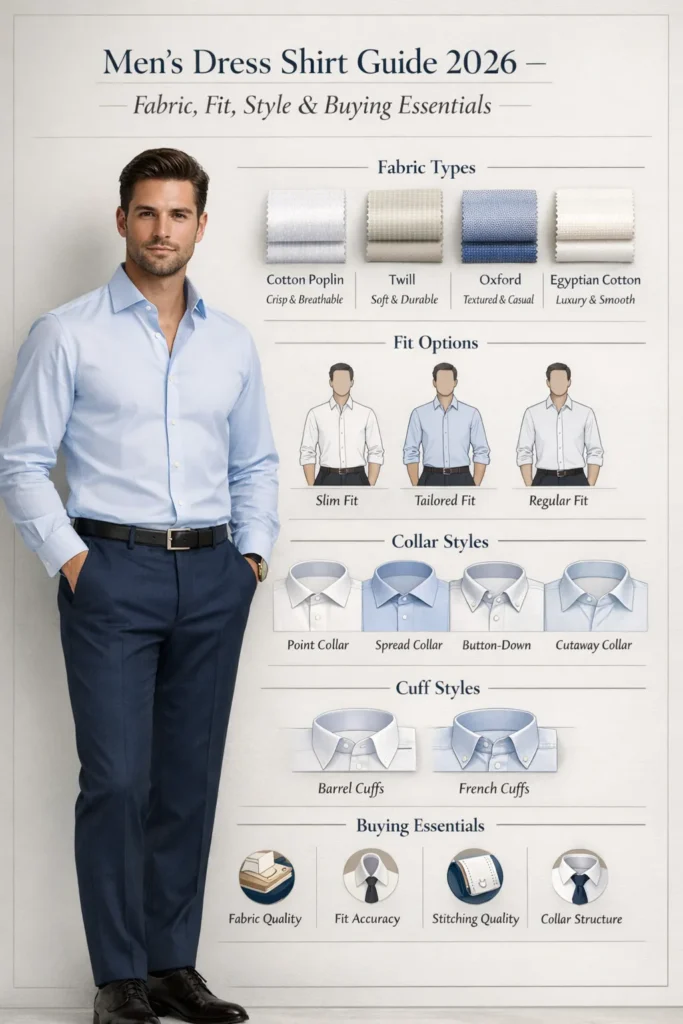
Fabric Types & Materials Used
Fabric quality determines how a dress shirt performs, feels, and ages.
Common Dress Shirt Fabrics
| Fabric Type | Features | Best For |
| Cotton Poplin | Lightweight, crisp, breathable | Office & formal wear |
| Oxford Cloth | Textured, durable | Business casual |
| Twill | Soft, wrinkle-resistant | Long workdays |
| Egyptian Cotton | Long fibre, luxurious hand feel | Premium shirts |
| Performance Blends | Stretch, moisture control | Travel & daily wear |
Why Fabric Matters
High-quality fabric:
- Regulates body temperature
- Minimizes creasing
- Feels gentle on the skin
- Retains shape after repeated washing
Low-grade textiles degrade quickly, losing structure and sophistication.
Styles & Variations of Men’s Dress Shirts
Dress shirts have many styles. Dress shirts are designed to fit different body types. Some individuals like certain types of dress shirts because of their origins.
Collar Styles
- Point Collar – Timeless and versatile
- Spread Collar – Contemporary, ideal for larger tie knots
- Button-Down Collar – Relaxed yet refined
- Cutaway Collar – European-inspired, fashion-forward
Cuff Styles
- Barrel Cuffs – Everyday Practicality
- French Cuffs – Formal elegance
- Convertible Cuffs – Flexible functionality
Fit Types
- Slim Fit – Modern, close-cut profile
- Regular Fit – Traditional comfort
- Tailored Fit – Balanced and adaptive
When purchasing a dress shirt, fabric matters. A dress shirt’s fit also matters greatly
Occasions Where Men’s Dress Shirts Are Worn
Dress shirts’ versatility makes them essential.
Common occasions include:
- Corporate meetings
- Professional workplaces
- Weddings and receptions
- Religious services
- Job interviews
Countries & Cultures Where Dress Shirts Are Popular
Dress shirts enjoy global adoption, with regional styling nuances.
Regional Preferences
- UK & Europe – Tailored silhouettes, refined patterns
- Italy – Soft construction, luxurious fabrics
- France – Progressive cuts and design
- Germany – Minimalism and structure
- USA – Comfort-oriented practicality
European markets prioritise slim profiles and breathable materials.
Latest Trends & Modern Updates (2026)
Dress Shirt Trends for 2026
- Sustainably sourced cotton
- Wrinkle-resistant finishes
- Stretch integration
- Minimal branding
- Made-to-measure growth
How to Style a Men’s Dress Shirt
With a Suit
- White or pale blue shirt
- Spread or point collar
- Polished Oxford shoes
Business Casual
- Subtle patterns
- Chinos or wool trousers
- Loafers or derby shoes
Smart Casual
- Untucked styling
- Dark denim or chinos
- Clean, minimal Accessories
Accessories That Elevate Style
- Leather belts
- Quality wristwatches
- Pocket squares
- Ties when appropriate
Care Tips & Washing Guide
Proper maintenance dramatically extends garment lifespan.
Washing Tips
- Cold or lukewarm water
- Gentle detergent
- Avoid overcrowding
Ironing Tips
- Start with the collar and cuffs
- Use steam for cotton
- Iron, while slightly damp
Storage
- Use sturdy hangers
- Allow space between garments
Buying Guide
What to Check Before Buying
- Fabric pretty
- Accurate neck and sleeve grade
- Stitch quantity
- Collar brace
- Brand chance
Pros & Cons of Men’s Dress Shirts
Pros
- Timeless charm
- Special versatility
- Professional improvement
- Long oldness with care
Cons
- Requires sewing
- Rigour fit required
- Premium qualityand costs
FAQs
A: High-quality cotton, such as poplin or twill, provides excellent comfort and force.
A: Five to seven shirts allow proper orbit.
A: Yes, with chinos or denim for good-casual looks.
A: Excellent for travel, still pure cotton offers better breathability.
Conclusion
A man’s dress shirt is not something that you wear. It is a sign of the fact that you are a human being and that you respect yourself and other people. The dress shirt has a history that began with rich people in Europe. It has evolved to include fabrics and Technology. However, one aspect that has not remained the same is the fact that the dress shirt is a part of what men wear when they want to look their best. By virtue of superior fabric selection, fit, styling, and care, men can tap into long-term value.
