
Introduction
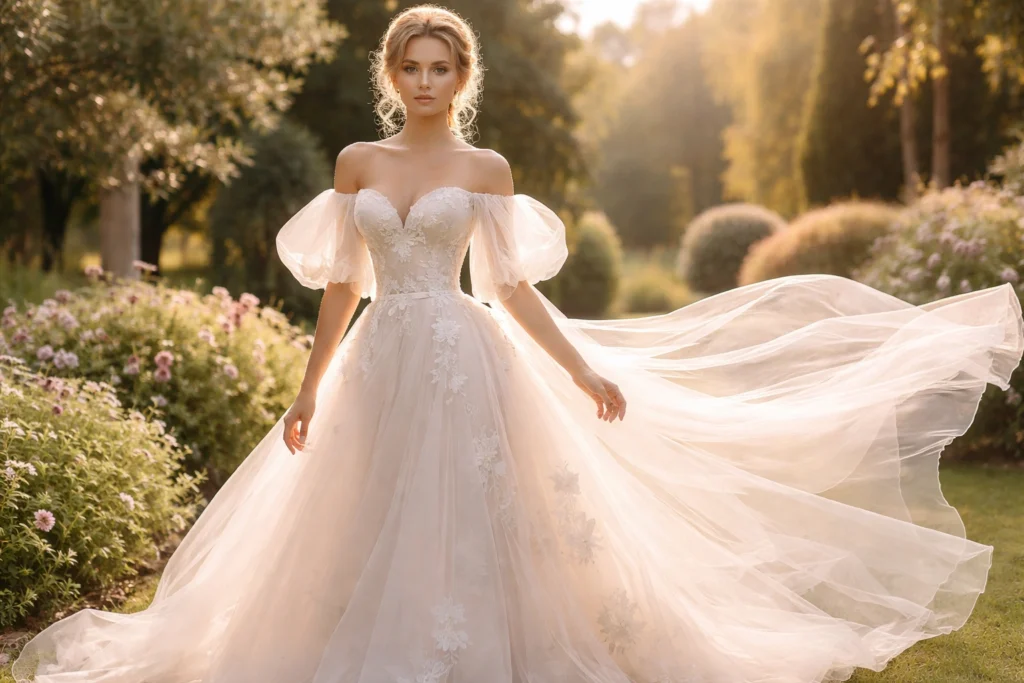
Selecting the ideal wedding attire is one of the most meaningful and unforgettable experiences in a bride’s journey. Though lots of fabrics fill stores now, dresses made from organza keep showing up at ceremonies, light on their feet yet full of presence. Brides find them hard to pass by – soft folds catching air like whispers, elegance built into every layer.
Come 2026, comfort meets grace in wedding gowns – Organza Wedding Dress slips into view as the go-to fabric for brides who want lightness with presence. Rather than dragging down movement, its airy frame floats through moments like whispers at dawn. Structure shows up too, giving shape without weight, so fantasy feels wearable by afternoon sunlight. Heavy trains? Tight seams? Not here. Instead, soft volume blooms where it matters most. Looks stay sharp yet breathe easily, matching how today’s rituals unfold – from courtyard vows to rooftop dances.
Picture a grand party inside a glittering hall, yet that same dress feels at home beneath swaying trees under an open sky. Light as a whisper, it moves when you do, never holding back your step. Sharp lines shape the look, giving presence without weight. Even near ocean waves, where wind tugs at everything, the fabric keeps its form.
What Is an Organza Wedding Dress?
A soft rustle gives away the dress before you even see it. Fabric like frozen air holds its shape without weight. Crisp edges catch light while shadows show through. Transparency feels deliberate here – not fragile but firm. Structure shapes every fold, each layer standing just so.
Once made only from silk, organza now often uses materials like polyester or nylon instead. Because of these changes, it lasts longer, costs less, and reaches more people – yet still keeps its distinctive look.
Key Characteristics of Organza Fabric
- Feather-light and breathable
- Crisp, slightly stiff texture
- Subtle natural sheen
- Semi-transparent layered appearance
- Adds volume without heaviness
A puff of air might weigh more than organza, yet its magic happens when stacked in folds. Brides drawn to big moments on their wedding day often find what they need here – lightness that still makes a statement.
History & Origin of Organza in Bridal Fashion
Centuries ago, something delicate began taking shape. From the heart of ancient China came a craft – silk threads shaped by quiet hands into something light. Mastery grew slowly, thread by thread, under patient skies.
Begun along ancient paths such as the Silk Road, this rich fabric traveled into Europe, soon worn by nobles who wore it like a quiet claim. From there, its presence grew, stitched deeply into elite styles without saying a word.
Evolution Timeline
- 18th–19th Century: Worn by royalty and elite society
- Early 20th Century: Introduced into Western bridal couture
- Modern Era: Widely used in both designer and affordable wedding collections
Nowadays, people everywhere choose the organza wedding gown because it mixes tradition with modern grace. What stands out is how light fabric carries deep cultural roots forward. Still, its charm lies in simplicity meeting timeless design.
Types of Organza Fabric Used in Wedding Dresses
Some organza isn’t quite like the rest. One type might feel stiffer, another drapes more loosely. Appearance shifts too – sheen or transparency can change from batch to batch.
Common Types of Organza
Silk Organza
Softness comes through clearly here, thanks to pure silk threads shaping its gentle touch. Still holds form without losing grace – perfect when making elegant dresses or detailed wedding designs.
Polyester Organza
A cheaper man-made option built to last longer. Not quite as soft, yet found in many low-cost garments across stores.
Nylon Organza
Pieces hold their shape well, great for clean lines when building up layers. Tough enough to keep forms sharp without losing flexibility.
Mirror Organza
A soft glow runs through it, so evenings or big events work well. While not flashy, the light catches just enough for serious occasions.
Popular Styles of Organza Wedding Dresses
The way organza shifts effortlessly between shapes and styles. Different cuts find new life through their structure; each looks shaped by intent rather than limits. Some gowns drape softly; others stand firm – each choice guided by fabric that responds without resistance.
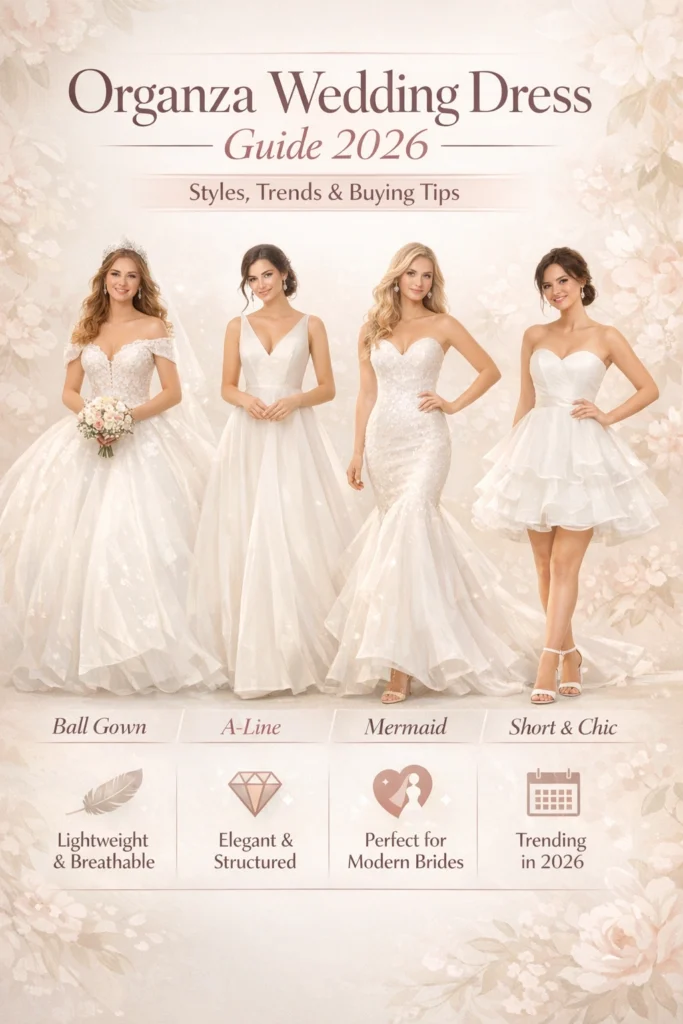
Ball Gown Organza Dress
- Full, layered skirt
- Dramatic and regal appearance
- Ideal for grand venues
A dreamy choice for brides chasing that fairy-tale glow.
A-Line Organza Dress
- Fitted bodice with a flowing skirt
- Universally flattering design
- Suitable for all body shapes
Lasts long beside nearly every dress style. Still picks itself, year after year.
Mermaid Organza Dress
- Contours the body
- Flares at the hem
- Enhances curves
A splash of daring sets the tone – sleek lines meet sharp confidence. Style steps forward when glamour leans into now. This isn’t subtle; it claims space with quiet fire.
Sheath Organza Dress
- Straight silhouette
- Minimal and lightweight
- Perfect for beach settings
A touch of quiet charm suits these brides just right. Simple beauty stands out without shouting.
Organza Lehenga (Desi Bridal Style)
- Popular in South Asian weddings
- Paired with embroidered dupattas
- Combines tradition with contemporary fabric
Organza vs Other Wedding Dress Fabrics
Fabric choice shapes how you feel on your wedding day just as much as how you appear. A wrong pick might tug at seams when you want ease. The softness against skin matters more than shine under lights.
| Fabric | Appearance | Texture | Best For |
| Organza | Structured & airy | Slightly crisp | Voluminous gowns |
| Tulle | Soft & fluffy | Ultra-light | Princess dresses |
| Chiffon | Flowing & smooth | Lightweight | Minimal weddings |
| Satin | Glossy & rich | Heavy | Formal luxury gowns |
| Lace | Detailed & textured | Soft | Vintage styles |
Where Organza Wedding Dresses Are Popular
The popularity of organza spans across different cultures and regions.
Global Appeal
- Europe & UK: Classic ball gowns
- United States: Contemporary minimalist designs
- Pakistan & India: Organza lehengas and dupattas
- Middle East: Luxurious layered gowns
Folks find it fits just right into many ways of doing things, depending on what they like.
Occasions to Wear an Organza Wedding Dress
An organza bridal gown is appropriate for a wide range of wedding settings:
- Church ceremonies
- Garden weddings
- Beach celebrations
- Ballroom receptions
- Destination weddings
Fresh air moves through it easily, so wearing it feels light whether inside or out. Comfort stays high because the material does not weigh you down.
How to Style an Organza Wedding Dress
Fashion tweaks bring out the grace in your dress, shaping how you look on your wedding day. A well-chosen finish pulls everything together, giving your outfit its final glow.
Footwear
- Heels for formal events
- Flats or sandals for outdoor settings
Jewelry
- Keep accessories minimal
- Choose pearls, diamonds, or delicate pieces
Makeup
- Soft glam or natural glow
- Neutral tones enhance elegance
Color Pairing
- White and ivory for classic looks
- Pastels for modern aesthetics
- Champagne tones for luxury appeal
Buying Guide
Selecting the right gown requires thoughtful consideration.
Fabric Quality
- Check smoothness and finish
- Avoid overly rough textures
Layering
- Ensure proper lining
- Avoid excessive layers that reduce comfort
Fit & Comfort
- Test movement (walking, sitting)
- Ensure breathability
Budget Range
| Price Range | Quality Level | Recommendation |
| $100–$300 | Basic | Polyester organza |
| $300–$1000 | Mid-range | Blended fabrics |
| $1000+ | Premium | Silk organza |
Brand & Tailoring
- Choose reputable designers
- Custom tailoring ensures a perfect fit
Latest Organza Wedding Dress Trends (2026)
Bridal trends in 2026 highlight elegance with practicality.
Trending Styles
- Layered pastel organza gowns
- Puffy statement sleeves
- Minimalist overlays
- Floral embroidered details
- Detachable trains
Pros and Cons
Advantages
- Lightweight yet voluminous
- Elegant and luxurious
- Breathable for warm weather
- Maintains structure well
Disadvantages
- Wrinkles easily
- Slight stiffness
- Requires lining
- Can snag if not handled carefully
Care & Maintenance Guide
Proper care ensures your gown remains in perfect condition.
Cleaning
- Always opt for dry cleaning
- Avoid machine washing
Storage
- Use breathable garment bags
- Store in a cool, dry place
Ironing
- Use steam instead of direct heat
- Avoid pressing directly
FAQs
A: Yes, sure – thanks to its clean layout, grace under pressure, plus a relaxed feel. Structure shows up early. Elegance slips in quietly. Comfort stays late.
A: True enough – if there’s a solid inner layer.
A: Fabric made from silk costs more, yet versions built with man-made fibers come at a lower price.
A: Light as air, yet strong enough to keep you cool when temperatures rise. Breathe easy even under the hot sun – this one moves with the heat instead of against it.
A: True, though a quick steam will set things right.
Conclusion
A sheer fabric like organza keeps its shape well, yet feels light on the skin. Because of that, many brides still pick it when choosing gowns for 2026 Ceremonies. Elegance comes through without sacrificing ease. Its firm drape supports bold silhouettes while allowing movement. So whether the day is grand or quiet, the look holds.
A dreamy ball gown might come to mind first – yet the same cloth shapes it just as well into something sharp, stripped down. Maybe tradition calls; then again, organza flows easily into old forms too. Whatever direction pulls the strongest, the material follows without strain.
