
Indrouctoin
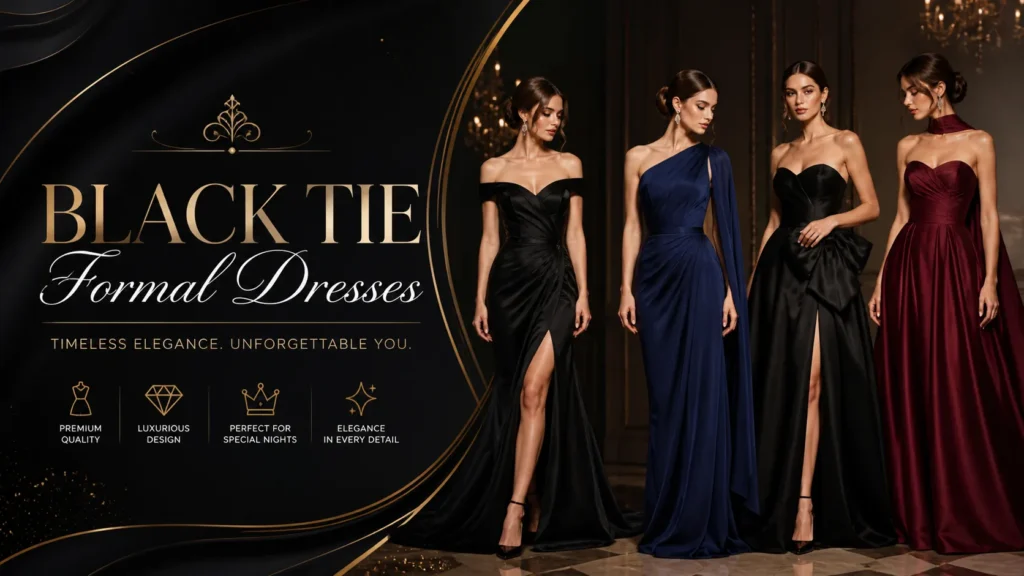
Black Tie Formal Dresses 2026 represent the highest tier of sophistication in women’s evening fashion. These garments are not just clothing pieces; they are powerful expressions of elegance, refinement, prestige, and personal identity. Worn at elite gatherings such as luxury weddings, gala dinners, award ceremonies, diplomatic receptions, and red carpet events, black tie gowns follow a structured dress code that prioritizes grace, class, and timeless appeal over casual trends.
In 2026, the fashion landscape is undergoing a major transformation. The industry is moving away from heavy ornamentation and exaggerated detailing toward minimal luxury, architectural silhouettes, and sustainable craftsmanship. Designers are focusing on refined simplicity, premium materials, and long-lasting wardrobe investments instead of fast-fashion designs.
This comprehensive pillar guide will walk you through everything you need to know about Black Tie Formal Dresses 2026, including their history, design evolution, fabric science, styling strategies, body-type guidance, purchasing decisions, global fashion influence, and future predictions.
Whether you are preparing for your first formal event or you are a seasoned fashion enthusiast, this guide will help you master the art of black tie elegance with confidence and sophistication.
What Are Black-Tie Formal Dresses
Black Tie Formal Dresses are full-length, highly refined evening gowns specifically designed for the most formal social and professional occasions. These dresses follow a strict global dress code where elegance, restraint, and polished presentation are more important than experimental fashion trends.
Unlike casual or semi-formal outfits, black tie attire is governed by traditional etiquette standards that emphasize timeless beauty, luxurious fabrics, and structured silhouettes.
Key Features of Black Tie Formal Dresses
Black tie gowns share several defining characteristics:
Floor-length design is mandatory in most formal settings
Premium fabrics such as silk, satin, velvet, chiffon, and organza
Tailored construction with elegant structure
Sophisticated color palette rather than bright casual tones
Minimalistic detailing with refined embellishment instead of excess decoration
Balanced silhouette that enhances posture and presence
These features collectively create a look that is graceful, authoritative, and aesthetically elevated.
Black Tie Dress Code Rules
To properly understand Black Tie Formal Dresses 2026, it is essential to follow established etiquette guidelines:
Dresses must be full-length and should ideally touch or slightly graze the floor
Fabrics must be formal and luxurious (avoid cotton, denim, jersey, or casual blends)
Cuts should remain elegant without overly revealing or informal styling
Footwear should consist of sophisticated heels or formal stilettos
Accessories must be refined, minimal, and high-quality rather than excessive
Simply put: Black tie fashion is about controlled elegance, refined luxury, and polished presentation—not casual experimentation.
History of Black Tie Formal Dresses
The evolution of Black Tie Formal Dresses is deeply rooted in centuries of fashion development influenced by royalty, aristocracy, and Hollywood glamour.
H3: Fashion Timeline
1920s–1940s: Hollywood Glamour Era
During this period, evening fashion became heavily influenced by cinema. Flowing gowns made of silk and satin dominated red carpets. Elegance was defined by softness, draping, and feminine silhouettes.
1950s–1970s: Structured Feminine Revolution
Fashion evolved toward tighter waists, defined silhouettes, and tailored gowns. Designers emphasized sculpted femininity and classic elegance.
1980s–2000s: Bold Glamour Phase
This era introduced dramatic fashion elements such as sequins, bold embellishments, metallic fabrics, and extravagant designs.
2010s–2020s: Minimal Luxury Movement
Fashion shifted toward simplicity, neutral palettes, and clean lines. Luxury became subtle rather than loud.
2026 Direction:
The current era is defined by:
✔ Sustainable fashion practices
✔ Architectural silhouettes
✔ Minimalist elegance
✔ Timeless investment pieces
Black Tie Formal Dresses 2026 Trends
Modern black tie fashion in 2026 is centered on refined simplicity and intelligent design.
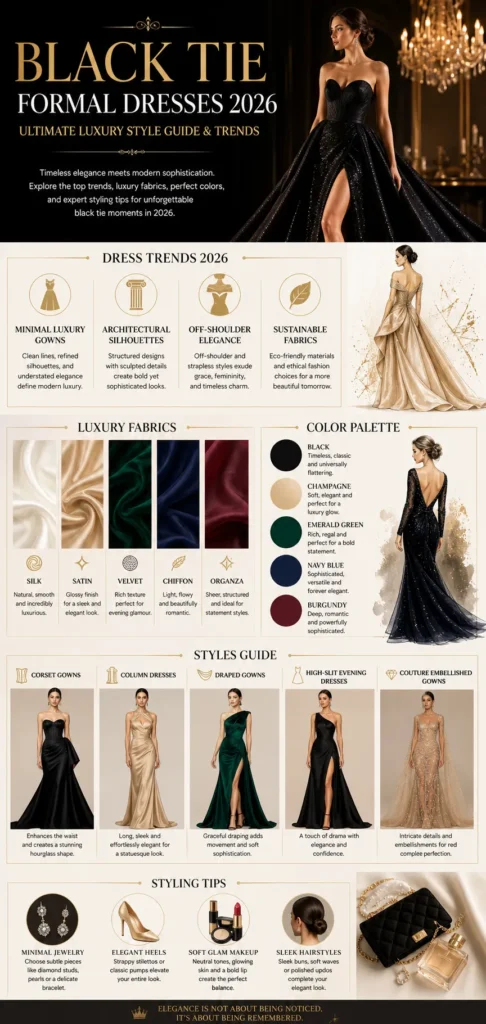
Top Trends of Black Tie Formal Dresses 2026
Minimal Luxury Designs
Clean silhouettes dominate runways, focusing on cut and fabric rather than decoration.
Neutral and Deep Color Palettes
Popular shades include black, ivory, champagne, emerald green, navy, and burgundy.
Off-Shoulder and Strapless Elegance
These styles highlight the neckline while maintaining sophistication.
Sustainable Luxury Fabrics
Eco-conscious materials are now a major industry standard.
Architectural Draping Techniques
Designers are incorporating sculptural folds and artistic structure.
Soft Glam Styling
Makeup and accessories remain subtle, elegant, and balanced.
Fabrics Used in Black Tie Formal Dresses
Fabric selection plays the most critical role in determining the luxury level of a black tie dress.
Luxury Fabrics
Satin
Smooth, glossy surface ideal for evening glamour.
Silk
Natural, breathable, and ultra-luxurious textile.
Velvet
Rich, warm, and perfect for winter formal events.
Chiffon
Lightweight, flowing, and romantic in appearance.
Organza
Structured yet delicate, used for dramatic silhouettes.
Sustainable Fabric Innovations in 2026
The fashion industry is increasingly adopting:
✔ Recycled silk fibers
✔ Eco-satin blends
✔ Plant-based textiles
✔ Low-impact dyeing processes
Luxury is now being redefined as both beautiful and responsible.
Styles & Variations of Black Tie Formal Dresses
Black tie gowns come in multiple variations designed for different personalities and body aesthetics.
Minimal Luxury Gowns
Simple, elegant, and timeless silhouettes with no excess decoration.
Corset Structured Dresses
Defined waistlines offering a powerful, feminine silhouette.
Draped Column Dresses
Straight-cut designs inspired by ancient Greek aesthetics.
High-Slit Evening Gowns
Modern designs with controlled sophistication and movement.
Couture Embellished Dresses
Artistic gowns with subtle beadwork and Handcrafted details.
Black Tie Formal Dresses by Body Type
Choosing the right silhouette enhances confidence and appearance.
Hourglass Body
Corset dresses and fitted gowns enhance natural curves.
Pear Shape
A-line gowns balance lower body proportions.
Apple Shape
Empire waist dresses create elegant vertical flow.
Tall Body Type
Column dresses and high slits complement height.
Petite Body Type
Minimalist gowns with vertical lines elongate their appearance.
Best Occasions for Black Tie Formal Dresses
Where You Should Wear Them
✔ Luxury weddings
✔ Gala events
✔ Award Ceremonies
✔ Red carpet appearances
✔ High-end corporate functions
Global Fashion Interpretation
Different regions interpret black tie fashion uniquely:
- USA & Europe: Strict traditional dress codes
- Middle East: Luxury blended with modest fashion
- Asia: Fusion of modern and cultural elegance
- South America: Bold colors and expressive silhouettes
Color Guide for Black Tie Formal Dresses 2026
Best Color Choices
✔ Black – timeless authority
✔ Navy blue – royal elegance
✔ Emerald green – luxury richness
✔ Champagne – soft sophistication
✔ Burgundy – bold refinement
Bright neon tones are generally avoided in black-tie environments.
How to Style Black Tie Formal Dresses
Shoes
✔ Elegant heels
✔ Metallic stilettos
✔ Nude pumps
Jewelry
✔ Diamond studs
✔ Pearl earrings
✔ Minimal bracelets
Bags
✔ Clutches
✔ Satin evening purses
✔ Metallic handbags
Hair & Makeup
✔ Sleek buns
✔ Soft waves
✔ Neutral glam makeup
✔ Bold lip contrast
Buying Guide
Key Factors
✔ Fabric quality
✔ Tailoring precision
✔ Comfort level
✔ Event requirement
✔ Color suitability
Price Categories
- Budget: $80–$200
- Mid-range: $200–$800
- Luxury: $800–$5000+
Common Mistakes
Cheap synthetic materials
Over-accessorizing
Ignoring dress codes
Poor fit selection
Care Tips for Black Tie Formal Dresses
Dry clean silk and satin
Store in breathable garment covers
Avoid direct sunlight
Use padded hangers
Steam instead of ironing
Sustainability in Black Tie Formal Dresses 2026
Modern fashion emphasizes responsibility along with elegance.
Sustainable Practices
Ethical manufacturing
Eco-friendly fabrics
Reusable luxury designs
Slow fashion movement
Comparison Table – Black Tie Formal Dress Types
| Category | Fabric | Style | Best Occasion |
| Minimal Gown | Satin | Straight | Formal dinners |
| Luxury Classic | Silk | Flowing | Weddings |
| Winter Glam | Velvet | Structured | Evening galas |
| Modern Chic | Chiffon | Draped | Outdoor events |
| Bold Couture | Organza | Statement | Red carpet |
Pros & Cons
Advantages
✔ Timeless elegance
✔ Universally accepted dress code
✔ Ideal for luxury events
✔ Enhances personality and presence
Disadvantages
High-cost materials
Strict styling rules
Maintenance requirements
Not suitable for casual wear
FAQs
A: A floor-length gown designed for highly formal events like galas, weddings, and luxury ceremonies.
A: No, black tie events typically require full-length gowns.
A: Black, navy, emerald, champagne, and burgundy are ideal choices.
A: Not always, but higher-quality fabrics and tailoring increase cost.
Conclusion
Black Tie Formal Dresses 2026 embody the essence of modern luxury fashion. They represent a fusion of tradition, elegance, innovation, and sustainability. From minimal satin gowns to structured couture Masterpieces, black tie fashion continues evolving toward refined simplicity and timeless beauty. When chosen correctly—based on fabric, fit, and styling—these dresses do more than enhance appearance; they create unforgettable presence, confidence, and sophistication in any formal setting.
