
Introduction
Summer formal dresses represent one of the most essential and influential categories in women’s fashion, especially for those who aim to achieve a balance between elegance, sophistication, and comfort during hot weather conditions. In 2026, the fashion industry is undergoing a significant transformation where visual appeal is no longer the only priority—functional comfort, breathable construction, and sustainable versatility have become equally important.
Whether you are attending a wedding ceremony, an upscale evening gala, a cocktail gathering, or a formal dinner event, your choice of dress directly influences your confidence, presence, and overall impression. Summer fashion today is defined by smart material selection, airflow-friendly silhouettes, and adaptable styling approaches that allow repeated use across multiple occasions.
Unlike colder-season apparel that focuses on layering and insulation, Summer Formal dresses prioritize:
- Lightweight textile engineering
- Air circulation and cooling structure
- Soft and minimal layering
- Elegant but relaxed silhouettes
- Multi-occasion usability
Modern consumers increasingly prefer outfits that are not limited to a single use. As a result, sustainability, reusability, and cost-efficiency have become core decision-making factors in 2026 fashion trends.
What Are Summer Formal Dresses?
Summer formal dresses are specially engineered fashion garments designed for formal or semi-formal occasions during warm or humid weather conditions. These dresses are crafted to merge aesthetic refinement with physical comfort, ensuring the wearer remains cool, stylish, and confident throughout the event.
Core Characteristics of Summer Formal Dresses
Modern summer formal dresses typically include:
- Air-permeable fabrics that enhance ventilation
- Lightweight structural composition
- Moisture-minimizing textile behavior
- Fluid and graceful movement design
- Comfortable inner lining for skin protection
- Temperature-adaptive construction
Common Event Categories
These dresses are widely used for:
- Wedding ceremonies (indoor and outdoor environments)
- Cocktail receptions and social gatherings
- Formal evening dinners and banquets
- Garden parties and luxury outdoor events
- Beachside formal celebrations
The primary objective is simple yet powerful:
Achieve elegance without discomfort or overheating.
History & Evolution of Summer Formal Dresses
The origin of formal wear dates back centuries, particularly in European aristocratic societies where clothing symbolized class structure, social ranking, and cultural identity. However, early formal clothing designs were often heavy, layered, and unsuitable for warm climates.
Fashion Evolution Timeline
| Era | Development Stage |
| 1800s | Introduction of lighter cotton and muslin fabrics |
| 1920s | Rise of flowing silhouettes and relaxed party dresses |
| 1950s | Popularization of structured A-line formal dresses |
| 2000s | Shift toward minimalist and modern aesthetics |
| 2020–2026 | Focus on sustainability, comfort, and versatility |
Key Transformation Phases
Fashion evolution has shifted through major transitions:
- Heavy textile → breathable fabric innovation
- Tight corseted shapes → flow-based silhouettes
- Single-use outfits → reusable wardrobe pieces
- Decorative overload → minimalist elegance
Summer formal dresses are a perfect combination of luxury aesthetics and practical wearability.
Fabrics & Materials Used in Summer Formal Dresses
Fabric selection is one of the most critical aspects of summer formal wear because it directly impacts comfort, breathability, and appearance.
Premium Fabric Options
| Fabric Type | Key Properties | Ideal Usage |
| Chiffon | Lightweight, airy, transparent flow | Weddings, outdoor events |
| Silk | Smooth, luxurious, naturally breathable | Evening formal wear |
| Satin Blends | Glossy finish, soft texture | Cocktail parties |
| Cotton Blends | Comfortable, absorbent, breathable | Daytime events |
| Linen Blends | Ultra-light, cooling effect | Beach formal events |
Textile Science Insight
Natural fibers such as cotton, silk, and linen are significantly more efficient for summer wear compared to synthetic alternatives. They:
- Allow uninterrupted airflow
- Absorb perspiration naturally
- Prevent overheating
- Reduce skin irritation
Synthetic fabrics, while visually appealing, often trap heat and reduce comfort in high temperatures.
The golden rule in 2026 fashion is:
Comfort always outweighs visual complexity.
Styles & Variations of Summer Formal Dresses
Modern fashion in 2026 is driven by inclusivity, adaptability, and aesthetic diversity. Summer formal dresses now come in multiple silhouettes suitable for different body types and event requirements.
Maxi Dresses
- Floor-length flowing design
- Elegant and graceful appearance
- Ideal for weddings and luxury events
A-Line Dresses
- Universally flattering structure
- Comfortable waist-to-hem flow
- Suitable for most body shapes
Mermaid Dresses
- Body-contouring upper structure
- Dramatic flare at the bottom
- Best for indoor formal occasions
Slip Dresses
- Minimalist and modern aesthetic
- Lightweight and breathable
- Popular in contemporary fashion culture
High-Low Dresses
- Asymmetrical hem design
- Trendy and dynamic visual appeal
- Suitable for semi-formal occasions
Fashion tip:
Always prioritize freedom of movement and airflow when selecting a style.
Cultural Influence on Summer Formal Fashion
Summer formal fashion varies significantly across global regions, influenced by cultural traditions, climate conditions, and social norms.
| Region | Fashion Style |
| Europe | Subtle elegance, neutral tones |
| United States | Bold, Experimental silhouettes |
| Middle East | Modest luxury with refined detailing |
| South Asia | Embroidered, culturally blended designs |
Cultural diversity plays a major role in fabric selection, coverage levels, and color psychology.
Summer Formal Dress Trends (2026)
Fashion trends in 2026 are shifting toward simplicity, sustainability, and comfort-driven design philosophy.
Minimalist Elegance
- Clean tailoring
- Reduced ornamentation
- Structural precision
Breathable Luxury
- High demand for chiffon and silk
- Comfort-first design approach
Trending Colors
- Soft Blue tones
- Blush Pink shades
- Lavender hues
- Emerald green accents
Flow-Based Silhouettes
- Maxi dresses dominate
- A-line remains timeless
- Slip dresses are gaining popularity
Statement Design Elements
- Ruffle detailing
- Asymmetrical cuts
- Halter necklines
2026 fashion philosophy:
“Simplicity is the new luxury.”
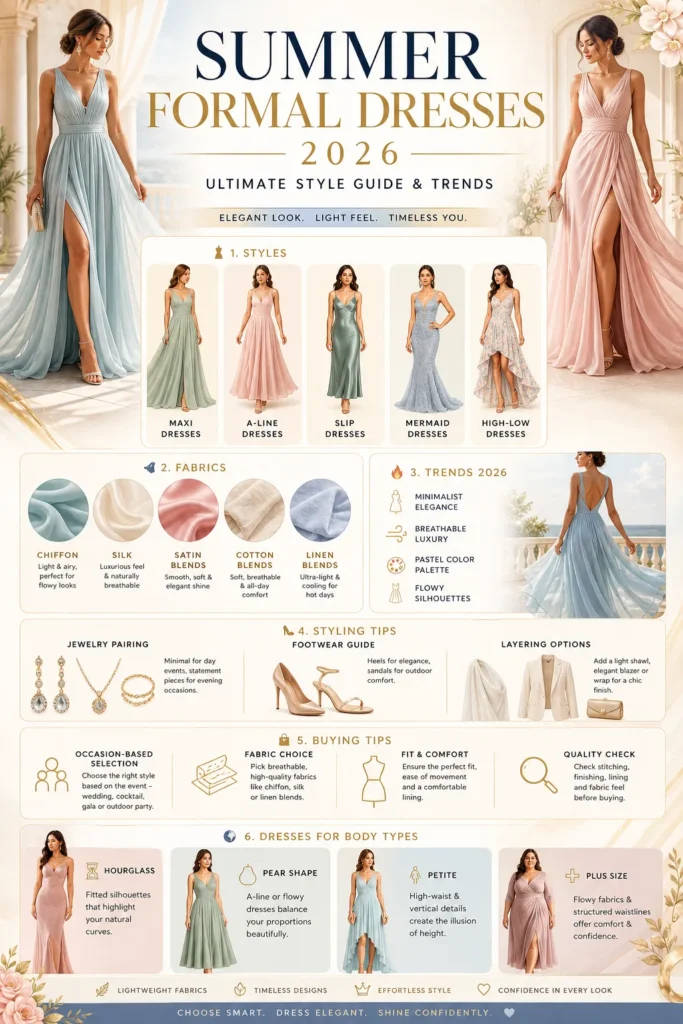
How to Style Summer Formal Dresses
Proper styling significantly enhances the visual impact of any outfit.
Jewelry Styling
- Day events → minimal accessories
- Evening events → bold statement pieces
Footwear Selection
- Heels → formal and evening occasions
- Sandals → outdoor comfort events
Layering Options
- Lightweight shawls
- Tailored blazers
- Sheer wraps
Color Coordination Strategy
| Dress Color | Matching Accessories |
| Pastels | Nude tones |
| Bold shades | Neutral accessories |
Styling principle:
Less complexity, more elegance.
Care & Maintenance Guide
Proper maintenance ensures long-term durability and fabric preservation.
Washing Instructions
- Prefer hand washing for delicate materials
- Use cold or lukewarm water
- Avoid harsh chemical detergents
Storage Guidelines
- Use padded hangers
- Store in breathable garment bags
- Keep away from direct sunlight
Avoid
- Machine drying silk or chiffon
- Overexposure to heat
- Rough folding techniques
Proper care extends garment life significantly.
Buying Guide:
Purchasing the right dress requires thoughtful analysis and practical decision-making.
Occasion-Based Selection
| Event Type | Recommended Dress |
| Wedding | Maxi or A-line |
| Cocktail | Midi or slip dress |
| Gala | Mermaid gown |
Fabric Prioritization
Always select breathable and lightweight materials.
Comfort Evaluation
Ensure ease of movement and proper fitting.
Quality Assessment
| Factor | What to Inspect |
| Stitching | Clean finishing |
| Fabric | Soft texture |
| Lining | Comfortable interior |
Budget Optimization
- Invest in timeless designs
- Choose multi-purpose dresses
Smart purchasing leads to long-term wardrobe value.
Dresses According to Body Type
Understanding body structure helps enhance overall appearance.
Hourglass Shape
- Fitted silhouettes
- Waist emphasis
Pear Shape
- A-line dresses
- Balanced proportions
Petite Frame
- High-waist designs
- Vertical illusion styling
Plus Size
- Flowing fabrics
- Structured waistlines
The right fit enhances confidence and presence.
Advantages & Limitations
Advantages
- Lightweight construction
- High versatility
- Suitable for multiple occasions
- Wide variety of styles
Limitations
- Delicate maintenance required
- Limited layering options
- Light colors prone to stains
Occasion-Based Styling
Weddings
- Floral maxi dresses
- Soft pastel shades
Cocktail Parties
- Sleek midi dresses
- Satin or slip styles
Evening Events
- Dark elegant tones
- Structured silhouettes
FAQs
A: Chiffon, silk, and cotton blends are ideal due to their breathability and comfort properties.
A: Yes, modern fashion trends embrace dark shades such as black, navy, and deep green.
A: Yes, sleeveless designs are highly suitable for warm climates and outdoor events.
A: By changing accessories, footwear, and layering, you can create multiple outfit variations.
Conclusion
Summer formal dresses in 2026 reflect a powerful blend of elegance, functionality, and modern lifestyle adaptation. The evolution of fashion now prioritizes breathable fabrics, Minimalistic aesthetics, and multi-occasion usability.
By understanding:
- Fabric selection
- Style variations
- Trend directions
- Body shape compatibility
- Maintenance techniques
You can confidently choose outfits that enhance both comfort and visual appeal.
