
Introduction
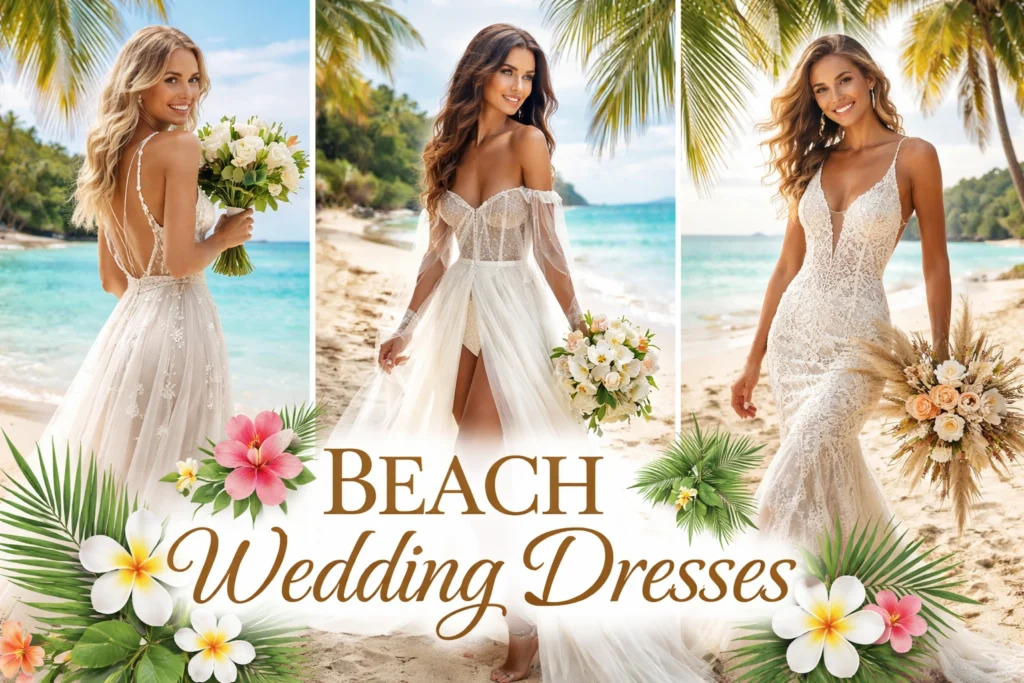
A beach wedding dress is not merely a ceremonial gown—it is an embodiment of liberty, romance, and understated elegance. Lightness takes center stage when fabric dances above sunlit sand. Tradition slips away as simplicity steps forward under open skies. Movement matters more than structure when waves hum beside vows. Elegance shows up quietly, never loud, where horizon meets lace. Comfort weaves through every seam because heat lingers near water. Style follows setting once breeze shapes silhouette.
Out on the shore, arranging a beach wedding dress means working around tricky conditions. Sun beating down, sticky air, sudden breezes – these push choices toward airy materials that let skin breathe. Instead of heavy layers, many women now pick gowns that move easily, shaped by gentle draping rather than stiff structure.
From sandy shores to seaside vows, gowns have shifted through decades, shaped by culture and comfort. Beach Wedding Dresses Styles now bloom in layers, light as sea foam, moving with ocean breezes instead of stiff tradition. Fabrics like chiffon or lace breathe easily under sunlit skies, chosen not just for look but for how they feel on warm skin. Some favor flowing silhouettes that suit curves, others pick structured shapes that hold form near crashing waves. Trends emerge quietly – off-shoulder lines, delicate beadwork, bare backs framed by wind. Matching a gown to your shape matters less than how it makes you move, stand, and pause. Shopping means touching fabric, walking in samples, imagining tides nearby during the first steps down a makeshift aisle. Once worn, these dresses ask gentle handling – air drying, shade storage, mindful packing after the celebration fades.
What Are Beach Wedding Dresses?
Definition
Imagine soft fabrics that move with ocean breezes, light enough to walk barefoot in sand. Picture styles without heavy layers, made so you can feel air instead of weight. Think flowy silhouettes that don’t trap heat under bright sun. Consider details like minimal lace, avoiding anything too stiff or hot. Feel how breathable materials keep comfort high near salty water. Notice shorter trains, sometimes none at all – just clean lines.
- Comfort in warm and humid conditions
- Easy mobility on sandy beaches
- Lightweight and breathable fabrics
- Relaxed yet elegant styling
What Makes Them Unique
In contrast to traditional gowns:
- They avoid heavy layers, Voluminous skirts, and long trains
- They often feature airy fabrics like chiffon, lace, and organza
- Silhouettes are relaxed and fluid
- They integrate natural beauty and modern aesthetics
History & Evolution of Beach Wedding Dresses
Warm coastal breezes started pulling couples seaside for vows around the 1980s, just as faraway ceremonies caught on. Back then, many brides stuck to heavy, classic dresses no matter where they stood – sand between toes, sun beating down, fabric clinging tight.
Sun-drenched spots like Hawaii, Bali, and islands across the Caribbean began drawing couples eager to tie the knot under swaying palms. Outcomes: lightweight gowns – elegant but built for breezy beachfront vows.
Evolution Timeline
| Era | Style Trend |
| 1980s | Simple sundresses and casual whites |
| 1990s | Lightweight A-line gowns |
| 2000s | Bohemian lace and ethereal designs |
| 2015+ | Minimalist modern gowns, convertible pieces |
| 2026 | Sustainable, breathable, and versatile dresses |
Best Fabrics for Beach Wedding Dresses
Fabric choice shapes how you feel, move, and look. What matters most? Comfort meets fit, then function follows close behind. A wrong pick restricts motion, dulls appearance, and drains energy throughout the day.
Top Fabric Options
| Fabric | Key Characteristics | Why It Works |
| Chiffon | Light, flowy, drapes beautifully | Perfect for breezy settings |
| Linen | Natural, breathable, soft | Ideal for hot and tropical climates |
| Lace | Romantic, textured, delicate | Adds elegance while staying airy |
| Organza | Structured yet lightweight | Provides volume without heaviness |
| Light Tulle | Soft layers, ethereal | Creates a whimsical, dreamy effect |
Types & Styles of Beach Wedding Dresses
Beach wedding dresses cater to diverse preferences, from bohemian free spirits to minimalist modernists.
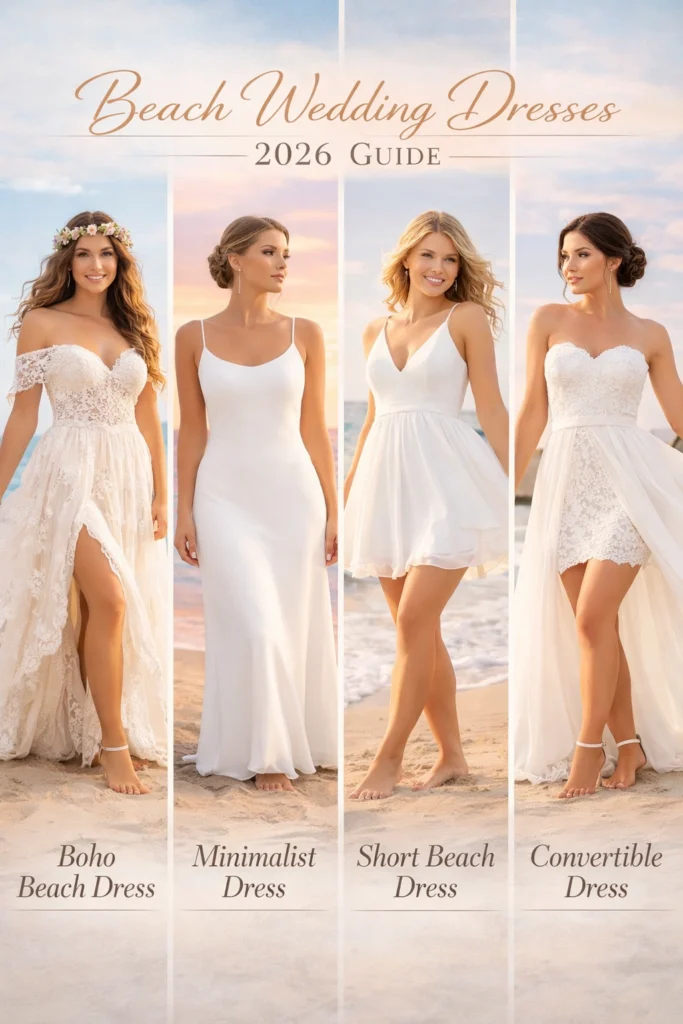
Boho Beach Wedding Dresses
Features:
- Flowing and breezy silhouettes
- Crochet, lace, or macramé detailing
- Off-shoulder, bell sleeves, or relaxed sleeves
Best For: Brides who desire a free-spirited, nature-inspired look
Minimalist Beach Wedding Dresses
Features:
- Sleek, clean lines
- Uncomplicated cuts
- Neutral shades like white, ivory, or nude
Best For: Modern brides seeking effortless elegance
Short Beach Wedding Dresses
Features:
- Mini or knee-length styles
- Maximum mobility and comfort
- Fun, casual, playful designs
Best For: Destination weddings or less formal, intimate ceremonies
Lace & Sheer Dresses
Features:
- Lightweight and airy
- Romantic lace overlays or sheer panels
- Adds elegance without bulk
Best For: Brides who want delicate and stylish transparency
Convertible Wedding Dresses
Features:
- Detachable skirts, sleeves, or trains
- Allows multiple looks in one dress
- Practical yet stylish design
Best For: Brides who desire versatility and dual-style options
A-Line & Empire Waist Dresses
Features:
- Universally flattering for all body shapes
- Comfortable fit and flowing design
- Elegant yet breezy
Best For: Classic bridal aesthetics with beach practicality
Occasions to Wear Beach Wedding Dresses
Out here, beach wedding gowns aren’t just for stiff ceremonies. These styles work well when the sand meets celebration
- Beach weddings and destination ceremonies
- Pre-wedding Photoshoots
- Engagement parties
- Honeymoon dinners and celebrations
- Vow renewals and informal celebrations
Popularity Across Countries & Cultures
Top Beach Wedding Destinations
- USA: Hawaii, Florida, California
- Maldives: Idyllic overwater venues
- Bali, Indonesia: Tropical paradise weddings
- Greece: Santorini’s cliffside views
- Thailand: Exotic beach resorts
- Caribbean islands: Luxury coastal ceremonies
Cultural Adaptations
- Western brides: Classic white or ivory
- Asian brides: Pastel shades or embellished designs
- European brides: Minimalist and elegant dresses
Beach Wedding Dress Trends 2026
- Sustainable Fabrics – Eco-conscious materials dominate global trends.
- High Slits & Cut-Outs – Bold, modern, and flattering.
- Sheer Layers – Adds delicate elegance without weight.
- Soft Pastel Hues – Blush, champagne, and nude tones remain popular.
- Backless & Low-Back Designs – Perfect for breezy seaside ceremonies.
How to Style Beach Wedding Dresses
Footwear
- Barefoot sandals for natural elegance
- Comfortable flats or espadrilles
- Wedges for subtle height without sinking in sand
Accessories
- Minimalistic jewelry: pearls, delicate chains
- Floral crowns or fresh flower hairpieces
- Light clutches or beach-friendly purses
Hairstyles
- Loose waves or curls
- Braids or fishtails
- Messy buns or relaxed updos
Makeup
- Dewy, natural complexion
- Light foundation and Concealer
- Soft lip colors and minimal eye makeup
Beach Wedding Dresses by Body Type
- Hourglass: Fitted silhouettes accentuate curves
- Pear Shape: Flowy A-line dresses create balance
- Petite: Short or high-waist styles enhance height
- Plus Size: Empire waist or flowing gowns flatter the figure
Ultimate Buying Guide (Expert Advice)
Step-by-Step Process
- Consider Location: Tropical vs resort, windy vs calm beaches
- Set Budget: Define an affordable yet stylish range
- Choose Fabric: Prioritize breathable and lightweight materials
- Pick a Style: Match personality and comfort
- Check Fit: Ensure ease of movement and comfort
Price Comparison
| Type | Price Range |
| Budget Dresses | $100 – $300 |
| Mid-Range | $300 – $800 |
| Designer | $800 – $3000+ |
Pros & Cons of Beach Wedding Dresses
Pros:
- Lightweight, breezy, and comfortable
- Allows freedom of movement
- Ideal for hot, sunny climates
- Modern, chic, and versatile
Cons:
- Limited formal structure
- Wind can affect flowy fabrics
- Less dramatic than traditional ball gowns
Care Tips & Maintenance Guide
Pre-Wedding
- Store in breathable garment bags
- Avoid wrinkles by hanging or lightly steaming
Post-Wedding
- Dry clean delicate fabrics
- Hand-wash lightweight layers
- Store in cool, dry environments away from sunlight
FAQs
A: Fabric that moves easily brings both ease and grace. Lightness matters when picking something soft to wear. A gentle drape often feels just right against the skin. Flowing styles tend to follow motion without pulling.
A: Maybe not. Depending on how they’re made, fabric choice, cut, and details might make them fancy or quiet.
A: Fresh off a quiet dawn, white slips in like breath. Ivory follows, close behind, warm but never loud. Champagne catches light without shouting. Soft pastels drift through, barely touching the air – each hue stays, simply because it fits.
A: Sand shifts under flat soles more easily. Wedge shapes spread weight just right.
Conclusion
Breezes whisper through fabric meant to glide, not fight. Style matters less when sand shifts under bare feet. Movement comes first where waves crash close by. Climate shapes choices more than trends ever could. Simplicity wins quietly against stiff lace and heavy trains. Design follows terrain here – soft folds replace rigid structure. Beauty hides in how light touches lightweight seams.
Brides might choose flowing chiffon or clean lines, depending on how they see themselves and where they say I do. Because settings change, so do silhouettes – light fabrics move easily in sea breezes, while simpler cuts suit barefoot moments in sand. Style now follows substance: eco-minded details appear more often, stitched into relaxed fits that feel natural. Comfort shapes beauty here, letting grace come without effort. Designs grow smarter each year, blending ease with Imagination.
Start by trying shapes that surprise you, mix textures instead of matching them, then think about how your frame meets the light. A dress waits somewhere near salt air, built for waves and long walks on sand.
