
Introduction
Formal maternity dresses have evolved significantly over the past decade, transforming from simple, oversized garments into highly refined fashion pieces designed with elegance, comfort, and body positivity in mind.
In earlier years, maternity wear was often plain, repetitive, and focused only on functionality. However, in 2026, the fashion industry has completely reshaped how pregnancy clothing is designed and perceived. Today, maternity fashion is not about hiding the baby bump—it is about celebrating it with confidence, grace, and style.
Modern expectant mothers now demand clothing that supports their changing body while still reflecting personal identity, lifestyle, and fashion taste. Designers have responded with innovative cuts, flexible fabrics, and luxurious aesthetics that make maternity wear suitable for weddings, office events, parties, and formal gatherings.
In simple terms, Formal Maternity dresses in 2026 represent a perfect balance between:
- Elegance and sophistication
- Physical comfort and adaptability
- Trend-driven aesthetics
- Functional body support
This comprehensive pillar guide explores everything you need to know, including evolution, fabrics, styles, trends, styling strategies, buying guidance, and frequently asked questions.
History & Evolution of Formal Maternity Dresses
The evolution of maternity fashion reflects changing social attitudes toward pregnancy, femininity, and body expression.
Early 1900s – Concealment Era
During this period, pregnancy was often considered a private matter. Clothing was designed to conceal rather than highlight the body.
- Loose and shapeless garments dominated maternity wear
- Dark colors were commonly used
- Comfort and functionality were secondary considerations
- Fashion expression was minimal or non-existent
The focus was primarily on modesty rather than style or individuality.
1950s–1970s – Structured Limitation Phase
As fashion began to evolve, maternity clothing gained a slight structure but remained restrictive in design philosophy.
- Dresses became more tailored but still lacked flexibility
- Limited fabric Technology restricted comfort
- Styles were repetitive and conservative
- Fashion choices for pregnant women remained narrow
Despite minor improvements, maternity fashion still lagged behind mainstream trends.
1990s – Elastic Fabric Breakthrough
The introduction of stretchable textiles revolutionized maternity wear.
- Elastic and blended fabrics improved mobility
- Clothing became more body-responsive
- Comfort increased significantly
- Dedicated maternity fashion brands began emerging
This period marked the beginning of modern maternity fashion as a recognized industry.
2020–2026 – Fashion Empowerment Era
The current era represents a complete transformation in maternity clothing philosophy.
- Fashion-forward maternity dresses are widely available
- Designers prioritize both aesthetics and comfort
- Body positivity has become central to design thinking
- Social media has influenced maternity style trends
Pregnancy fashion is now expressive, empowering, and highly personalized.
What Makes Formal Maternity Dresses Unique?
Formal maternity dresses differ significantly from regular formal wear due to their specialized construction.
Key Functional Features
Adaptive Fit Technology
Modern maternity dresses are designed with expandable structures that adjust according to pregnancy stages. This ensures long-term usability throughout different trimesters.
Body-Enhancing Silhouettes
These dresses are crafted to highlight natural curves while maintaining proportion and elegance.
Breathable Comfort Fabrics
Soft, stretchable, and skin-friendly materials are used to avoid irritation and overheating.
Occasion-Oriented Design
They are suitable for multiple formal settings, including weddings, corporate events, and celebrations.
In essence, these dresses combine medical comfort principles with fashion aesthetics.
Best Fabrics for Formal Maternity Dresses
Fabric selection is one of the most crucial aspects of maternity fashion.
Common Fabric Categories
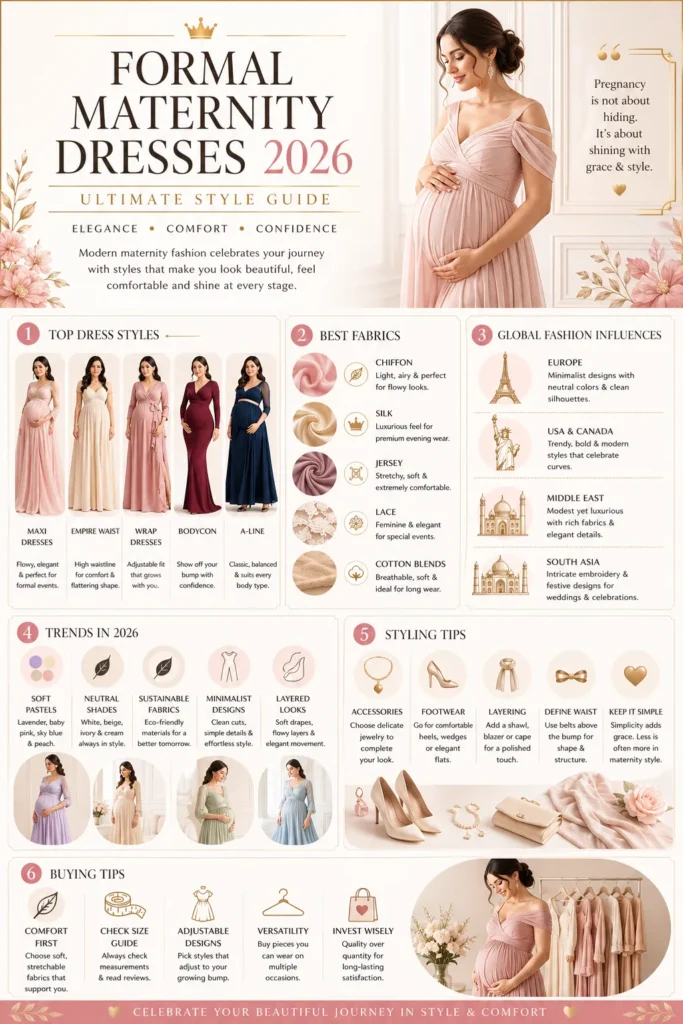
Chiffon
- Lightweight and airy
- Ideal for flowing gowns
- Provides soft movement and elegance
Silk
- Luxurious texture
- Smooth finish
- Suitable for premium evening wear
Stretch Jersey
- Highly flexible
- Perfect for long wear
- Adapts easily to body changes
Lace
- Decorative and elegant
- Often used in formal or bridal designs
- Enhances feminine aesthetics
Cotton Blends
- Breathable and practical
- Ideal for office or semi-formal wear
- Comfortable for extended use
Fabric Comparison Table
| Fabric Type | Comfort Level | Best Use | Breathability | Style Appeal |
| Chiffon | High | Weddings | High | Elegant |
| Silk | Medium | Evening Events | Medium | Luxury |
| Jersey | Very High | Daily/Formal | High | Modern |
| Lace | Medium | Parties/Weddings | Medium | Premium |
| Cotton Blend | High | Office Wear | Very High | Simple Chic |
Top Styles of Formal Maternity Dresses
Different silhouettes serve different body needs and occasions.
Maxi Maternity Dresses
Long, flowing, and elegant. Ideal for formal events and photography sessions.
Empire Waist Dresses
Designed with a raised waistline to reduce pressure on the abdomen while enhancing shape.
Wrap Dresses
Adjustable and flexible, making them ideal for changing body sizes.
Bodycon Maternity Dresses
Form-fitting designs that highlight pregnancy curves in a confident way.
A-Line Dresses
Balanced structure that suits most body types and occasions.
Global Influence on Maternity Fashion
Maternity fashion is now shaped by global cultural aesthetics.
Europe
Minimalist and neutral tones dominate, focusing on simplicity.
USA & Canada
Trend-driven designs with bold cuts and modern silhouettes.
Middle East
Luxury-focused maternity wear with modest yet elegant styling.
South Asia
Rich embroidery and festive designs for cultural events and weddings.
Latest Trends in Formal Maternity Dresses (2026)
Fashion trends in 2026 emphasize sustainability, simplicity, and comfort.
Soft Pastel Colors
Lavender, peach, baby pink, and sky blue dominate seasonal collections.
Neutral Elegance
White, beige, ivory, and cream remain timeless choices.
Sustainable Fashion
Eco-conscious fabrics like organic cotton and bamboo blends are gaining popularity.
Minimalist Aesthetics
Clean cuts, subtle detailing, and lightweight designs define modern maternity wear.
Layered Styling
Soft draping and layered fabrics create elegant movement.
How to Choose the Perfect Formal Maternity Dress
Selecting the right dress requires careful consideration.
Comfort Priority
Always prioritize stretchability and softness.
Pregnancy Stage Awareness
- Early pregnancy: flexible non-maternity dresses may work
- Mid to late pregnancy: specialized maternity wear is essential
Occasion-Based Selection
| Occasion | Best Dress Style |
| Wedding | Maxi / Lace Gown |
| Office Event | A-Line / Midi |
| Party | Bodycon / Wrap |
| Baby Shower | Floral / Pastel |
Styling Tips for a Polished Look
Proper styling enhances overall appearance.
- Use minimal jewelry for elegance
- Pair with comfortable heels or wedges
- Add light layering, such as shawls or blazers
- Use belts above the bump for shape definition
- Match accessories with dress tones
Buying Guide: How to Choose the Best Dress
Smart purchasing ensures long-term satisfaction.
Key Considerations
- Always check sizing charts carefully
- Read verified customer feedback
- Prefer adjustable waist designs
- Choose breathable materials
Expert Recommendations
- Invest in versatile dresses
- Avoid overly trendy fast-fashion pieces
- Select neutral shades for repeated use
Pros & Cons
Advantages
- Excellent comfort levels
- Designed for body changes
- Stylish and elegant appearance
- Boosts self-confidence
Disadvantages
- Relatively higher cost
- Limited usage duration
- Size variations between brands
Formal Maternity Dresses by Occasion
Weddings
Maxi gowns, lace dresses, and embellished styles.
Baby Showers
Floral prints and soft pastel tones.
Office Events
Structured A-line and midi dresses.
Evening Parties
Satin and bodycon maternity gowns.
Care Tips & Maintenance Guide
Proper maintenance increases garment lifespan:
- Hand-wash delicate fabrics
- Use mild detergents
- Avoid direct heat drying
- Store in protective garment bags
- Prefer steaming over ironing
FAQs
A: Empire waist and maxi dresses are the most comfortable and stylish options.
A: Yes, but only in early pregnancy. Later stages need maternity-specific dresses
A: Chiffon and stretch jersey are the best for comfort and flexibility.
A: Usually, 2–3 good-quality dresses are enough.
Conclusion
Formal maternity dresses in 2026 represent a powerful shift in fashion ideology, combining elegance, functionality, and emotional comfort. They are no longer just temporary clothing pieces but thoughtfully designed garments that support women during one of the most important phases of life.
From luxurious silk gowns to breathable jersey wraps, maternity fashion now offers a wide range of styles for every occasion and Personality. The key to choosing the perfect dress lies in understanding comfort, fabric quality, and long-term usability.
