
Introduction
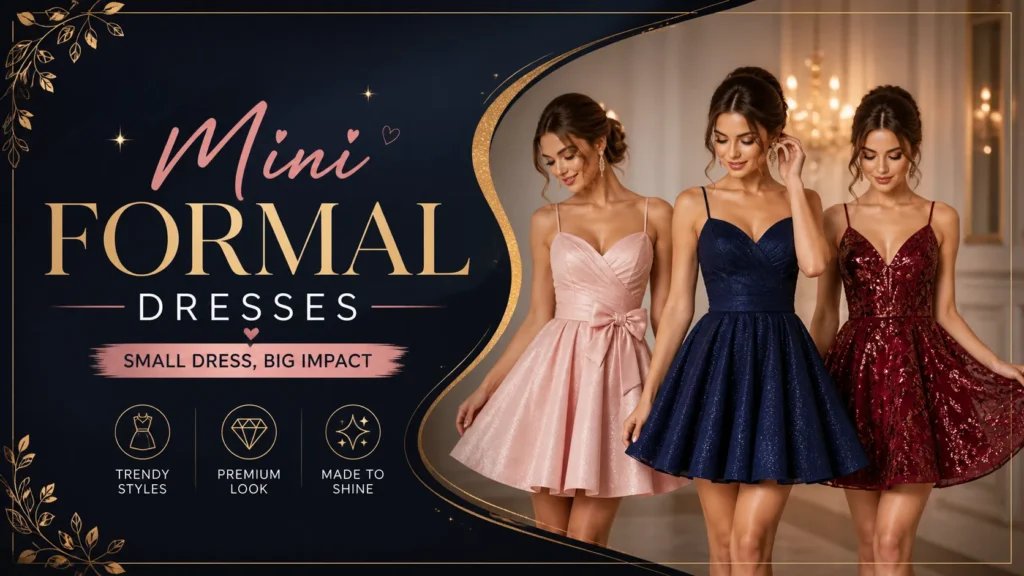
Mini formal dresses in 2026 are transforming the landscape of modern fashion. For decades, floor-length gowns dominated formal wear, symbolising sophistication and grace. However, the narrative has evolved dramatically. Today, shorter hemlines are not only accepted but celebrated for their refined elegance, adaptability, and contemporary charm.
Women are increasingly gravitating toward attire that merges aesthetics with practicality. A Mini Formal dress perfectly embodies this balance. It delivers a polished appearance while allowing freedom of movement, ease of wear, and the flexibility to restyle for multiple occasions.
In a world where fashion is becoming more functional, versatile, and expressive, mini dresses stand out as a powerful wardrobe essential. Whether attending a wedding reception, cocktail gathering, prom night, formal dinner, or upscale party, these dresses provide a confident, stylish, and modern alternative to traditional gowns.
This comprehensive guide will walk you through everything you need to know:
- What defines a mini dress as formal
- The best materials and textiles
- Trending styles for 2026
- Practical outfit combinations
- Expert tips to select the ideal dress
By the end, you will have a clear understanding of how to choose, style, and wear a mini formal dress with confidence and sophistication.
🕰️ History & Origin of Mini Formal Dresses
The journey of mini dresses began in the 1960s, a revolutionary period in fashion history. These shorter garments emerged as symbols of liberation, youthfulness, and cultural transformation. Initially considered daring and unconventional, mini dresses challenged societal norms and redefined femininity.
Evolution Timeline:
- 1960s: Mini dresses rise in popularity as casual wear, representing rebellion and freedom
- 1990s: Celebrities begin incorporating mini dresses into high-profile events
- 2000s: Red carpet appearances normalise shorter formal attire
- 2020s–2026: Mini formal dresses become a mainstream luxury trend
Over time, perceptions shifted significantly. What was once viewed as bold is now seen as refined and stylish. Modern mini dresses represent:
- Contemporary elegance
- Empowerment and confidence
- Individual expression
- Practical luxury
They have successfully transitioned from casual wear to a legitimate category within formal fashion.
What Makes a Mini Dress “Formal”?
Not every short dress qualifies as formal. Several elements determine whether a mini dress fits into the formalwear category.
Fabric Quality (Primary Element)
The material is the foundation of formality. High-end fabrics elevate the overall appearance and create a luxurious impression.
Top Fabric Choices:
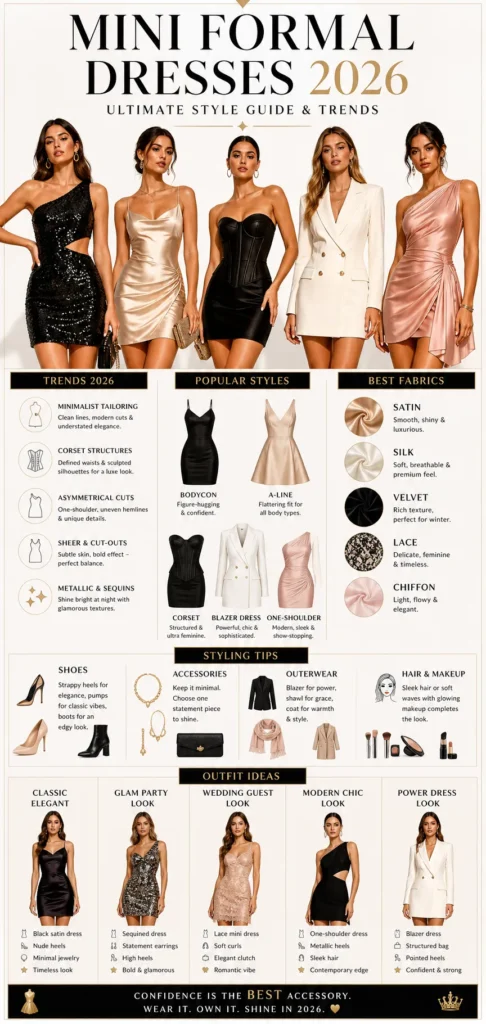
- Satin – sleek, glossy, and polished
- Silk – smooth, breathable, and premium
- Velvet – dense, rich, and ideal for colder seasons
- Lace – intricate, delicate, and feminine
- Chiffon – airy, soft, and elegant
Avoid casual materials such as cotton blends or jersey fabrics, as they lack the refined finish required for formal settings.
Tailored Silhouette
Structure plays a vital role in enhancing sophistication. A formal mini dress should feature:
- Defined waistline
- Precise stitching
- Clean lines
- Balanced proportions
A well-constructed silhouette ensures the garment appears polished rather than casual.
Refined Colour Palette
Colour significantly influences perception. Certain tones naturally convey elegance and formality.
Popular Colours for 2026:
- Black – timeless and versatile
- Emerald – luxurious and striking
- Burgundy – deep and opulent
- Champagne – subtle and graceful
- Navy – modern and composed
These shades enhance the dress’s overall sophistication and suitability for formal occasions.
Elevated Detailing
Details can transform a simple design into a statement piece. Look for:
- Sequins
- Embroidery
- Ruching
- Lace accents
- Metallic embellishments
These features add texture, depth, and visual interest.
Fabric Types & Materials Used
Choosing the right textile is essential for comfort, appearance, and occasion suitability.
| Fabric Type | Characteristics | Ideal Use |
| Satin | Glossy, smooth, luxurious | Evening events |
| Silk | Soft, breathable, high-end | Weddings |
| Velvet | Thick, warm, rich | Winter occasions |
| Lace | Decorative, feminine | Romantic settings |
| Chiffon | Lightweight, flowy | Summer gatherings |
Pro Tip: Always match fabric selection with climate and event type.
Styles & Variations of Mini Formal Dresses
Different cuts and designs cater to diverse preferences, body shapes, and occasions.
Bodycon Mini Dresses
These dresses are form-fitting and contour the body’s natural curves. They create a bold, confident look suitable for evening events.
A-Line Mini Dresses
Fitted at the top and flared at the bottom, this style offers comfort and suits nearly all body types.
Corset Mini Dresses
Featuring structured bodices, these dresses accentuate the waist and provide a sculpted silhouette.
One-Shoulder Mini Dresses
Asymmetrical designs introduce a modern and fashionable edge, perfect for formal parties.
Blazer Mini Dresses
Combining tailoring with femininity, these dresses offer a sophisticated yet contemporary aesthetic.
Global Popularity of Mini Formal Dresses
Mini formal dresses are embraced worldwide, though styling varies by region.
- Europe: High-fashion designs with bold silhouettes
- USA: Popular for proms, parties, and red carpet events
- Middle East: Styled modestly with luxurious fabrics
- Australia: Relaxed yet polished cocktail aesthetics
Cultural preferences influence length, coverage, and styling choices.
Occasions to Wear Mini Formal Dresses
These dresses are suitable for a variety of events:
- Cocktail parties
- Semi-formal weddings
- Prom and homecoming
- Birthday celebrations
- Evening dinners
- Fashion gatherings
Avoid wearing mini dresses at extremely formal occasions requiring strict dress codes.
Mini Formal Dress Trends 2026
Fashion trends in 2026 emphasise minimalism, structure, and bold detailing.
Minimalist Tailoring
Clean cuts and simple designs create understated elegance.
Structured Corsetry
Defined shapes inspired by couture enhance the silhouette.
Asymmetrical Designs
Uneven cuts and one-shoulder styles add uniqueness.
Sheer & Cut-Out Elements
Balanced boldness with sophistication.
Metallic & Sequin Finishes
Ideal for evening glamour and statement looks.
Mini Formal Dress Outfit Ideas
Classic Elegant Look
- Black satin mini dress
- Neutral heels
- Minimal Accessories
Glam Party Look
- Sequined dress
- Statement earrings
- High heels
Wedding Guest Look
- Lace mini dress
- Soft hairstyle
- Elegant clutch
Modern Chic Look
- One-shoulder design
- Metallic footwear
- Sleek hairstyle
How to Style Mini Formal Dresses
Footwear
- Strappy heels → refined
- Pumps → classic
- Boots → edgy
Accessories
Keep it minimal. Choose one focal piece.
Outerwear
- Blazer → structured
- Shawl → soft
- Coat → seasonal
Best Mini Formal Dresses by Body Type
Petite
Shorter hemlines elongate the legs.
Curvy
Bodycon or wrap styles enhance shape.
Tall
Balanced lengths maintain proportion.
Plus Size
A-line designs and structured fabrics provide comfort and elegance.
Buying Guide
1. Understand the Occasion
Different events require different levels of formality.
2. Select Premium Fabric
Material determines overall appearance.
3. Focus on Fit
Proper tailoring is essential.
4. Choose the Right Colour
Darker tones appear more formal.
5. Prioritise Comfort
Confidence comes from comfort.
Mini Formal Dresses vs Long Formal Dresses
| Feature | Mini Dresses | Long Dresses |
| Comfort | High | Moderate |
| Movement | Easy | Limited |
| Formality | Semi to Formal | Highly Formal |
| Versatility | High | Limited |
| Trend Appeal | Modern | Traditional |
Pros & Cons of Mini Formal Dresses
Advantages
- Stylish and contemporary
- Comfortable
- Easy mobility
- Reusable
Disadvantages
- Not suitable for ultra-formal events
- Requires confident styling
- Length must be appropriate
Care Tips & Maintenance Guide
- Dry clean delicate materials
- Hand-wash lace and chiffon
- Avoid excessive heat
- Store in garment bags
- Use padded hangers
Common Mistakes to Avoid
- Choosing casual fabrics
- Wearing overly short lengths
- Over-accessorizing
- Ignoring dress codes
- Poor fit
Future of Mini Formal Dresses
Fashion is shifting toward:
- Sustainability
- Comfort-focused design
- Multi-functional clothing
Mini formal dresses align perfectly with these evolving trends. They are not just fashionable—they represent the future of modern elegance.
FAQs
A: Yes, if made with luxury fabrics and styled correctly.
A: Mid-thigh length is considered elegant.
A: Yes, for semi-formal or cocktail weddings.
A: Satin, silk, and velvet are top choices.
Conclusion
Mini formal dresses in 2026 are redefining elegance in a modern context. They combine refinement, adaptability, and contemporary appeal in a way that traditional gowns often cannot.
These dresses offer:
- Sophistication
- Comfort
- Flexibility
- Trend-forward aesthetics
Whether your preference leans toward minimalism or glamour, there is a mini formal dress designed to suit your style. By understanding fabrics, silhouettes, trends, and styling techniques, you can confidently choose a dress that enhances your presence at any event.
