
Introduction
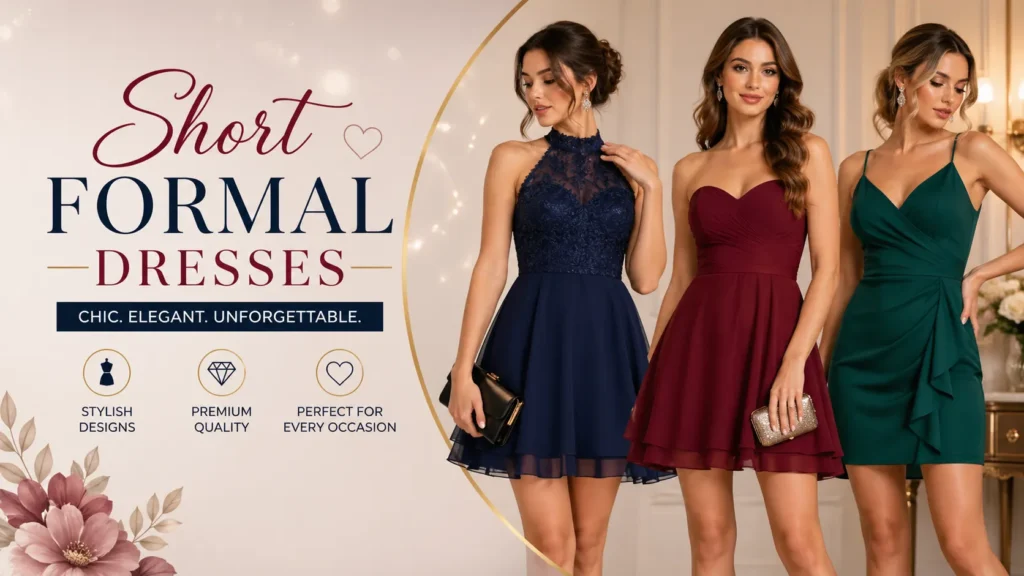
Short formal dresses have evolved from being occasional fashion statements into a fundamental element of contemporary formalwear in 2026. What was once considered unconventional for upscale occasions is now widely embraced across global fashion scenes. Women today are confidently choosing shorter hemlines for events that traditionally demanded floor-length gowns, and this shift reflects deeper changes in lifestyle, comfort preferences, and fashion philosophy.
From weddings and cocktail receptions to corporate dinners and upscale social gatherings, Short Formal dresses offer a perfect balance of sophistication, mobility, and modern charm. They are no longer seen as casual alternatives—they are now a primary choice for refined dressing.
So, what explains their growing popularity?
- They provide ease of movement and flexibility
- They feel lightweight and breathable
- They maintain a luxurious and polished appearance
- They align with modern minimalistic fashion values
Designers in 2026 are emphasizing:
- Streamlined silhouettes
- Precise tailoring
- High-end materials
- Subtle yet impactful detailing
The result is a garment that appears premium, refined, and timeless without excessive embellishment.
In this comprehensive guide, you will explore everything about short formal dresses—from their historical transformation and fabric selection to trending designs, styling strategies, and expert purchasing insights.
History & Evolution of Short Formal Dresses
Short formal dresses did not emerge suddenly—they are the outcome of decades of evolving fashion, cultural shifts, and changing societal norms.
Key Milestones
1920s (Flapper Era)
This period marked a revolutionary shift in women’s fashion. Hemlines rose to knee-length, symbolizing liberation, independence, and rebellion against restrictive clothing norms.
1950s (Cocktail Culture)
The introduction of the cocktail dress transformed social dressing. Shorter dresses became acceptable in semi-formal settings, blending elegance with practicality.
1980s (Bold Fashion Era)
This decade embraced dramatic styles, including glamorous mini dresses with bold silhouettes, sequins, and structured designs tailored for nightlife and events.
2020s–2026 (Modern Minimalism)
Contemporary fashion focuses on:
- Clean construction
- Refined aesthetics
- Premium-quality textiles
Functional elegance
Fabric Types & Materials Used
Fabric selection is arguably the most critical factor influencing the overall appearance, comfort, and perceived value of a dress. The same design can look either inexpensive or luxurious, depending entirely on material quality.
Popular Fabrics in 2026
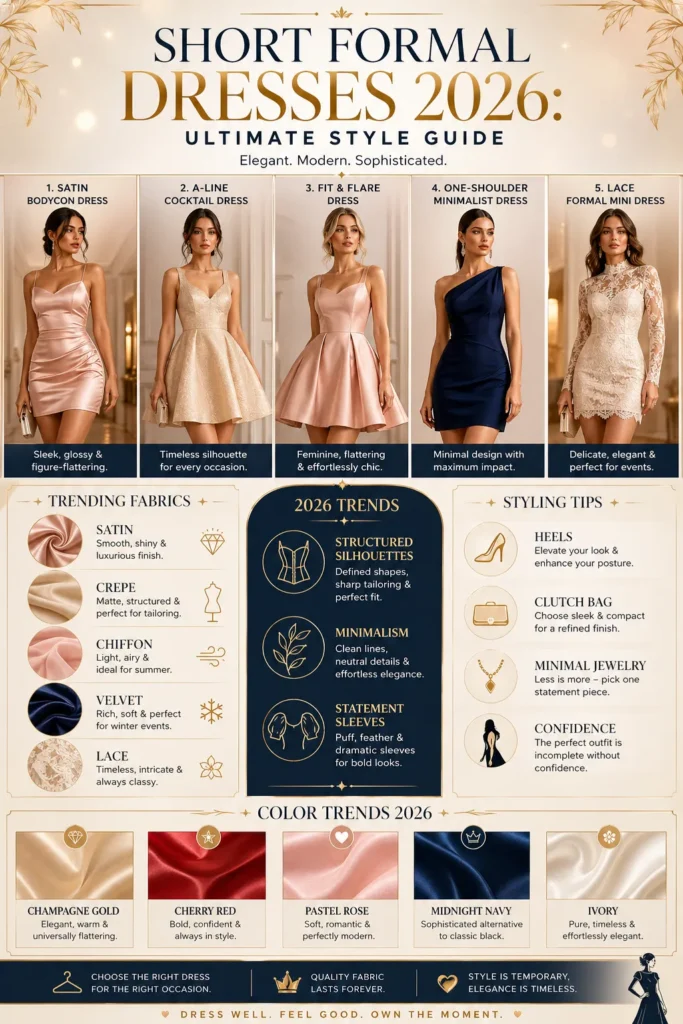
Satin
- Smooth, glossy surface
- Reflective finish
- Ideal for evening and upscale events
Crepe
- Slightly textured, matte appearance
- Structured yet comfortable
- Perfect for professional or corporate settings
Chiffon
- Lightweight and airy
- Flowing and delicate
- Suitable for warm weather and daytime events
Velvet
- Rich, dense texture
- Soft and plush feel
- Best suited for winter and evening occasions
Organza
- Crisp and sheer
- Adds volume and dimension
- Often used for layered designs
Lace
- Intricate and detailed
- Feminine and timeless
- Commonly used in wedding attire
Fabric Comparison Table
| Fabric Type | Texture | Best For | Season | Formal Level |
| Satin | Sleek & glossy | Evening events | All | High |
| Crepe | Matte & structured | Corporate wear | All | High |
| Chiffon | Light & breathable | Summer occasions | Summer | Medium |
| Velvet | Thick & luxurious | Winter parties | Winter | High |
| Lace | Detailed & delicate | Weddings | All | High |
Expert Insight:
A minimal design crafted from superior fabric will always appear more expensive and refined than a heavily embellished garment made from low-quality material.
Styles & Variations of Short Formal Dresses
Understanding different dress styles helps in selecting the most flattering and appropriate option for both your body type and occasion.
A-Line Dresses
- Fitted bodice with a flared skirt
- Universally flattering silhouette
- Ideal for weddings and formal gatherings
Bodycon Dresses
- Form-fitting design
- Accentuates natural curves
- Suitable for evening parties and bold looks
Fit & Flare Dresses
- Balanced proportions
- Feminine and graceful
- Perfect for semi-formal occasions
Cocktail Dresses
- Classic knee-length style
- Timeless and versatile
- Appropriate for corporate events and receptions
Wrap & Draped Dresses
- Adjustable fit
- Comfortable and adaptable
- Suitable for diverse body shapes
Choosing the right silhouette enhances both confidence and overall appearance.
Occasions to Wear Short Formal Dresses
Short formal dresses are now widely accepted across a variety of formal and semi-formal environments.
Common Occasions
- Wedding celebrations (guest attire)
- Cocktail parties
- Corporate functions
- Gala dinners
- Romantic evenings
- Graduation ceremonies
Golden Rule: Always align your outfit with the event’s dress code and cultural expectations.
Global Popularity & Cultural Influence
Short formal dresses are a global phenomenon, but styling preferences vary by region.
Trending Regions
- USA & Canada: Cocktail culture and modern party aesthetics
- UK: Refined semi-formal elegance
- France & Italy: Minimalist luxury and tailoring
- UAE & Middle East: Modest styling with premium fabrics
- Pakistan & India: Rapidly growing urban adoption
Fashion is becoming increasingly globalized, yet cultural nuances still shape styling choices.
Latest Trends in Short Formal Dresses (2026)
Fashion trends in 2026 revolve around refinement, precision, and impact without excess.
Top Trends
Structured Silhouettes
- Corset-inspired bodices
- Defined waistlines
- Architectural tailoring
Minimalism with Statement Details
- Asymmetrical cuts
- Open-back designs
- Clean yet striking aesthetics
Premium Fabrics Over Heavy Embellishment
- Satin
- Silk
- Crepe
Statement Sleeves
- Puff sleeves
- Feather accents
- Dramatic cuffs
Trend Philosophy:
“Less, but stronger” defines modern elegance.
Best Colors for Short Formal Dresses (2026)
Color selection significantly influences the overall impact of your outfit.
Trending Colors
- Midnight navy (modern alternative to black)
- Champagne gold
- Cherry red
- Soft metallic shades
- Pastel rose
Choose shades based on:
- Skin undertone
- Event type
- Time of day
How to Style Short Formal Dresses
Styling determines whether your outfit looks ordinary or exceptional.
Perfect Outfit Formula
Short Dress + Heels + Minimal Jewelry = Elegant Look
Footwear Guide
- High heels → elongate the legs
- Strappy sandals → modern aesthetic
- Pumps → timeless elegance
Accessories Tips
- Keep accessories minimal
- Focus on one standout piece
- Avoid excessive layering
Bags
- Clutches
- Mini handbags
- Neutral or metallic tones
The goal is to maintain balance and sophistication without visual overload.
Care Tips & Washing Guide
Proper care extends the lifespan and maintains the quality of your garments.
General Care Tips
- Always read fabric labels
- Hand-wash delicate materials
- Dry clean premium fabrics
- Avoid harsh chemicals
- Store garments properly
Care Table
| Fabric | Washing Method | Drying | Ironing |
| Satin | Dry clean | Air dry | Low heat |
| Chiffon | Hand wash | Hang dry | Low heat |
| Velvet | Dry clean | Flat dry | No iron |
| Crepe | Gentle wash | Air dry | Medium |
Buying Guide:
Selecting the perfect dress requires careful evaluation.
Fabric Quality
- Check thickness and texture
- Avoid overly synthetic shine
Fit & Structure
- Tailoring is crucial
- Should enhance body proportions
Occasion Matching
- Align with event formality
Comfort
- Ensure ease of movement
Stitching Quality
- Clean seams
- Durable finishing
Golden Rule:
A well-fitted, simple dress will always appear more luxurious and sophisticated.
Pros & Cons of Short Formal Dresses
Pros
- Comfortable
- Stylish
- Easy to wear
- Versatile
Cons
- Not suitable for extremely traditional events
- Requires thoughtful styling
- Length must be appropriate
Comparison: Short vs Long Formal Dresses
| Feature | ShortDresses | Long Dresses |
| Comfort | High | Medium |
| Mobility | Easy | Limited |
| Formality | Modern | Traditional |
| Styling | Minimal | Elaborate |
| Occasions | Versatile | Specific |
FAQs
A: Yes, especially A-line or lace dresses are perfect.
A: Above knee to knee-length is best.
A: Yes, structured cocktail dresses work great.
A: Satin and velvet are top choices.
Conclusion
Short formal dresses in 2026 beautifully combine elegance, comfort, and modern sophistication, making them a smart choice for today’s fashion-forward women. They offer versatility for multiple occasions while maintaining a polished and refined appearance. With the right fabric, fit, and minimal styling, these dresses can easily rival traditional long gowns. Trends now focus on simplicity, structure, and premium quality rather than heavy embellishments. Choosing the perfect dress depends on understanding your body type, event requirements, and personal style. When styled correctly with heels and subtle Acessories, short dresses create a confident and timeless look. They are practical, stylish, and aligned with modern fashion values. Ultimately, investing in a well-designed short formal dress ensures you always look graceful, confident, and effortlessly elegant.
