
Introduction
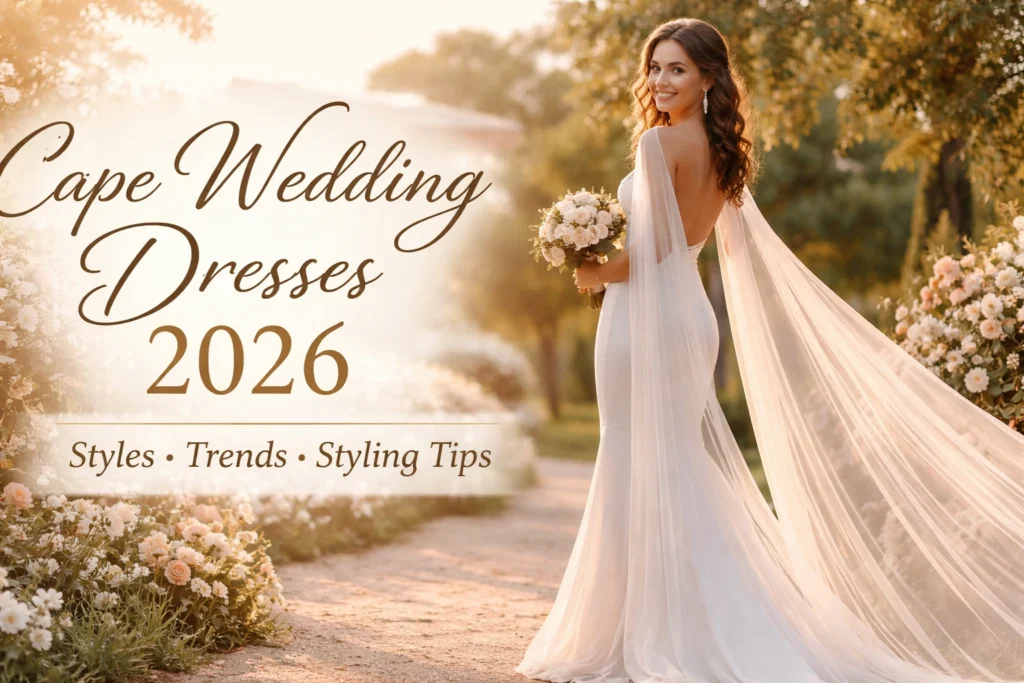
The cape wedding dress is no longer just a fashion statement—it’s a defining symbol of modern bridal identity in 2026. Today’s brides are moving beyond traditional veils, embracing designs that offer both visual drama and Functional Versatility. A flowing cape adds movement, personality, and a cinematic touch, transforming every step into a moment.
Unlike fixed, conventional elements, a cape introduces freedom. It can be worn for a grand entrance and removed for ease during celebrations—giving you two distinct bridal looks in one seamless outfit. Whether you’re walking down a grand aisle or celebrating outdoors, the cape wedding dress reflects a shift toward personal expression, comfort, and intentional styling
What is a Cape Wedding Dress?
A cape wedding dress features an elegant drape fastened at the shoulders, neck, or along the back. Flowing behind like a whisper of silk, it replaces – or complements – the usual veil. Sometimes soft, sometimes structured, the addition moves with grace instead of staying stiff in place. Not always sheer, some capes bring texture where veils often play safe. Fabric choices shift the mood entirely – velvet drapes feel bold, while lace brings delicate contrast.
Key Features
- Attached or removable cape design
- Flowing textiles such as tulle, chiffon, or lace
- Available in multiple lengths (short, medium, cathedral)
- Adds grace, motion, and refinement
- Allows multiple styling options
History & Origin of Cape Wedding Dresses
Cloaks have been around for a very long time, woven into how people dressed over generations. Styles shifted across eras, yet flowing outer layers kept appearing in wardrobes now and then.
Royal Beginnings
Queens once draped themselves in capes across Europe, a habit picked up by nobility. Worn not just for warmth, but also as quiet markers of rank. Elite circles embraced them, letting fabric speak before words.
- Authority
- Prestige
- Opulence
Long they tended to be, draped in rich detail, made with materials that felt too fine for everyday life.
Evolution in Bridal Fashion
- Early 1900s → Capes appeared in vintage bridal attire
- 1960s–70s → Sleek and minimalist cape designs gained popularity
- 2010s → Designers reintroduced capes as veil substitutes
- 2026 → Cape wedding dresses dominate modern bridal trends
Fabric Types & Materials used
Fabric choice matters – how it feels, how it looks, how easily you can move. Each detail ties back to what you pick at the start.
Popular Fabrics for a Cape Wedding Dress
Tulle
Floating on a breeze, almost weightless, perfect when softness speaks louder than shape. A whisper of fabric that dreams are made of, drifting through moments like morning mist.
Chiffon
Breezy fabric that moves easily, ideal when the sun heats up the sand. Light on skin, yet strong enough to catch a sea breeze now, then. Drapes well without sticking, stays cool even under bright skies.
Lace
A touch rough, a bit worn – perfect alongside timeless, older looks.
Organza
Volume builds fast when shape meets sharp lines. Drama slips in through clean cuts that hold their form. A solid frame gives lift, while defined edges bring intensity without effort.
Silk
Smooth and luxurious—perfect for premium weddings
Velvet
Cold months call for deeper tones. Weighty presence fits solemn moments. Fullness matters when skies stay low. Warmth hides in layers of sound. Dark days embrace what lingers longer.
Choosing Cape Wedding Dresses
Today’s brides are no longer dressing to meet expectations—they’re dressing to tell a story. A cape wedding dress offers something deeply personal: movement that mirrors emotion and design that adapts to the rhythm of the day. From the quiet, meaningful walk down the aisle to the energy of the reception, the cape evolves with every moment. It’s not just about looking elegant in photos—it’s about feeling unrestricted, confident, and completely yourself. In a time where individuality matters more than ever, the cape becomes less of an accessory and more of a signature.
Styles & Variations of Cape Wedding Dresses
From classic lace to modern silhouettes, cape wedding gowns span many styles. Some drape softly, others stand bold – each brings its own quiet charm.
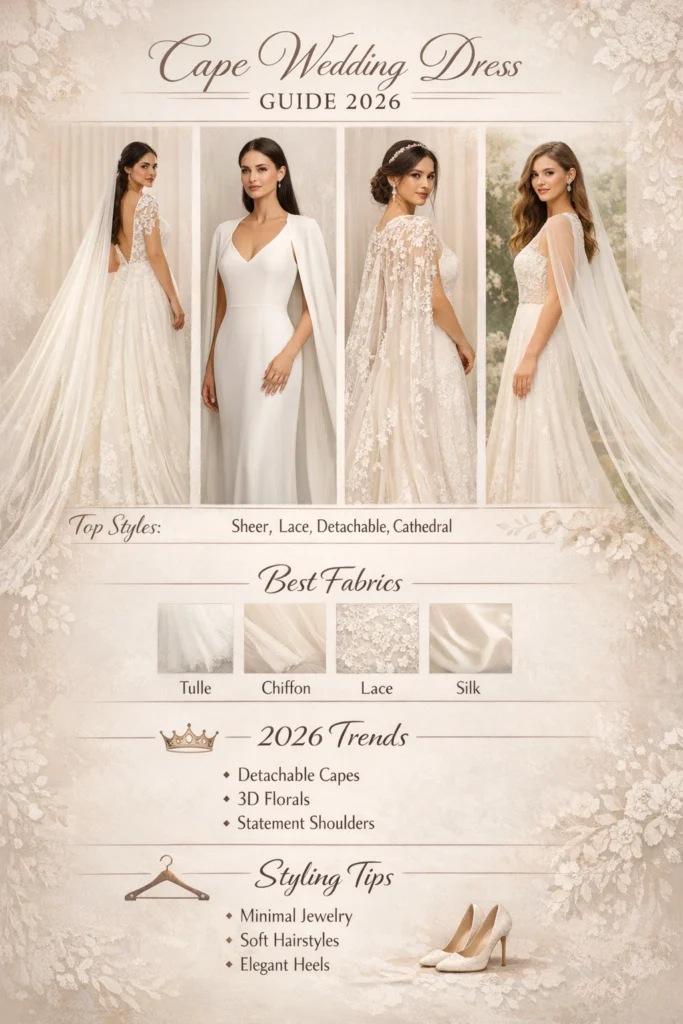
Sheer Cape Wedding Dress
- Crafted from transparent materials
- Light and breathable
- Ideal for outdoor weddings
Creates a fairy-tale and ethereal appearance
Lace Cape Bridal Gown
- Intricate detailing
- Timeless and romantic
- Suitable for traditional ceremonies
Detachable Cape Dress
- Removable cape design
- Two looks in one outfit
- Ideal for the ceremony and reception
One of the most demanded styles in 2026
Cathedral Cape (Royal Style)
- Long and dramatic
- Creates a grand entrance
- Best for luxury weddings
Minimalist Cape Dress
- Clean lines and simple structure
- Focus on elegance over embellishment
Ideal for modern and minimalist brides
Occasions Where Cape Wedding Dresses Are Worn
A single standout feature? It works nearly everywhere. The way this cut shifts between settings stands out most.
Suitable for:
- Church weddings
- Destination weddings
- Garden ceremonies
- Beach weddings
- Cultural events (Nikah, Barat, Reception)
Fine-tuned for quiet rooms, yet just at home near a crowded bar. Where one might expect stiffness, there’s instead ease – no matter the crowd, no matter the clock
Countries & Cultures Where It’s Popular
Becoming known far beyond its origins, the cape wedding dress now draws eyes worldwide.
Worldwide Popularity Cape Wedding Dresses
Europe (UK, France, Italy)
Inspired by royal heritage
USA
Favored by fashion-forward brides
Middle East & South Asia
Cape lehengas trending in Pakistan and India
Australia & Canada
Popular for outdoor and beach weddings
Latest Trends in 2026
Bridal fashion in 2026 emphasizes creativity and individuality.
Trending Features
- Detachable cape designs
- 3D floral embellishments
- Colored cape accents
- Layered bridal outfits
- Statement shoulders
Folks who make designs now care about fitting different needs, and they like things that shift roles easily.
How to Style a Cape Wedding Dress
How you present yourself shapes how others see you. A fresh cut makes a difference just like clean lines do. Details matter more than most think – little choices add up silently.
Footwear Cape Wedding Dresses
- Heels for formal events
- Flats for outdoor or beach settings
Accessories Cape Wedding Dresses
- Minimal jewelry
- Statement earrings
- Avoid heavy necklaces
Hairstyles Cape Wedding Dresses
- Soft curls
- Sleek bun
- Half-up Hairstyles
Color Pairing
- Ivory with gold
- Blush tones
- Champagne shades
Let the cape remain the focal point
Care Tips & Washing Guide
Fresh each day, it stays when care follows every wear. A clean touch keeps fabric bright beyond the years passing by. Gentle handling guards lace edges from fraying loose. Spotless storage blocks dust shadows forming overnight.
Cleaning Cape Wedding Dresses
- Dry clean only
- Avoid machine washing
- Treat stains immediately
Storage Cape Wedding Dresses
- Use breathable garment bags
- Keep away from sunlight
- Hang properly
Proper care preserves beauty and longevity
Buying Guide
Choosing the right dress requires thoughtful consideration.
Key Factors Cape Wedding Dresses
- Comfort and weight
- Fabric quality
- Cape attachment durability
- Ease of movement
- Weather Suitability
Comparison
Lightweight Cape
- High comfort
- Easy movement
- Ideal for summer
Heavy Cape
- Dramatic appearance
- Slightly less mobility
- Suitable for winter
Expert Advice Cape Wedding Dresses
- Walk and move in the dress before buying
- Observe how the cape flows
- Test sitting and mobility
- Choose detachable designs for flexibility
Pros & Cons of Cape Wedding Dresses
Advantages
- Distinctive and modern style
- Flexible styling options
- Elegant and dramatic effect
- Suitable for all body shapes
Disadvantages
- Can feel heavy
- May restrict movement
- Requires careful styling
- Not ideal in strong winds
FAQs
A: Cape-style gown brings fresh options, different from old veil designs. Style shifts here feel current, not stuck in the past.
A: Right – you’ll often find gowns that include removable capes made just for that reason.
A: Folks come in all forms, so clothing follows suit. Styles shift to match each frame, simply because one size never fits all. Whatever your build, something out there lines up just right – no exceptions.
A: Light as air, chiffon dances where tulle follows – both let skin breathe easy. A breeze slips through their weave instead of sticking as heavier cloths might.
A: Fabric choice shapes cost, while design tweaks shift it further. Brand name tags along, nudging price up or down. Each detail plays a part, steering what you pay.
Conclusion
Cape wedding dresses have firmly established themselves as one of the most elegant and versatile bridal trends of 2026. They combine movement, individuality, and practicality—allowing brides to create a look that evolves throughout their special day.
From soft, flowing silhouettes to bold, structured statements, the cape adds a layer of storytelling that goes beyond tradition. It’s not just about replacing the veil—it’s about redefining bridal style on your own terms.
If you’re planning your wedding, consider a cape gown not just for its beauty, but for the freedom and Flexibility it offers. The right choice won’t just complement your look—it will enhance your entire experience.
