
Introduction
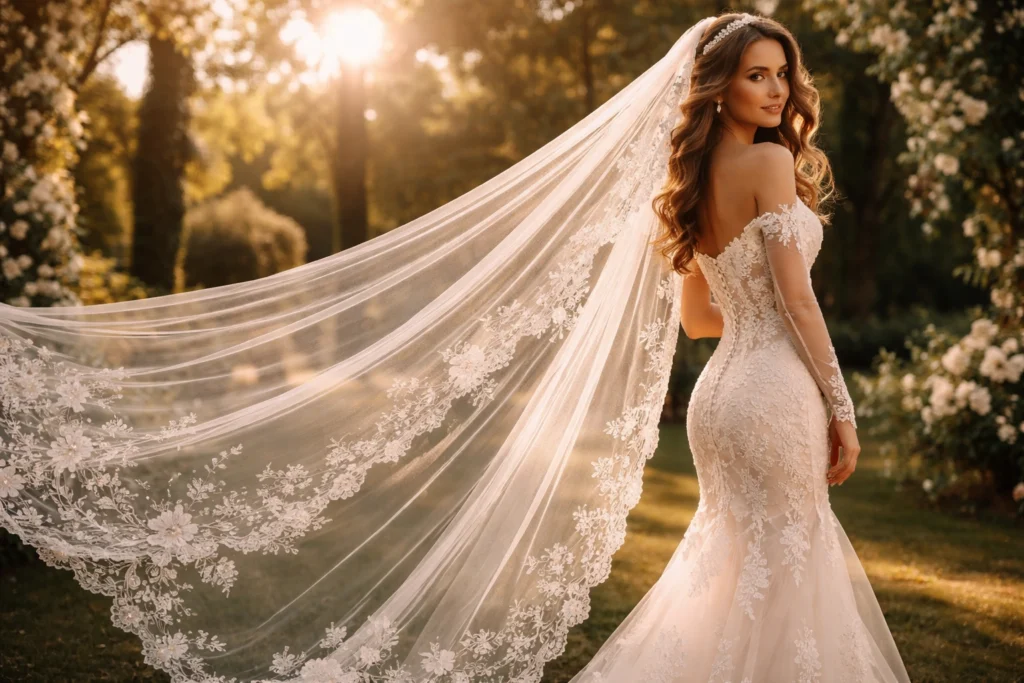
A wedding dress veil is much more than simply a wedding dress accessory. It’s emotional, symbolic, and visually appealing. Wedding dress veils have been around for many years and have represented grace, femininity, and tradition. However, in today’s modern weddings, the wedding dress veil has become a significant wedding dress fashion statement. It can totally redefine your look. Whether you’re thinking of a dramatic cathedral wedding dress veil flowing beautifully behind your wedding dress or a romantic fingertip Wedding Dress Veil for a clean and modern look, your wedding dress veil can add charm, sophistication, and magic to your look. Your wedding dress veil can frame your face, complement your dress, and create memorable visual moments, especially when walking down the aisle. However, getting the right wedding dress veil can be overwhelming. There are many styles, lengths, fabrics, and looks to choose from.
What is a Wedding Dress Veil?
A wedding dress veil is a lightweight fabric accessory that is usually placed on the head of a bride using a comb, tiara, headband, crown, etc.
Traditionally, a wedding veil covered the bride’s face, representing modesty, purity, and innocence. Today, in the context of modern wedding fashion trends, it is more about the bride’s choice of expression and elegance rather than tradition.
History & Origin of Wedding Veils
The background information on the veil helps to give more significance to this timeless piece of wedding attire.
Ancient Rome
The veil, which is brightly colored (usually red or orange), is meant to guard the bride from evil spirits.
Medieval Europe
The veil is symbolic, and the bride is protected from evil spirits.
Victorian Era
Queen Victoria made the white wedding veil and dress popular, and this is now the standard wedding attire.
Modern Times
The veil is not symbolic; rather, it is more individualistic, fashionable, and subjective. The bride chooses the veil depending on her preferences and comfort.
Fabric Types & Materials Used in Wedding Veils
The material used for your veil plays a significant role in determining its look, texture, and feel. The material for your veil can make or break your entire look as a bride.
Tulle (Most Popular)
- Lightweight, airy, and soft
- Sheer and flowy texture
- Universally flattering
Best for: Classic, modern, and versatile styles
Lace
- Detailed and romantic
- Often used as edging
- Adds vintage sophistication
Best for: Traditional and elegant brides
Silk Tulle
- Ultra-soft and Luxurious
- High-end and premium quality
- Drapes beautifully
Best for: Luxury weddings
Organza
- Slightly structured
- Crisp and defined
- Holds its shape well
Best for: Structured or modern designs
Netting
- Common in birdcage veils
- Bold, retro aesthetic
- Short and stylish
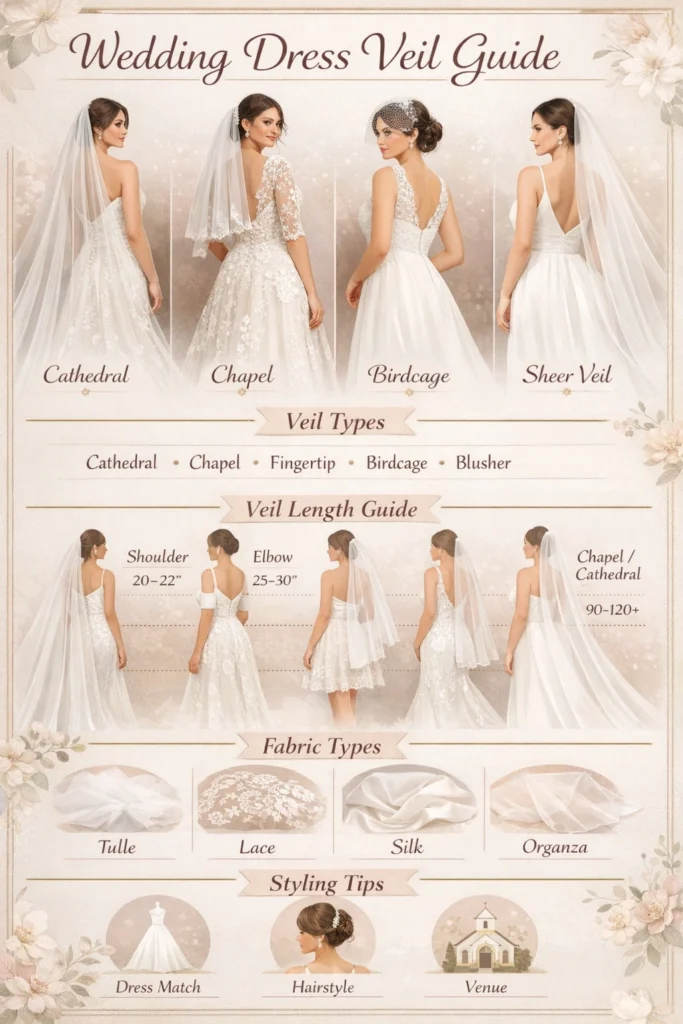
Types of Wedding Veils
Choosing the right type of veil is important in attaining the perfect look for your wedding.
Cathedral Veil
- Longest and most dramatic
- Extends beyond the gown’s train
- Creates a regal, royal appearance
Chapel Veil
- Slightly shorter than a cathedral
- Elegant yet manageable
Fingertip Veil
- Ends at fingertips
- Most popular and versatile
Birdcage Veil
- Short and vintage-inspired
- Covers part of the face
Blusher Veil
- Covers the face during the ceremony
- Soft, romantic, and traditional
Wedding Veil Length Guide
Choosing the correct length is crucial for harmony and proportion.
| Veil Length | Length Range | Best For |
| Shoulder | 20–22 inches | Casual Weddings |
| Elbow | 25–30 inches | Semi-formal events |
| Fingertip | 36–45 inches | Classic bridal look |
| Chapel | 90–108 inches | Elegant ceremonies |
| Cathedral | 120+ inches | Grand weddings |
How to Choose the Perfect Wedding Dress Veil
Dress Style Based
- Ball gown → Cathedral veil
- Mermaid dress → Fingertip veil
- Simple gown → Detailed or embellished veil
Face Shape
- Round face → Longer veils elongate features
- Oval face → Most styles suit well
Based on Hairstyle
- Updos → Support longer veils
- Loose waves → Lightweight veils work best
Based on Venue
- Beach weddings → Short or fingertip veils
- Church weddings → Chapel or cathedral veils
How to Match Veil With Wedding Dress
The appropriate length is also very important in ensuring harmony and proportion.
Golden Rules
- Lace dress → Lace-edged veil
- Minimal dress → Statement veil
- Detailed gown → Simple veil
Occasions Where Wedding Veils Are Worn
Veils are traditionally worn during:
- Wedding ceremonies
- Religious rituals
- Bridal Photoshoots
- Reception (optional trend)
Making sure that there is harmony between the veil and the gown is important.
Countries & Cultures Where Veils Are Popular
Europe
- Traditional church weddings
- Long veils are common
USA & UK
- Classic bridal fashion
- Fingertip and chapel veils dominate
Middle East
- Luxurious and ornate veils
- Heavy embellishments
South Asia
- Often combined with dupatta-style coverings
Latest Wedding Veil Trends You Must Know
Pearl-Embellished Veils
Soft pearls add elegance and dimension
Floral Lace Veils
Romantic and feminine aesthetic
Colored Veils
Blush, champagne, and pastel tones
Embroidered Message Veils
Custom names or meaningful text
Minimalist Sheer Veils
Clean, modern, understated elegance
How to Style a Wedding Dress Veil
Shoes
- Heels → Pair well with long veils
- Flats → Ideal for outdoor weddings
Accessories
- Keep jewelry minimal
- Avoid excessive layering
Colors
- Match the veil tone with the dress
- Avoid mismatched shades
Placement
- High placement → Formal look
- Low placement → Relaxed and soft
Wedding Veil Care Tips & Washing Guide
Cleaning Tips
- Hand wash with cold water
- Use a mild detergent
- Avoid machine washing
Storage Tips
- Hang or lay flat
- Use breathable garment bags
- Keep away from humidity
Wrinkle Removal Wedding Dress Veil
- Use gentle steaming
- Avoid direct ironing
Wedding Veil Buying Guide (Expert Advice)
What to Look For
- Fabric quality
- Stitching precision
- Comfort and Wearability
- Weight balance
- Proper length
Budget Guide
| Category | Price Range | Features |
| Budget | $20–$80 | Basic designs |
| Mid-Range | $100–$300 | Better materials |
| Luxury | $500+ | Designer craftsmanship |
Where to Buy
- Bridal boutiques
- Online retailers
- Custom designers
Pros & Cons of Wearing a Wedding Veil
Pros
- Enhances elegance
- Completes the look
- Stunning in photographs
- Adds tradition
Cons
- May feel uncomfortable
- Not ideal for all venues
- Requires proper styling
- Additional expense
FAQs
A: No, this is not a requirement for all brides; in fact, many brides today do not wear a wedding dress veil.
A: Yes, you can definitely wear a wedding dress veil even if you have short hair.
A: No, a wedding veil is not necessary; in fact, it looks beautiful on a bride.
A: Yes, you can definitely wear a wedding dress veil at the reception too; however, this is usually not done as it can be uncomfortable for the bride.
Conclusion
While the wedding dress veil may be considered an additional aspect to your wedding attire, it is also a traditional and iconic symbol of elegance, grace, and personal style. From traditional cathedral veils to modern and minimalist wedding dress veils, there are many options available to help create a beautiful and perfect wedding look. In choosing your wedding dress veil, it’s important to consider your personal style, wedding venue, and wedding theme, as well as your dress and your hairstyle. While there are many traditional wedding dress veils available, from traditional blusher veils to modern and contemporary sheer wedding dress veils, it’s also important to consider your personal style and Wedding Theme. While your wedding dress may be an important aspect of your wedding attire, your wedding dress veil is also an important aspect to consider.
