
Introduction
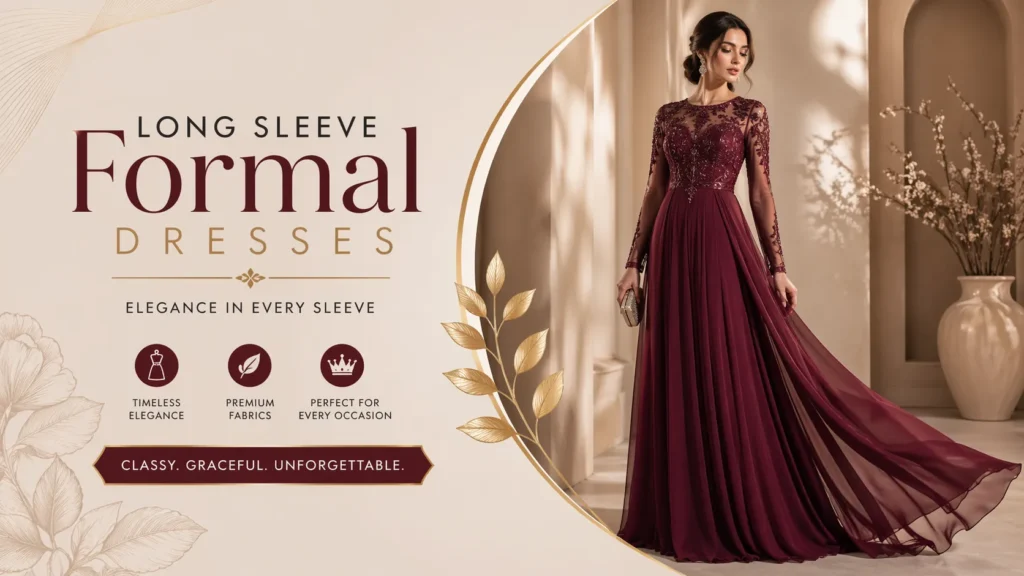
Long sleeve formal dresses have transformed into one of the most influential fashion choices in 2026. They are no longer simply associated with modest dressing—they now symbolize self-assurance, grace, adaptability, and contemporary elegance.
Whether you are attending a wedding ceremony, black-tie gala, evening celebration, or corporate gathering, these dresses provide a flawless combination of sophistication and comfort. Their appeal lies in their ability to merge refinement with practicality, making them suitable for diverse occasions.
One of the most remarkable advantages of Long Sleeve Formal dresses is their year-round flexibility. Lightweight textiles such as chiffon and organza are ideal for warmer climates, while heavier materials like velvet and wool blends offer warmth during colder seasons. This adaptability ensures they remain a wardrobe essential for modern women.
History & Origin of Long Sleeve Formal Dresses
The Beginning: Royal and Aristocratic Fashion
The origin of long sleeve dresses dates back centuries, deeply rooted in aristocratic and royal fashion traditions. During the Victorian era, women wore floor-length gowns featuring extended sleeves as a representation of:
- Decorum and modesty
- Prestige and affluence
- Social hierarchy
These garments were often crafted from dense fabrics like silk, brocade, and velvet, enriched with intricate embroidery, lace detailing, and embellishments. The sleeves themselves were a symbol of elegance and restraint.
Fashion Evolution Over Time
1920s–1930s
Fashion shifted toward slimmer silhouettes and more refined tailoring. Sleeves became more structured, and evening gowns adopted a sleek, elongated look.
1950s (Hollywood Era)
This period introduced glamorous, figure-enhancing gowns inspired by cinema icons. Long sleeve dresses gained popularity on red carpets and formal occasions, emphasizing femininity and sophistication.
Modern Era (2000s–2026)
In the modern fashion landscape, long sleeve dresses represent a fusion of modest fashion and luxury aesthetics. Designers now prioritize:
- Sustainable materials
- Versatile silhouettes
- Inclusive sizing
- Innovative textile technology
Today, these dresses seamlessly blend tradition with modernity, making them a global fashion staple.
Fabric Types & Materials Used in Long Sleeve Formal Dresses
Selecting the appropriate fabric plays a crucial role in determining the comfort, appearance, and suitability of your outfit.
Chiffon
A lightweight, airy fabric known for its breathable and flowy nature. Ideal for summer events, chiffon creates a soft, ethereal look that enhances movement.
Velvet
A dense, plush textile that exudes luxury. Perfect for winter occasions, velvet provides warmth while adding depth and richness to the outfit.
Satin
Recognized for its smooth surface and glossy finish, satin is a preferred choice for formal gatherings. It delivers a sleek, polished, and refined appearance.
Lace
A delicate and decorative fabric often used in sleeves or overlays. Lace adds a romantic and feminine touch, making it popular for weddings and special events.
Tulle
A light, net-like material commonly used in ball gowns. It creates volume and dramatic flair, ideal for grand occasions.
Fabric Comparison Table
| Fabric | Best For | Season | Style Effect |
| Chiffon | Weddings, parties | Summer | Soft & flowing |
| Velvet | Galas, formal events | Winter | Rich & luxurious |
| Satin | Formal occasions | All | Sleek & elegant |
| Lace | Weddings | All | Romantic & refined |
| Tulle | Ball gowns | Winter | Dramatic & voluminous |
Styles & Variations of Long Sleeve Formal Dresses
There are numerous designs available, each tailored to different body shapes, preferences, and events.
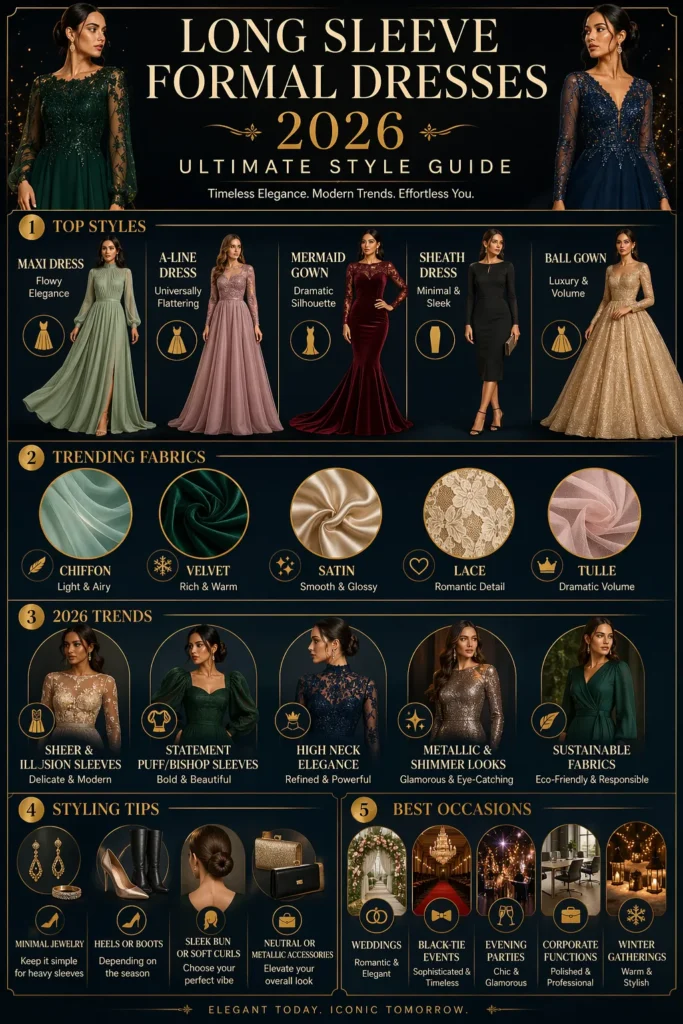
Long Sleeve Maxi Dresses
These full-length dresses offer timeless elegance and are ideal for weddings and formal ceremonies.
A-Line Dresses
Featuring a fitted top and flared bottom, A-line dresses are universally flattering and comfortable.
Mermaid Gowns
Designed to hug the body and flare at the hem, these gowns create a dramatic and glamorous silhouette.
Sheath Dresses
A straight-cut design that provides a clean, minimalist look—perfect for corporate settings.
Ball Gown Dresses
Characterized by voluminous skirts, these dresses are perfect for luxurious events and grand celebrations.
Occasions to Wear Long Sleeve Formal Dresses
One of the key advantages of these dresses is their versatility.
Weddings
Soft fabrics like lace and chiffon paired with pastel shades create an elegant appearance.
Black-Tie Events
Velvet or satin gowns in darker tones enhance sophistication and formality.
Corporate Functions
Minimalist sheath dresses provide a professional and polished look.
Evening Parties
Shimmering fabrics and metallic tones add a trendy and eye-catching element.
Winter Events
Thicker materials ensure warmth while maintaining elegance.
Popularity Across Countries & Cultures
Long sleeve formal dresses are globally appreciated due to their ability to align with both modern and modest fashion standards.
Europe
Classic silhouettes and seasonal practicality dominate fashion trends.
Middle East
High demand for modest yet luxurious attire, often featuring intricate designs and premium fabrics.
Asia
Widely used in weddings and cultural events, combining tradition with contemporary fashion.
North America
Popular in red carpet events and evening wear collections.
Latest Trends in 2026
Fashion in 2026 embraces boldness, individuality, and innovation.
Sheer & Illusion Sleeves
Transparent fabrics with embroidery and embellishments create a delicate yet striking effect.
Statement Sleeves
Puff, bishop, and balloon sleeves add volume and drama.
High Neck Designs
These designs offer a refined and powerful aesthetic.
Metallic & Shimmer
Perfect for evening events, these fabrics enhance visibility and glamour.
Sustainable Fabrics
Eco-friendly materials are becoming increasingly popular in ethical fashion.
Bold Colors
Trending shades include emerald green, burgundy, champagne gold, and midnight black.
How to Choose the Perfect Long Sleeve Formal Dress
Selecting the right dress depends on multiple factors.
Based on Body Type
- Hourglass: Mermaid styles
- Pear Shape: A-line silhouettes
- Petite: High-waisted designs
- Plus Size: Flowy or structured styles
On Occasion
- Wedding: Lace and soft tones
- Gala: Velvet or satin
- Office: Simple and minimal
Based on Season
- Summer: Lightweight fabrics
- Winter: Thick and insulating materials
How to Style Long Sleeve Formal Dresses
Styling enhances the overall look and creates a cohesive outfit.
Shoes
- Heels for elegance
- Boots for colder seasons
Accessories
- Minimal jewelry for detailed sleeves
- Clutch bags for formal settings
Hairstyles
- Soft curls for a romantic feel
- Sleek buns for a modern touch
Color Coordination
- Black dress → Gold or silver accents
- Pastels → Neutral tones
- Bold colors → Keep accessories simple
Care Tips & Washing Guide
Proper maintenance ensures longevity.
Basic Care
- Always follow garment labels
- Use gentle cleaning methods
Fabric-Specific Care
- Lace → Hand wash
- Satin & Velvet → Dry clean
- Tulle → Handle delicately
Storage Tips
- Use breathable garment covers
- Avoid direct sunlight exposure
Buying Guide:
Purchasing a formal dress requires careful consideration.
Key Factors
Fabric Quality → Choose durable and premium materials
Fit & Comfort → Ensure ease of movement
Occasion Suitability → Match the event
Versatility → Opt for reusable designs
Quick Buying Checklist Table
| Factor | What to Check |
| Fabric | Soft, durable, breathable |
| Fit | Comfortable and flattering |
| Design | Trendy yet timeless |
| Price | Worth the investment |
Pros & Cons
Pros
- Elegant and timeless
- Suitable for all seasons
- Ideal for modest fashion
- Versatile for multiple occasions
Cons
- Can feel warm in hot weather
- Heavy fabrics reduce airflow
- Requires thoughtful styling
Common Mistakes to Avoid
- Wearing thick fabrics in summer
- Ignoring body proportions
- Over-Accessorizing
- Choosing outdated sleeve designs
Long Sleeve Dresses in Modern Fashion
Fashion continues to evolve rapidly, and long sleeve dresses remain at the forefront.
Key Reasons for Popularity
- Growth of modest fashion
- Increased demand for sustainability
- Multi-season usability
These garments are not just a temporary trend—they represent the future direction of fashion.
FAQs
A: Yes, they are one of the top fashion trends due to their elegance and versatility.
A: Yes, choose breathable fabrics like chiffon.
A: Yes, they are perfect for weddings and formal events.
A: Velvet and wool blends are ideal.
Conclusion
Long sleeve formal dresses represent the perfect fusion of elegance, comfort, and adaptability. In 2026, they have become an essential component of modern fashion. From luxurious velvet gowns to lightweight chiffon ensembles, there are endless Possibilities to suit every occasion and personal style. By understanding fabrics, silhouettes, emerging trends, and styling techniques, you can confidently select a dress that reflects your personality and enhances your appearance. Whether attending a wedding, gala, or evening celebration, long sleeve formal dresses will always ensure you look refined, confident, and effortlessly stylish.
