
Introduction
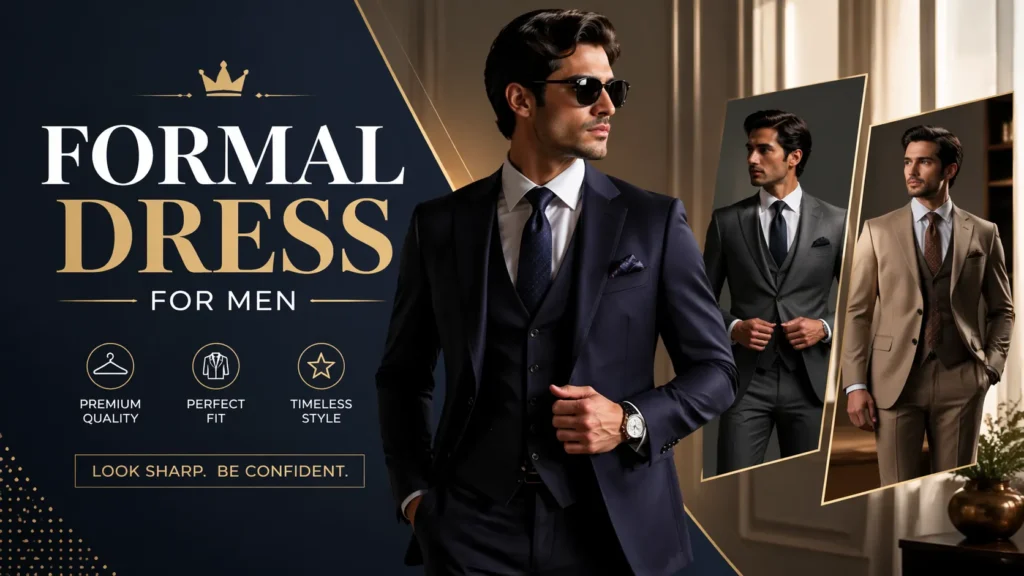
Formal Dress for Men is far more than just clothing; it is a structured form of visual communication that expresses confidence, discipline, personality, and social awareness. In 2026, formal menswear has transformed significantly from rigid traditional suits into more adaptive, comfortable, and style-conscious attire that blends elegance with practicality.
Modern man does not dress formally only to follow rules but to express identity, professionalism, and sophistication. Whether attending a corporate meeting, wedding ceremony, business conference, or luxury evening event, a well-structured formal outfit becomes a powerful tool of impression-building.
Modern fashion trends now prioritize three essential pillars: comfort, refinement, and individuality. Designers focus on breathable materials, improved tailoring techniques, and versatile silhouettes that allow men to look polished without sacrificing ease of movement or long-hour comfort.
This complete guide explores everything about Formal Dress for Men, including definitions, historical evolution, fabric selection, outfit categories, styling principles, trends of 2026, common mistakes, and expert recommendations. The aim is to help you build a timeless, versatile, and powerful wardrobe suitable for every formal occasion.
What is Formal Dress for Men?
Formal Dress for Men refers to a well-structured and refined dress code designed for professional environments, ceremonial events, and high-status social gatherings. It follows a disciplined approach to styling where every element contributes to a clean, elegant, and coordinated appearance.
At its core, formal dressing is based on three foundational principles:
- Precision tailoring with structured fitting
- Premium-quality and season-appropriate fabrics
- Minimalist yet balanced styling approach
Unlike casual wear, which focuses on relaxation and individuality, formal wear emphasizes order, presentation, and sophistication. It is designed to create a strong visual impact without unnecessary exaggeration.
Core Elements of Formal Dressing
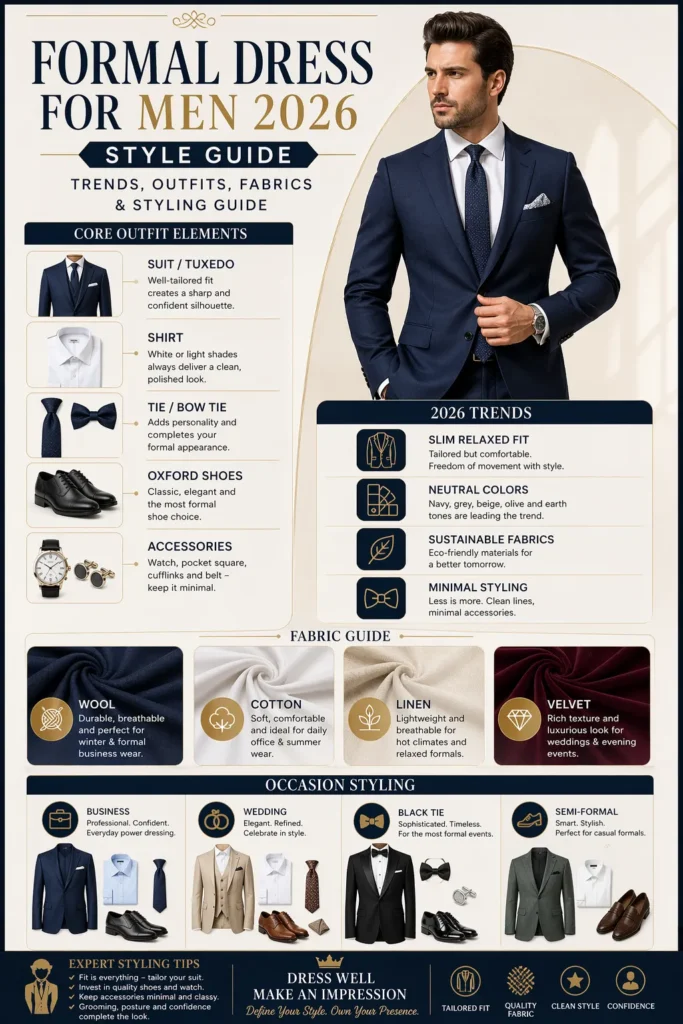
A complete formal outfit for men generally includes carefully selected components that work together harmoniously:
- A tailored suit or tuxedo
- Crisp dress shirt in neutral tones
- Formal leather shoes such as Oxford or Derby
- Necktie or bow tie, depending on the occasion
- Subtle accessories like a wristwatch, cufflinks, and a belt
The objective is not to overdecorate but to maintain elegance through simplicity and precision.
History of Formal Dress for Men
The evolution of formal menswear reflects centuries of cultural, social, and economic transformation. Clothing has always represented status, authority, and identity.
17th–18th Century (Aristocratic Period)
During this era, formal attire was heavily influenced by royalty and aristocracy. Men wore elaborate coats, embroidered waistcoats, silk fabrics, and decorative elements that symbolized wealth and dominance.
19th Century (Birth of the Modern Suit)
The structured suit began to emerge in Britain, introducing more refined tailoring and simplified silhouettes. Clothing became less decorative and more functional while still maintaining elegance.
20th Century (Tuxedo & Business Era)
The tuxedo became a symbol of evening sophistication. At the same time, business suits became standard professional wear worldwide, defining corporate identity.
21st Century (Slim Fit Revolution)
Modern fashion shifted toward slim-fit designs, improved comfort, and cleaner aesthetics. Functionality started becoming as important as appearance.
2026 Modern Era
The latest evolution includes sustainable fabrics, relaxed tailoring, smart textiles, and luxury minimalism, making formal wear more adaptable than ever.
Fabric Guide for Formal Dress for Men
Fabric selection plays a crucial role in defining comfort, durability, and appearance.
Wool
- Highly durable and structured
- Excellent breathability
- Ideal for professional suits and winter wear
Cotton
- Soft and comfortable texture
- Suitable for warm climates
- Best for long office hours
Linen
- Extremely breathable and lightweight
- Offers a relaxed yet formal appearance
- Perfect for summer events
Polyester Blends
- Wrinkle-resistant material
- Budget-friendly option
- Common in everyday office wear
Velvet
- Luxurious texture and rich appearance
- Best for weddings and evening functions
Fabric Comparison Overview
| Fabric | Comfort | Formal Level | Season |
| Wool | High | Very High | Winter |
| Cotton | High | Medium | Summer |
| Linen | Very High | Medium | Summer |
| Polyester | Medium | Medium | All |
| Velvet | Medium | Luxury High | Winter |
Types of Formal Dress for Men
Black Tie Formal Wear
- Classic black tuxedo
- White dress shirt
- Bow tie
- Polished Oxford shoes
Business Formal Attire
- Navy or charcoal suit
- White or light blue shirt
- Optional tie
- Leather formal shoes
Wedding Formal Dress
- Three-piece suit or fusion attire
- Light and elegant color palette
- Decorative pocket square
Semi-Formal Style
- Blazer with trousers
- No tie required
- Loafers or derby shoes
Modern Smart Formal
- Slim-fit blazer with turtleneck or shirt
- Minimal accessories
- Contemporary aesthetic
Occasions for Formal Dress for Men
Formal attire is suitable for multiple important situations:
- Corporate meetings
- Job interviews
- Weddings and engagements
- Business conferences
- Award ceremonies
- Formal dinners
- International events
Latest Trends in Formal Dress for Men (2026)
Modern trends focus on simplicity combined with sophistication:
- Relaxed slim-fit tailoring
- Neutral and earthy tones
- Monochromatic suit designs
- Textured fabrics like tweed and wool blends
- Minimalist accessory usage
- Eco-friendly sustainable materials
How to Style Formal Dress for Men
Shirt Selection
- White shirt: Most versatile and formal
- Light blue: Modern office appearance
- Black shirt: Evening luxury styling
Shoe Guide
- Oxford: Most formal option
- Derby: Flexible semi-formal choice
- Loafers: Smart casual formal blend
Accessories
- Matching leather belt and shoes
- Elegant wristwatch
- Pocket square for events
- Cufflinks for tuxedos
Common Mistakes in Formal Dressing
- Wearing an incorrect suit size
- Overloading accessories
- Mixing conflicting colors
- Using unpolished shoes
- Ignoring tailoring importance
Fit is always more important than brand value.
Buying Guide for Formal Dress for Men
- Prioritize proper fitting over brand names
- Start with neutral color suits
- Inspect fabric quality carefully
- Invest in tailoring services
- Build a mix-and-match wardrobe
A properly fitted mid-range suit often looks superior to an expensive but poorly fitted one.
Care & Maintenance Tips
Suit Maintenance
- Dry clean occasionally
- Store using wooden hangers
- Keep in breathable garment bags
Shoe Maintenance
- Regular polishing
- Keep dry and dust-free
- Use shoe trees for structure
Pros & Cons
Advantages
- Enhances confidence
- Strong first impression
- Suitable for multiple occasions
- Long-term wardrobe investment
Disadvantages
- Can be costly
- Requires maintenance
- Less comfortable in extreme heat
- Needs proper tailoring
Expert Fashion Tips
- Always prioritize tailoring
- Maintain at least two formal suits
- Invest in high-quality shoes first
- Keep accessories minimal
- Focus on grooming and posture
Quick Summary
| Factor | Importance |
| Fit | ⭐⭐⭐⭐⭐ |
| Fabric | ⭐⭐⭐⭐⭐ |
| Color | ⭐⭐⭐⭐ |
| Accessories | ⭐⭐⭐ |
| Shoes | ⭐⭐⭐⭐⭐ |
FAQs
A: A black tuxedo paired with a bow tie and Oxford shoes represents the highest level of formality.
A: Yes, modern styling allows partial formal combinations such as blazers with jeans or chinos.
A: Navy blue and charcoal grey are the most versatile and beginner-friendly options.
A: Yes, tailoring ensures perfect fitting, which is essential for a polished appearance.
Conclusion
Formal Dress for Men in 2026 represents a balanced fusion of tradition and modern innovation. It is no longer limited to strict rules but has evolved into a flexible expression of Personality, professionalism, and elegance.
A well-dressed man is defined not by expensive clothing but by attention to fit, fabric quality, and thoughtful styling decisions. Building a strong wardrobe requires patience, investment in tailoring, and an understanding of timeless fashion principles.
By following the principles outlined in this guide, you can develop a powerful, versatile, and confident formal style that works in every professional and social environment.
