
Introduction
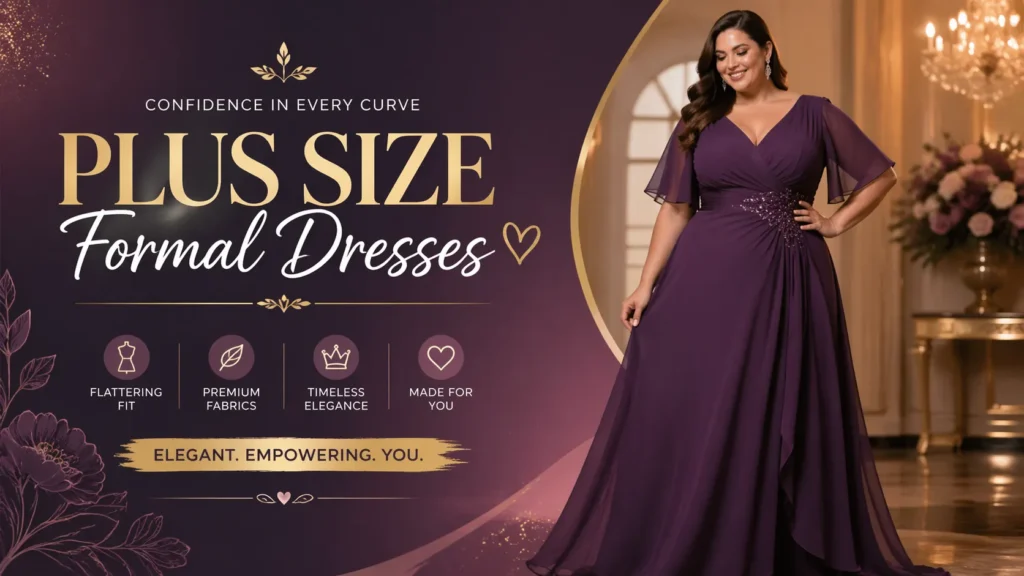
Plus-size formal dresses have undergone a remarkable transformation over the past decade, evolving from limited, generic clothing options into highly engineered, fashion-forward garments designed specifically to celebrate curves, structure, and individuality.
In earlier fashion eras, plus-size clothing was often simply an enlarged version of standard sizing, which frequently ignored proportional balance, body contouring, and comfort. However, in 2026, the fashion industry has entered a new phase where design intelligence, fabric innovation, and inclusive tailoring dominate the market.
Plus-Size formal dresses are not created to conceal the body but to enhance, define, and empower natural curves with elegance and sophistication. Designers now focus on architectural garment construction, strategic seam placement, and supportive internal structures that improve posture, silhouette, and confidence.
Whether attending a wedding ceremony, corporate gala, evening dinner, prom night, or luxury event, selecting the right formal dress is no longer just about appearance—it is about identity, confidence, and personal expression.
What Are Plus-Size Formal Dresses?
Plus-size formal dresses are specially engineered garments designed for individuals who typically wear size 14 and above. However, modern fashion defines them far beyond numerical sizing.
These dresses are not simply enlarged clothing pieces—they are precisely constructed fashion systems designed around curves, proportions, and movement.
Key Structural Features
- Enhanced bust support and shaping panels
- Defined waist contouring zones
- Strategically positioned seam lines
- Reinforced stitching for durability
- High-quality inner lining for comfort and structure
- Stretch-adaptive fabric zones for flexibility
These elements work together to improve fit accuracy, enhance silhouette definition, and provide all-day comfort without restricting movement.
Core Concept Difference
| Feature | Standard Dresses | Plus Size Formal Dresses |
| Design Method | Scaled sizing | Body-engineered design |
| Support System | Minimal | Structured internal support |
| Fabric Strategy | Basic stretch | Multi-layered reinforcement |
| Fit Philosophy | General fit | Curve-specific tailoring |
| Comfort Level | Moderate | High adaptability |
The most important shift in modern fashion is this:
Plus-size design is now based on engineering, not enlargement.
History & Evolution of Plus Size Formal Dresses
The evolution of plus-size fashion reflects broader cultural shifts toward inclusivity, representation, and body positivity.
Early Fashion Era (1920s–1950s)
During this period, clothing design followed conservative silhouettes. Plus-size options were extremely limited, often loose-fitting and shapeless.
Mid-Century Phase (1960s–1980s)
Fashion remained restrictive, with minimal attention given to plus-size aesthetics. Clothing often prioritized coverage over style.
Transitional Phase (1990s–2000s)
The fashion industry began recognizing diverse body types. Dedicated plus-size brands started emerging, introducing more structured silhouettes.
Modern Era (2010–Present)
The rise of body positivity revolutionized fashion. Designers began focusing on inclusivity, personalization, and advanced tailoring techniques.
2026 Fashion Reality
Today, plus-size fashion represents a multi-billion-dollar global industry, driven by innovation in:
- 3D garment modeling
- Smart fabric engineering
- Inclusive runway representation
- Personalized fit systems
Fabric Types & Materials Used in Modern Dresses
Fabric selection is one of the most critical aspects of plus-size formal dress design. The wrong fabric can distort shape, while the right one enhances elegance and structure.
Satin
- Glossy, smooth surface texture
- Ideal for evening and luxury events
- Provides a structured drape effect
Chiffon
- Lightweight and breathable material
- Perfect for warm climates and summer occasions
- Requires an inner lining for proper structure
Velvet
- Rich, dense, and luxurious texture
- Ideal for winter formal wear
- Naturally slimming visual effect
Scuba Knit
- Thick stretch fabric with structure
- Excellent for body contouring
- Maintains shape over time
Tulle
- Net-like layered fabric
- Adds volume and dramatic effect
- Common in gowns and prom dresses
Fabric Performance Comparison
| Fabric | Best Use | Strength | Limitation |
| Satin | Weddings & galas | Elegant drape | Wrinkles easily |
| Chiffon | Summer events | Breathable | Requires lining |
| Velvet | Winter events | Luxurious & slimming | Heavy texture |
| Scuba Knit | Body shaping | Structured flexibility | Less airflow |
| Tulle | Gowns | Volume effect | Can feel bulky |
Smart styling depends on fabric intelligence, not just design appeal.
Popular Styles & Variations
Plus-size formal dresses come in multiple silhouettes, each designed to highlight specific body proportions and aesthetic preferences.
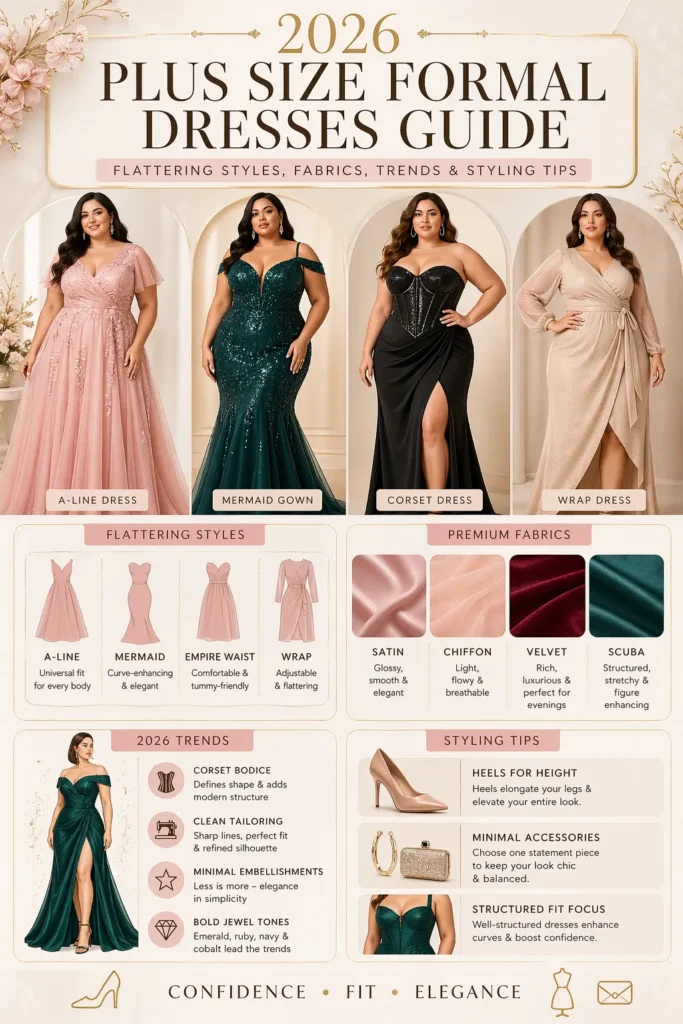
A-Line Dresses
A universally flattering design fitted at the top and gradually flaring toward the bottom.
- Balances body proportions
- Suitable for all body shapes
- Ideal for weddings and formal gatherings
Mermaid Dresses
Tight-fitting through the torso and hips, flaring at the lower legs.
- Enhances natural curves
- Creates a dramatic silhouette
- Best for evening luxury events
Empire Waist Dresses
Waistline is placed just below the bust.
- Creates an elongated appearance
- Comfortable for extended wear
- Ideal for tummy area coverage
Wrap Dresses
An adjustable structure that wraps around the body.
- Highly versatile fit
- Suitable for semi-formal occasions
- Easy to adjust for comfort
Corset Dresses
Structured bodice with internal shaping support.
- Strong waist definition
- Modern trending style in 2026
- Best for bold fashion statements
Occasions to Wear Plus-Size Formal Dresses
Different occasions require different levels of formality, fabric strength, and styling precision.
Weddings
- Flowing chiffon gowns
- Floral embroidered dresses
- Soft pastel tones
Gala Events
- Satin floor-length gowns
- Velvet structured dresses
- Metallic accents
Office Formal Events
- Midi-length tailored dresses
- Neutral shades like beige and navy
- Minimalistic styling
Cocktail Parties
- Knee-length fitted dresses
- Bold colors and modern cuts
Prom Nights
- Corset A-line combinations
- Glitter and tulle gowns
Always align your outfit with the event’s tone and dress code.
Global Popularity & Cultural Influence
Plus-size formal dresses have become globally accepted and culturally adapted across regions.
- USA & UK: Strong inclusivity movement and size diversity
- France & Italy: High-end couture tailoring
- Germany: Minimalist structured fashion
- Middle East: Elegant, modest formalwear
- South Asia: Fusion of traditional and modern designs
Fashion is now a universal language of expression.
Latest Trends in 2026
Fashion in 2026 focuses on precision tailoring and refined simplicity.
Trending Designs
- Structured corset gowns
- Basque waist silhouettes
- Clean-cut satin dresses
- Minimal embellishment aesthetics
Trending Colors
- Emerald green
- Ruby red
- Deep cobalt blue
- Classic black
Design Innovations
- Strategic side slits
- Architectural seam work
- Sharp geometric tailoring
Modern trend philosophy: Less decoration, more structure.
How to Choose the Perfect Plus-Size Formal Dress
Selecting the right dress involves understanding body structure, occasion, and material behavior.
Body Shape Analysis
- Apple Shape: Empire waist, A-line cuts
- Pear Shape: Embellished upper designs, off-shoulder styles
- Hourglass Shape: Fitted silhouettes, wrap dresses
- Rectangle Shape: Belted and ruched designs
Occasion Matching
- Weddings require flow and softness
- Corporate events require structure
- Parties allow bold experimentation
Fabric Intelligence
- Choose structured materials
- Prefer medium-weight fabrics
- Avoid overly thin textiles
Golden Principle: Fit is more important than fashion trends.
How to Style Plus-Size Formal Dresses
Styling enhances visual harmony and completes the outfit identity.
Footwear
- High heels elongate posture
- Pointed shoes add sophistication
Accessories
- Use minimal statement jewelry
- Avoid excessive layering
Color Strategy
- Dark tones create a slimming effect
- Bright tones create visual impact
Layering Options
- Blazers for professional events
- Light shawls for winter elegance
Professional Styling Tips
- Highlight one focal feature only
- Maintain visual balance
- Use shaping undergarments wisely
- Prioritize comfort and mobility
Simplicity enhances luxury perception.
Common Mistakes to Avoid
- Wearing oversized silhouettes
- Choosing low-quality fabrics
- Ignoring tailoring adjustments
- Over-accessorizing outfits
Even expensive dresses can look unflattering without proper fit.
Care & Maintenance Guide
Proper maintenance extends garment lifespan.
Washing Instructions
- Hand-wash delicate fabrics
- Use cold water cycles
- Avoid harsh detergents
Storage Tips
- Use padded hangers
- Store in breathable garment covers
Ironing Method
- Prefer steaming
- Avoid direct high heat
Buying Guide for Best Quality Dresses
Fabric Inspection
- Look for dense material
- Check surface finish quality
Stitching Quality
- Ensure reinforced seams
- No loose threads or gaps
Fit Testing
- Comfortable movement range
- Proper waist alignment
Brand Evaluation
- Check customer reviews
- Prefer reputable designers
Quick Style Comparison
| Style | Comfort | Elegance | Best Use |
| A-Line | High | High | Universal use |
| Mermaid | Medium | Very High | Evening events |
| Empire | High | Medium | Comfort wear |
| Wrap | High | Medium | Daily formal |
| Corset | Medium | Very High | Fashion events |
Pros & Cons of Plus-Size Formal Dresses
Advantages
- Designed for real body shapes
- High comfort levels
- Wide style variety
- Confidence enhancement
Disadvantages
- Premium pricing in some brands
- Limited availability in local markets
- May require tailoring adjustments
FAQs
A: A-line and wrap dresses suit almost all body types.
A: Yes, if the dress has proper structure.
A: Dark colors are slim, bold colors are trendy.
A: Yes, better quality improves fit and durability.
Conclusion
Plus-size formal dresses in 2026 represent a powerful shift in fashion ideology. They are no longer about hiding or adjusting the body but about enhancing natural shape through Intelligent design, structured tailoring, and fabric precision.
The modern fashion world encourages individuality, confidence, and self-expression. From elegant A-line silhouettes to bold corset gowns, every design serves a purpose: to make the wearer feel confident, stylish, and empowered.
Ultimately, the best dress is not the most expensive or the most trendy—it is the one that fits perfectly, feels comfortable, and reflects your personality with grace.
