
Introduction
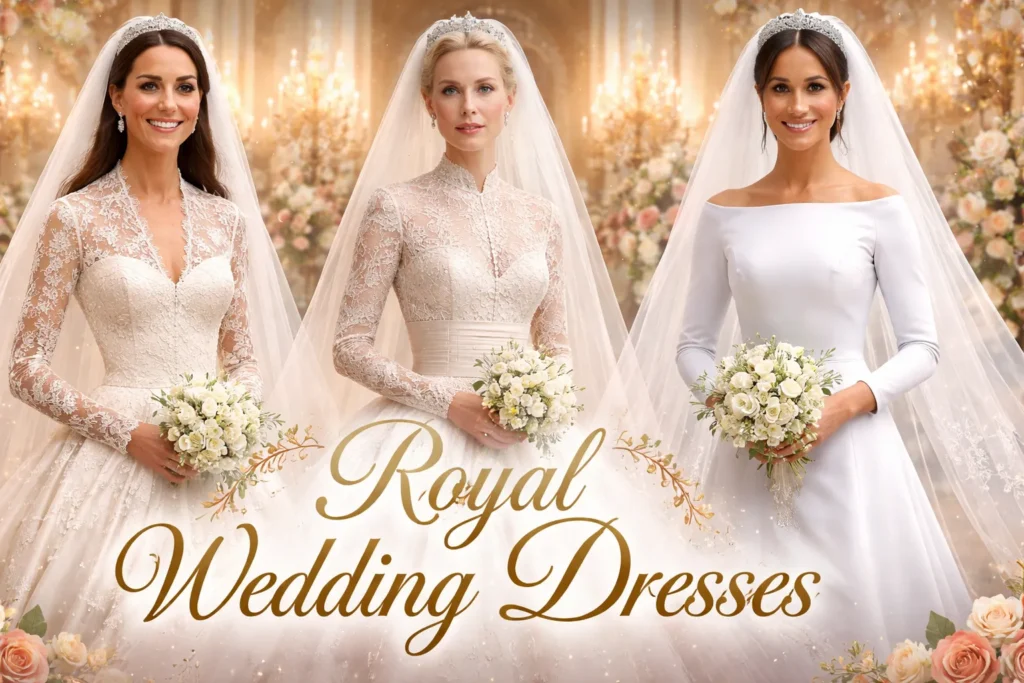
Royal wedding dresses have consistently symbolized the pinnacle of sophistication, grandeur, and everlasting charm. These extraordinary gowns are not merely garments—they embody heritage, artistry, tradition, and personal expression. Each royal bridal outfit tells a story, reflecting both cultural identity and historical legacy. The transformation of bridal fashion can be traced back to 1840, when Queen Victoria chose to wear a white silk gown for her wedding. This decision revolutionized bridal fashion globally, establishing white as the dominant color for wedding dresses. Over the years, influential Royal Wedding Dresses such as those of Princess Diana, Kate Middleton, and Meghan Markle have reshaped bridal trends, inspiring countless brides around the world. In 2026, modern brides are seeking a refined blend of tradition and individuality. They want the elegance of royal fashion while embracing comfort, functionality, and contemporary aesthetics.
What Are Royal Wedding Dresses?
Royal wedding dresses are bespoke, couture-level bridal gowns traditionally worn by members of royal families. These dresses are distinguished by their superior craftsmanship, premium materials, and timeless elegance.
Key Features of Royal Wedding Dresses
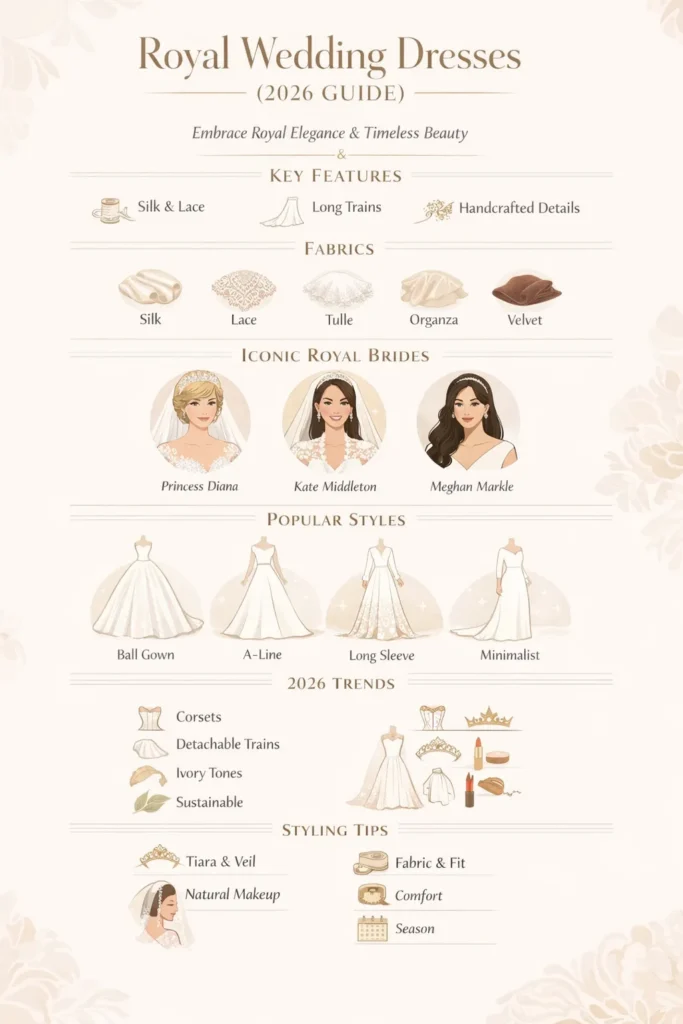
- High-quality fabrics such as silk, satin, and lace
- Modest yet graceful designs
- Long, dramatic trains and veils
- Intricate hand embroidery and embellishments
- Classic silhouettes that never go out of style
Unlike standard wedding dresses, royal gowns emphasize symbolism, tradition, and meticulous detailing. They are designed to reflect dignity, refinement, and cultural heritage.
Simple Understanding:
A royal wedding dress is not about excessive decoration—it is about understated luxury, elegance, and meaning.
History & Origin of Royal Wedding Dresses
The evolution of royal wedding dresses is deeply connected to cultural and historical developments.
The Beginning
Before the 19th century, brides wore dresses in various colors, including red, blue, and gold. White was not a standard choice. This changed dramatically when Queen Victoria wore a white gown, symbolizing purity and sophistication.
Key Milestones in Royal Bridal Fashion
| Year | Royal Bride | Impact |
| 1840 | Queen Victoria | Established the white wedding dress tradition |
| 20th Century | European Royals | Introduced embroidery and elaborate trains |
| 1981 | Princess Diana | Popularized dramatic volume and luxury |
| 2011 | Kate Middleton | Revived lace sleeves and classic elegance |
| 2018 | Meghan Markle | Introduced minimalist royal fashion |
Evolution Over Time
- Traditional Era: Heavy fabrics, long trains, strict dress codes
- Modern Era: Lightweight materials, personalized designs, refined simplicity
Insight:
Royal bridal fashion evolves with time, but its essence remains timeless and elegant.
Fabric Types & Materials Used
Fabric is one of the most important elements of a royal wedding dress. It determines the gown’s structure, comfort, and overall appearance.
Premium Fabrics
- Silk Satin: Smooth, glossy, and luxurious
- Lace: Intricate and delicate, symbolizing tradition
- Organza: Lightweight and structured, ideal for volume
- Tulle: Soft and airy, perfect for layered designs
- Velvet: Rich and heavy, suitable for winter weddings
Expert Insight:
The combination of silk and lace creates a perfect harmony between structure and softness, enhancing both elegance and comfort.
Most Iconic Royal Wedding Dresses
Royal brides have created unforgettable fashion moments that continue to influence modern bridal trends.
Princess Diana
- 25-foot train
- Silk taffeta fabric
- Decorated with 10,000 pearls
- Dramatic design
Kate Middleton
- Long lace sleeves
- Structured bodice
- Classic and timeless look
Meghan Markle
- Clean silhouette
- Boat neckline
- Modern and sophisticated aesthetic
These dresses continue to inspire bridal trends in 2026.
Popular Royal Wedding Dress Styles
Ball Gown Style
A fitted bodice paired with a voluminous skirt creates a fairytale-like appearance. This style is ideal for grand and formal weddings.
A-Line Royal Gown
This universally flattering silhouette gradually flares from the waist, offering both comfort and elegance.
Long Sleeve Lace Dresses
Inspired by Kate Middleton, this style is modest, graceful, and timeless.
Minimalist Royal Style
Inspired by Meghan Markle, this style focuses on clean lines and understated elegance.
Global Influence of Royal Wedding Dresses
Royal-inspired bridal fashion has gained worldwide popularity.
- United Kingdom: Traditional and heritage-driven designs
- Europe: Elegant and classic couture styles
- Middle East: Luxurious fabrics and heavy embellishments
- Asia: Fusion of modern fashion with cultural elements
Royal fashion has become a global benchmark for bridal elegance.
Occasions for Royal Wedding Dresses
Royal-style wedding dresses are suitable for:
- Grand weddings
- Destination ceremonies
- Church weddings
- Luxury bridal events
Modern brides choose these gowns to achieve a timeless and sophisticated appearance.
Royal Wedding Dress Trends (2026)
In 2026, royal bridal fashion continues to evolve with modern influences.
Key Trends
- Structured corsets for enhanced silhouette
- Detachable trains for versatility
- Soft ivory and neutral tones
- Minimal embroidery with luxurious fabrics
- Sustainable and eco-friendly materials
Trend Insight:
Modern brides prioritize individuality while maintaining royal elegance.
How to Style a Royal Wedding Dress
Accessories
- Elegant tiaras
- Pearl or diamond jewelry
- Long cathedral veils
Shoes
- Neutral or ivory heels
- Embellished bridal footwear
Hair & Makeup
- Natural, glowing makeup
- Soft curls or sleek bun hairstyles
Styling Tips
- Keep accessories minimal
- Focus on balance and harmony
- Maintain a confident posture
Care Tips & Maintenance Guide
Proper care ensures the longevity of a royal wedding dress.
Care Instructions
- Dry clean only
- Store in breathable garment bags
- Avoid direct sunlight
- Use padded hangers
Avoid machine washing delicate fabrics like silk and lace.
Buying Guide
Choosing the perfect gown requires careful planning.
Key Factors
Fabric Quality
Always select premium materials such as silk or lace
Fit & Tailoring
Custom fitting ensures a flawless look
Budget
Luxury can be achieved at various price levels
Comfort
Ensure ease of movement
Season
Choose fabrics appropriate for the weather
Royal vs Regular Wedding Dresses
| Feature | Royal Dress | Regular Dress |
| Fabric | Premium silk & lace | Mixed materials |
| Design | Custom couture | Ready-made |
| Train | Long | Short or none |
| Detail | Handcrafted | Machine-made |
| Cost | Expensive | Affordable |
Pros & Cons
Pros
- Timeless elegance
- High-quality craftsmanship
- Luxurious appearance
- Cultural significance
Cons
- Expensive
- Heavy
- Requires maintenance
- Not ideal for casual weddings
FAQs
A: A royal wedding dress uses luxury fabrics, a modest design, and high craftsmanship.
A: Yes! Focus on fabric, fit, and simple elegance.
A: Traditionally, yes, but modern brides choose ivory and soft tones.
A: Silk and lace are the most popular choices.
Conclusion
Royal wedding dresses remain the ultimate symbol of elegance, heritage, and timeless Sophistication. From the iconic influence of Queen Victoria to the refined styles of Kate Middleton and Meghan Markle, these gowns continue to shape bridal fashion worldwide.
In 2026, the focus has shifted toward blending tradition with modern personalization, allowing brides to express their individuality while maintaining a regal aesthetic. The key to achieving a royal look lies in choosing high-quality fabrics, timeless silhouettes, and elegant styling. Attention to detail, proper tailoring, and balanced accessories can elevate even a simple gown into something extraordinary. While royal dresses may seem luxurious, their essence is rooted in grace, simplicity, and confidence.
